Precision machining plays an indispensable role in modern manufacturing, particularly in industries where even the microscopic variance of a fraction of a millimeter can completely compromise a product’s performance. Whether you are developing complex aerospace components, advanced medical devices, or high-performance automotive parts, specialized CNC machining services ensure that every single feature aligns perfectly with your engineering blueprints and functions exactly as intended.
For businesses looking for a highly cost-effective path to manufacturing high-quality, high-tolerance components, utilizing advanced CNC machining services in China is an excellent strategy. Companies like AS Prototypes seamlessly bridge the gap between advanced manufacturing capabilities and competitive pricing. This allows your business to secure exceptionally accurate parts while keeping your project strictly on budget and on schedule.
But what does “accuracy” truly mean within the context of precision manufacturing, and how do engineers consistently achieve ultra-tight tolerances for complex projects? Below, we break down everything you need to know about precision machining accuracy, material behaviors, and modern production consistency.
What Does Accuracy Mean in Precision Machining?
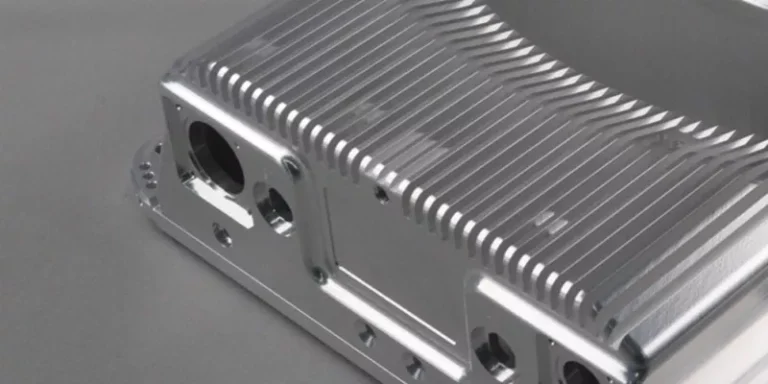
In the world of precision manufacturing, accuracy refers to how closely a finished, physical component matches the exact dimensions and geometric specifications defined in the original 3D CAD model or 2D technical drawing.
When evaluating a manufacturer’s capabilities, accuracy is typically quantified using millimeters (mm) or microns (µm). A micron is one-millionth of a meter, illustrating just how microscopic these measurements can be. In machining, accuracy is intrinsically tied to tolerance, which is the total allowable amount a specific dimension is permitted to deviate from the nominal design value.
- Higher Accuracy: Results in tighter, narrower tolerance bands, minimizing dimensional variation.
- Lower Accuracy: Leads to wider tolerance windows, allowing for greater dimensional variance between parts.
When you partner with an expert machining service, the goal is always to deliver maximum accuracy paired with high repeatability—ensuring that the first part off the line is identical to the thousandth.
Typical Tolerance Levels in Precision CNC Machining
The specific tolerance requirements for any given component depend heavily on its intended application, mating parts, and operational environment. Understanding these tiers helps optimize your design for both manufacturability and cost.
Standard Machining Tolerances (±0.05 mm to ±0.01 mm)
For the vast majority of commercial CNC machining projects, standard tolerances range from ±0.05 mm down to ±0.01 mm. These turn-around parameters are highly suitable for a broad spectrum of everyday industrial applications, including automotive structural parts, consumer electronics enclosures, industrial brackets, and general engineering assemblies.
High-Precision Machining Tolerances (±0.005 mm to ±0.002 mm)
When a project demands critical fits or handles high-stress operations, high-precision machining becomes necessary. Here, tolerances are constricted to between ±0.005 mm and ±0.002 mm. These exceptionally tight specifications are standard practice in aerospace engineering, defense applications, and medical instrument manufacturing, where even a minor deviation could cause system friction, fluid leakage, or catastrophic mechanical failure.
Ultra-Precision Machining Tolerances (±0.001 mm and Beyond)
Certain specialized or highly sensitive applications require sub-micron precision. Ultra-precision machining setups can deliver tolerances as tight as ±0.001 mm (1 micron) or even less. This level of extreme refinement is essential for cutting-edge optical components, laboratory testing devices, semiconductor manufacturing equipment, and advanced guidance systems.
Critical Factors That Affect Machining Accuracy
Achieving tight tolerances isn’t just about programming a machine; it requires managing a complex web of physical and mechanical variables throughout the entire manufacturing process.
1. Machine Kinematics and Capabilities
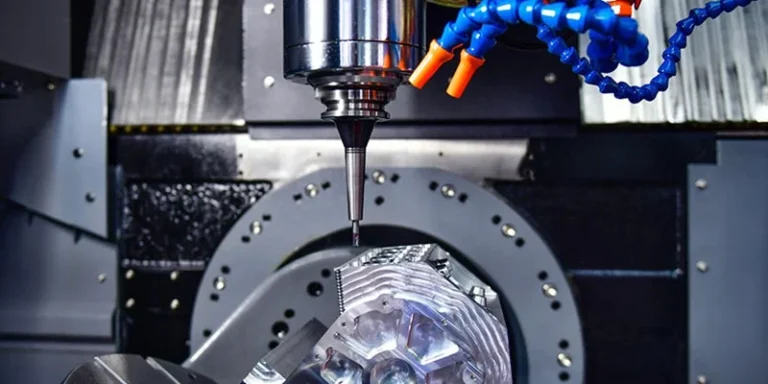
The configuration and structural rigidity of the CNC machine itself are fundamental. For instance, advanced multi-axis workflows, such as 5-axis CNC machining, allow complex geometries to be machined in a single setup. This eliminates the compounding errors and alignment stacks that naturally occur when a part has to be manually flipped or re-fixtured across multiple 3-axis operations.
2. Material Characteristics and Selection
Different materials react uniquely to the stress of cutting forces. Machining robust metals like 17-4PH stainless steel or 6061 aluminum requires distinct feed rates and tool geometries compared to machining engineering plastics like POM (Acetal) or PMMA (Acrylic). Factors like a material’s internal residual stress and thermal expansion coefficient must be calculated in advance to prevent warping, deformation, or structural shifting during or after the cutting process.
3. Thermal Dynamics and Heat Control
The friction generated between the cutting tool and the workpiece creates substantial thermal energy. Metals expand when heated. If this heat is not carefully managed using localized flood or mist coolants, the part can expand during machining, only to shrink below the required dimensions once it cools down to ambient room temperature.
4. Tooling Quality and Wear
As cutting tools engage with raw stock, they naturally experience wear over time. Even microscopic degradation of a tool’s cutting edge alters the chip load and introduces structural deflection. Precision machinists monitor tool lifespans closely and utilize automated tool setters to adjust offsets dynamically, preserving a flawless surface roughness (such as achieving smooth Ra 1.6 or pristine Ra 0.8 surface finishes).
5. Multi-Stage Production Planning
Many industrial components require a series of preparatory manufacturing processes—such as raw stock cutting, rough forming, or structural welding—long before they ever reach the final CNC milling or turning center. If these preliminary steps introduce internal stresses, they can negatively impact the final dimensions. Comprehensive engineering oversight ensures that these multi-stage processes are carefully sequenced and stress-relieved so that the final precision cuts remain completely stable.
How Precision Machining Achieves Industrial Consistency
While producing one highly accurate prototype is an impressive engineering feat, the true challenge lies in manufacturing thousands of identical parts with unyielding consistency. Advanced CNC machining overcomes this challenge through a combination of automated execution and rigorous verification protocols.
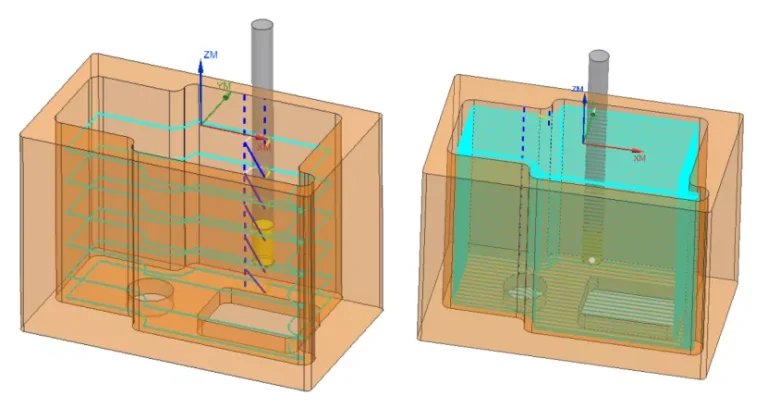
Modern CNC equipment relies entirely on computer-controlled movements driven by precise G-code toolpaths. This automation eliminates human operational error during the cutting cycle, ensuring that the physical motions of the machine spindles and axes remain completely uniform across large production volumes.
Furthermore, a comprehensive quality control system is woven directly into the manufacturing timeline. Throughout the production run, parts undergo detailed inspections. Specialized metrology instruments, including optical comparators, precision digital air gauges, and Coordinate Measuring Machines (CMM), are utilized to cross-verify physical dimensions against the original digital design. This data-driven approach catches any minor tool drift early, guaranteeing that every single component aligns perfectly with your parameters, whether you are ordering a short-run engineering prototype or a massive mass-production lot.
The AS Prototypes Commitment to Engineering Excellence
At AS Prototypes, we understand that precision is non-negotiable. We approach every manufacturing challenge with an analytical, engineering-first mindset, ensuring that your parts are optimized for manufacturability long before the first chip is cut. Our comprehensive precision machining services are designed from the ground up to fulfill the most demanding international manufacturing specifications, giving you complete confidence in the structural integrity and dimensional consistency of your components.
By implementing strict internal quality gates and end-to-end supply chain management, we monitor every step of production—from raw material verification and initial Design for Manufacturability (DFM) reviews to final dimensional reporting. When you partner with us, you receive highly reliable, precisely executed components that meet your exact engineering expectations every single time.
Streamline Your Next Precision Project
Ensure your next manufacturing run delivers the exact accuracy, surface finish, and mechanical reliability your project demands. The engineering team at AS Prototypes is ready to review your project files, optimize production pathways, and deliver premium CNC machining solutions tailored to your timeline.
To discuss your engineering requirements, receive a detailed design review, or obtain a comprehensive manufacturing quote, reach out to our team directly via email at info@asprototypes.com or submit your technical drawings through our secure online contact form.