Custom Lighting Prototyping & Optical CNC Machining Services
At AS Prototypes, our in-house optical CNC machining and precision fabrication facility partners directly with architectural lighting designers, automotive luminaire engineers, and commercial illumination developers worldwide. We eliminate the high financial risks of upfront tooling by manufacturing functional, production-intent optical prototypes and low-volume production runs. From single-point diamond fly-cut optical acrylic (PMMA) light pipes and TIR collimator lenses to high-thermal-conductivity aluminum 6061/6063 heatsinks and IP68 submersible fixture housings, our precision manufacturing workflow guarantees exacting optical fidelity, thermal stability, and mechanical fit.
DFM review within 24 hours • Prototypes in 4–8 business days (7–12 business days with anodizing) • Production in 7–30 business days
1. Overcoming Optical, Thermal & Environmental Challenges in Luminaire Development
High-performance commercial and architectural lighting fixtures operate under rigorous photometrical, thermal, and environmental constraints. Microscopic surface chatter or internal material stresses in optical lenses cause severe beam scattering, chromatic aberrations, and unacceptable lumen loss. Concurrently, high-lumen COB and SMD LED modules generate intense localized heat flux; without an efficiently engineered convective heatsink, excessive junction temperatures trigger premature lumen depreciation and color temperature shifts.
Our in-house manufacturing resolves these bottlenecks with dedicated engineering solutions. We deploy single-point diamond turning (SPDT) and specialized optical CNC milling for PMMA and Polycarbonate, achieving crystal-clear mirror finishes (Ra < 0.02 μm) with over 92% light transmittance and zero internal birefringence. When optical lenses or light guides undergo chemical vapor polishing (solvent vapor smoothing), we strictly enforce a mandatory 60–80°C post-vapor stress-relief thermal annealing cycle to relieve chemical internal stresses and eliminate risks of environmental stress cracking. For thermal management, we precision-mill high-density extruded 6061-T6 and 6063-T5 aluminum pin-fin heatsinks (thermal conductivity up to 218 W/m·K) paired with deep black anodizing to optimize convective and radiative heat transfer. For outdoor fixtures, our precision-machined gasket grooves ensure complete IP67 and IP68 watertight sealing integrity.
2. 5-Stage Engineering Verification Workflow for Lighting Systems
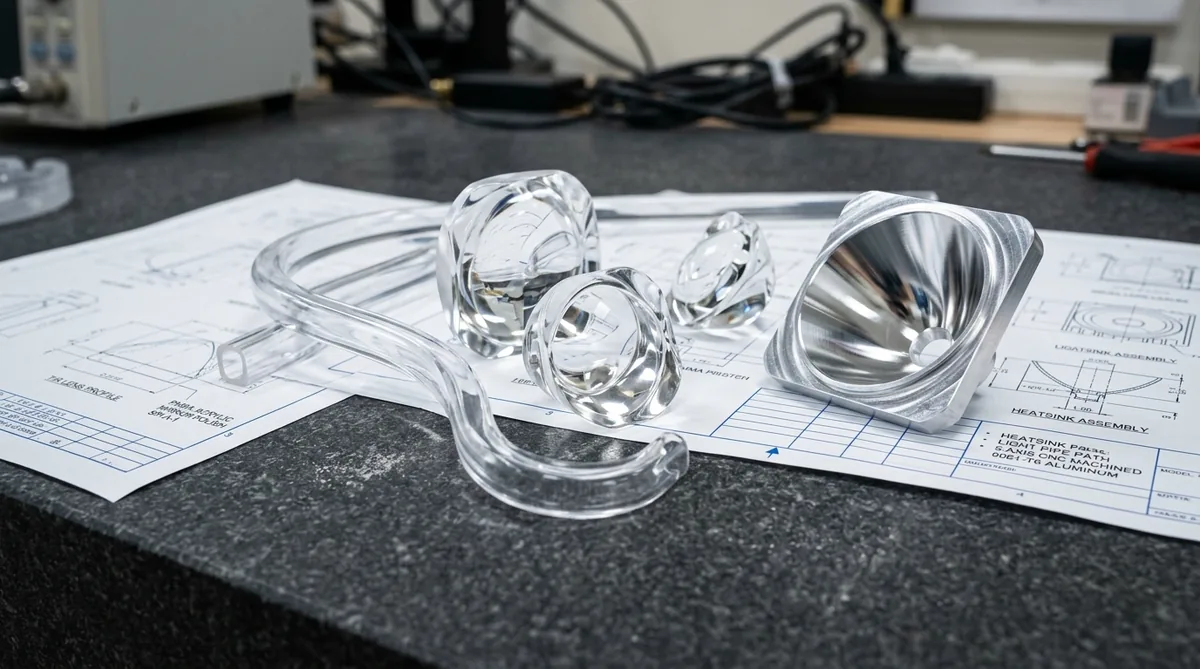
Fabricating physical diamond-milled PMMA light guides and SLA collimators allows engineers to test real beam angles, lux distribution profiles, and color rendering indices (CRI) on goniophotometers before committing tens of thousands of dollars to multi-cavity injection molds.
CNC machining billet 6061/6063 aluminum heatsink prototypes embedded with thermocouples verifies actual LED junction temperatures under 100% continuous duty cycles, ensuring compliance with thermal degradation targets prior to tooling sign-off.
Machining production-intent gasket channels and casting custom elastomeric silicone O-rings allows full-submersion hydrostatic pressure testing, validating waterproof reliability for outdoor floodlights, architectural ingrounds, and roadway luminaires.
Assembling complete prototype luminaires with custom laser-cut sheet metal brackets, bead-blasted aluminum trims, and painted trim rings provides design teams with physical presentation units for stakeholder approval and international lighting trade show exhibitions.
Manufacturing batches of 10 to 1,000+ units delivered in 7–30 business days (ex-factory) enables clients to supply commercial pilot installations, fulfill architectural contract milestones, and participate in municipal procurement tenders without waiting for hard tooling.
3. Custom Lighting & Optical Components We Manufacture
Ultra-Precision Light PipesOptics
Single-point diamond-milled PMMA and chemical vapor-polished Polycarbonate light guides engineered for total internal reflection with minimal attenuation.
TIR Collimator Lenses & PrismsOptics
Multi-faceted TIR collimators, micro-prisms, and Fresnel lens arrays machined with sub-micron diamond tooling to achieve precise narrow-to-wide beam distributions.
High-Thermal Radial HeatsinksThermal
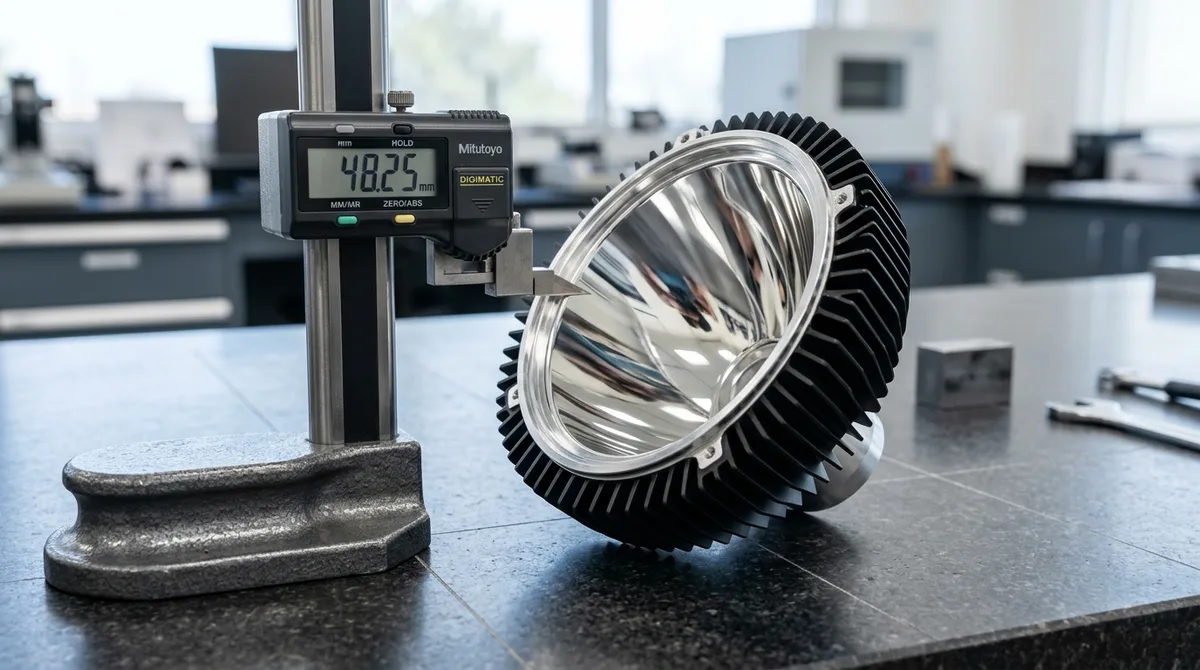
3-axis and 5-axis CNC machined 6061-T6 and 6063-T5 aluminum radial pin-fin heatsinks featuring dense thin-wall geometries and high-emissivity deep black anodizing.
PVD Parabolic Reflector CupsReflective
Diamond-turned aluminum or vacuum-metalized plastic reflector cones treated with physical vapor deposition (PVD) aluminizing achieving up to 96% specular reflectance.
Explosion-Proof Luminaire EnclosuresStructural
Heavy-duty CNC machined and die-cast aluminum enclosures engineered with reinforced flamepaths, robust wall sections, and anti-corrosive industrial powder coatings.
IP67/IP68 Waterproof Bezels & FramesSealing
Precision-milled stainless steel 316 and aluminum front bezels with integrated continuous dovetail O-ring grooves and cast silicone gaskets for airtight submersion.
4. Lighting Engineering Materials & Precision Specifications Matrix
Optical Polymers, Heat Dissipation Alloys & Reflector Substrates
Key mechanical, thermal, optical transmittance, and CNC precision tolerance parameters for lighting components
| Material Designation | Material Class / Optic Spec | Optical Transmittance / Thermal | Max Service Temp / HDT | In-House Precision Tolerance | Luminaire Applications |
|---|---|---|---|---|---|
| Optical PMMA (Acrylic / Plexiglas) | Ultra-Clear Stress-Relieved Polymer | Transmittance: 92-93% (Haze <1%, Abbe: 58) | HDT: 95°C | ±0.010 mm (SPDT Ra <0.02 μm) | Collimating TIR lenses, optical light pipes, edge-lit panels, precision light distribution prisms. |
| Optical Polycarbonate (PC / Lexan) | High-Impact Heat-Resistant Polymer | Transmittance: 88-90% (Impact: 650 J/m) | HDT: 135°C (UL94 V-0 flame) | ±0.010 mm (Vapor Polished + 60–80°C Annealed) | Vandal-resistant outdoor globes, street luminaire lenses, high-bay shatterproof diffusers, explosion-proof covers. |
| Aluminum 6063-T5 / 6061-T6 | High-Thermal Extrusion & CNC Billet | Thermal Cond: 201-218 W/m·K (High Convection) | Max Service: 200°C | ISO 2768-fH (±0.015 mm) (Deep Black Anodized) | High-bay LED heatsinks, linear luminaire extruded housings, track spotlight bodies, radial pin-fin coolers. |
| Cast Aluminum A380 / ADC12 | Structural Die Casting Alloy | Thermal Cond: 96-113 W/m·K | Max Service: 250°C | ISO 2768-mK (±0.05 mm) (Powder Coated) | Stadium floodlight main chassis, architectural exterior wall washers, roadway cobra-head bodies, IP68 housings. |
| Specular Reflector Aluminum (Alanod / PVD) | High-Reflectivity PVD Vacuum Clad | Total Reflection: 95-98% (Specular / Diffuse) | Max Service: 150°C | ±0.020 mm (Faceted forming) | Downlight parabolic reflector cones, troffer high-efficiency louvers, architectural spotlights, solar concentrators. |
| Optical Liquid Silicone (LSR) | High-Thermal Elastomeric Optics | Transmittance: >94% (UV-proof non-yellowing) | Continuous: 150°C (Peak 200°C) | ±0.025 mm (Micro-injection) | Direct-on-LED optical lens arrays, harsh-environment light guide strips, integrated waterproof sealing optics. |
5. In-House Manufacturing Capabilities for Custom Lighting
Ultra-Precision CNC Machining & Single-Point Diamond Turning
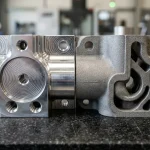
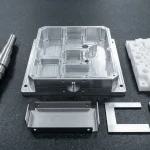
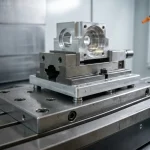
At AS Prototypes, our in-house CNC machining fleet combines 3, 4, and 5-axis continuous milling centers with single-point diamond turning (SPDT) ultra-precision lathes. We machine optical-grade acrylic (PMMA), Polycarbonate, and aerospace-grade 6061/6063 aluminum down to ±0.010 mm tolerances. Single-point diamond fly-cutting generates true optical mirror finishes (Ra < 0.02 μm) directly on reflector surfaces without manual buffing, preserving exact mathematical curves and eliminating light scattering.
Typical Components: Parabolic reflector cups, optical light pipes, LED heatsink housings, precision mounting plates, gimbal rings, IP68 bezel trims.
Material Options: Optical Acrylic (PMMA), Polycarbonate (PC), Aluminum 6061-T6 / 6063-T5, Copper C11000, Brass C360, Stainless Steel 316L.
Optical-Clear SLA 3D Printing for Fast Ray-Tracing Mockups
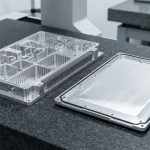
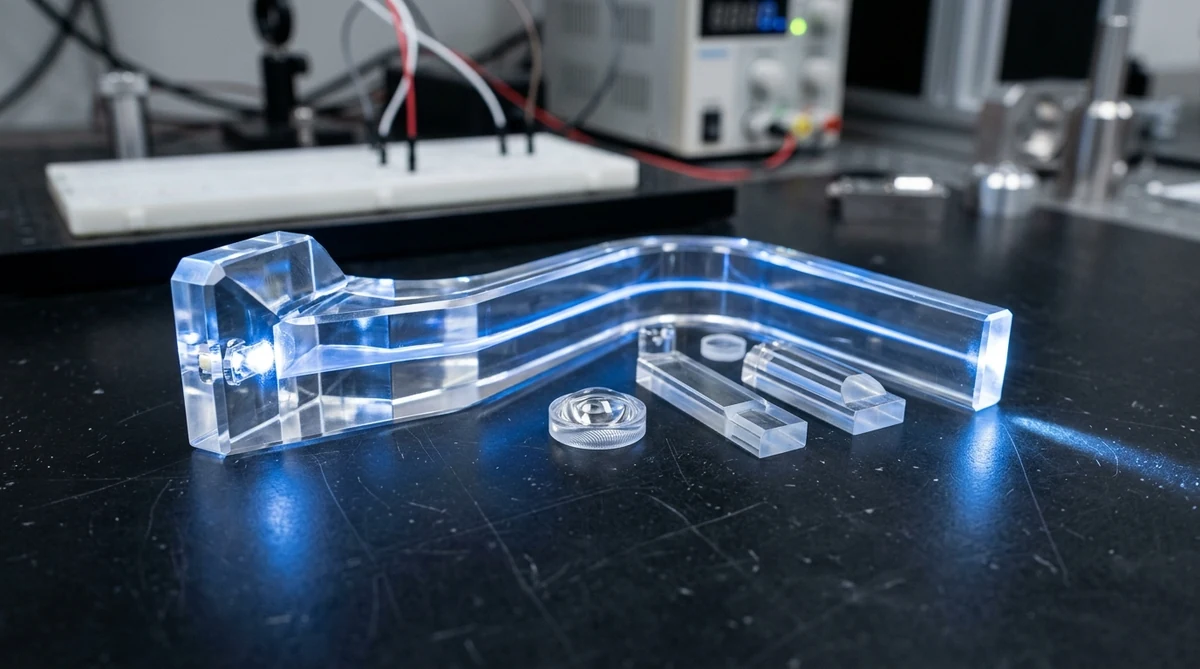
Industrial stereolithography (SLA) utilizing specialized high-clarity transparent photopolymer resins allows our engineering team to produce complex, organic light pipe geometries and custom lens mockups in 4–8 business days (ex-factory). Following precision UV post-curing, wet micro-sanding, and optical-grade clear coating, these prototypes deliver water-clear transparency suitable for early goniophotometer ray-tracing analysis, physical packaging fit-checks, and client design reviews.
Typical Components: Clear optical lenses, light guide arrays, diffuser caps, translucent indicator sleeves, luminaire shade concept models.
Material Options: High-Clarity SLA Photopolymer Resin, Accura ClearVue Equivalent, Tough Transparent Resin.
Optical-Grade Polyurethane Vacuum Casting for Diffusers & Lens Covers
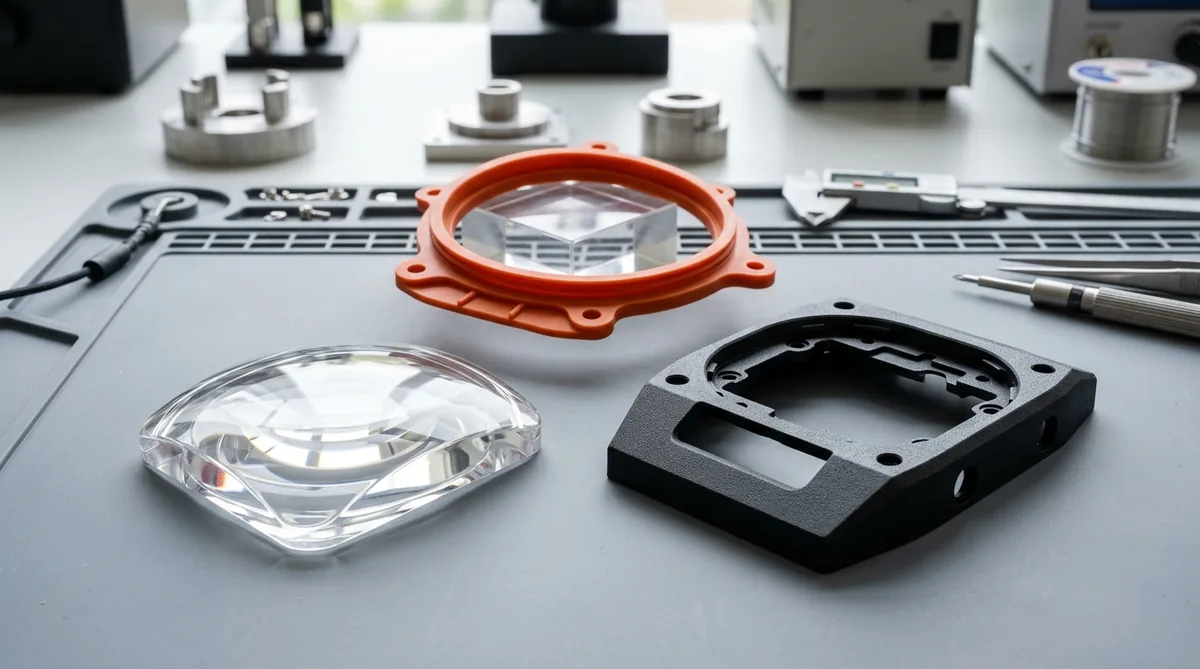
Polyurethane vacuum casting using precision CNC/SLA master patterns and high-durability silicone molds is the ideal bridge production method for pre-series lighting volumes (10 to 100+ units). Our vacuum degassing chamber process guarantees bubble-free, water-clear optical parts with custom levels of diffusion texturing, UV-stabilized formulations, or bespoke translucent tinting without the significant capital outlay of hard steel tooling.
Typical Components: Architectural linear diffusers, automotive indicator lenses, translucent lamp shades, cast silicone sealing gaskets, IP67 globes.
Material Options: Water-Clear Polyurethane (PMMA/PC simulating), Tinted Translucent Resins, Optical Elastomers (Shore 40A-80A).
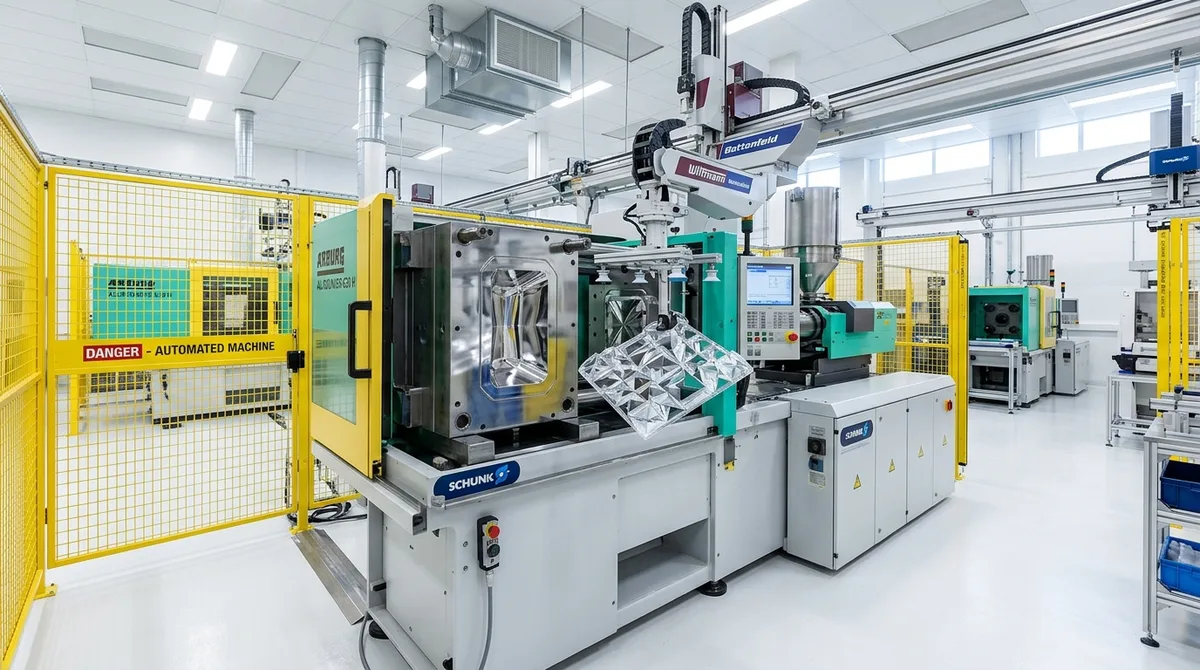
Rapid Injection Molding for Acrylic & Polycarbonate Optical Lenses
For scaled production runs requiring mill-traceable production polymers, our in-house tooling shop builds rapid aluminum (QC-10 / 7075) and pre-hardened P20 steel prototype molds featuring SPI A-1 diamond mirror-polished cavities. Utilizing all-electric injection molding presses, we shoot optical-grade virgin PMMA and heat-resistant Polycarbonate to produce high-efficiency TIR collimators, street light refractors, and matrix LED lens arrays in 18–35 business days turnaround.
Typical Components: TIR collimator lenses, street luminaire refractive covers, automotive headlamp lenses, matrix LED micro-optics, diffuser panels.
Material Options: Optical Acrylic (PMMA), Optical Polycarbonate (PC), Impact-Modified PC, Transparent ABS, Liquid Silicone Rubber (LSR).
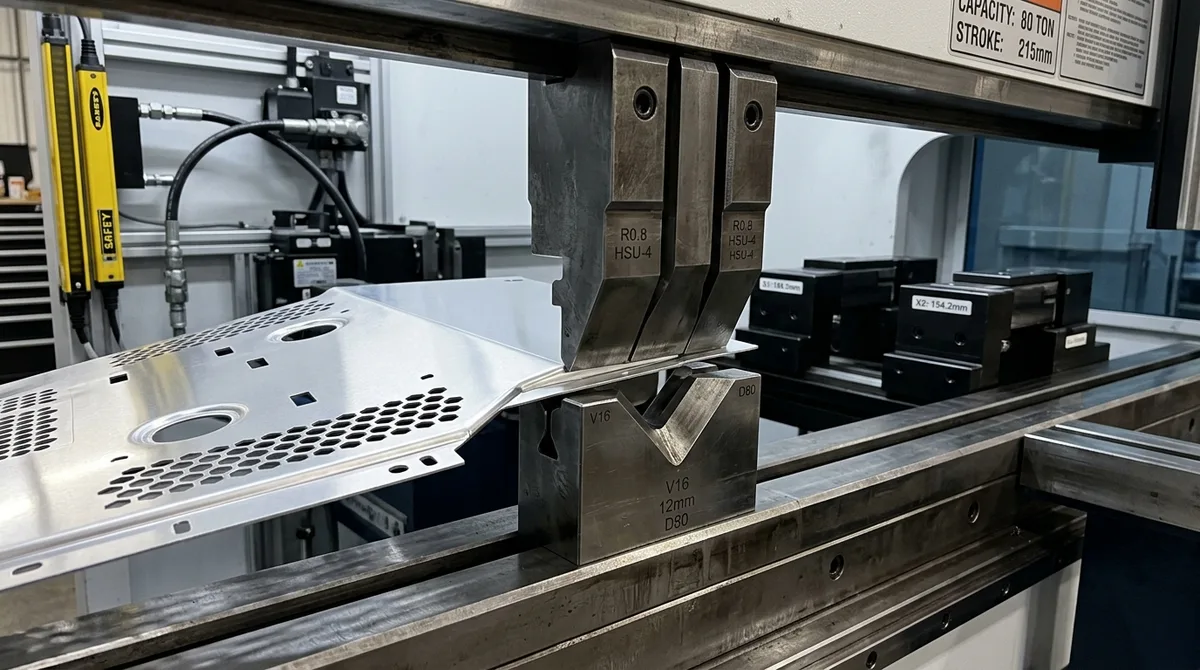
Precision Sheet Metal Fabrication for Luminaire Housings & Troffers
Architectural luminaires rely on lightweight, durable sheet metal enclosures with precise seam fit and thermal venting. Our facility operates high-precision fiber laser cutting systems and multi-axis CNC press brakes to fabricate recessed troffer pans, pendant fixture housings, and specular aluminum reflector louvers. We integrate PEM self-clinching studs, deburred cooling louvers, and apply durable UV-resistant architectural powder coatings or anodized finishes in-house.
Typical Components: Recessed troffer housings, pendant light bodies, high-bay sheet metal enclosures, architectural reflector louvers, floodlight mounting yokes.
Material Options: Aluminum 5052-H32 / 6061, Specular PVD Aluminum, Stainless Steel 304/316, Galvannealed Steel, Brass.
Frequently Asked Questions: Optical & Luminaire Manufacturing
How does AS Prototypes achieve optical clarity and eliminate birefringence in custom light pipes and lenses?
We select cast, stress-relieved optical PMMA or optical-grade Polycarbonate stock and employ single-point diamond turning (SPDT) and specialized single-flute micro-milling with chilled air blast. This subtractive process eliminates mechanical stress buildup and micro-cracking that cause double refraction (birefringence). Finished parts undergo controlled chemical vapor polishing—paired with a mandatory 60–80°C post-vapor stress-relief thermal annealing cycle to eliminate solvent crazing risks—or precision SPI A-1 optical hand-buffing to achieve 92%+ total luminous transmittance with surface roughness below Ra 0.02 μm.
What thermal dissipation options and machining tolerances do you support for high-power LED luminaires?
We precision-machine billet 6061-T6 and extruded 6063-T5 aluminum (thermal conductivity 201-218 W/m·K) into high-density pin-fin and radial heatsink geometries. Critical mounting surfaces conform to ISO 2768-fH tolerances (±0.010 mm to ±0.020 mm) with flatness under 0.025 mm to maximize thermal interface material (TIM) contact. We also apply high-emissivity deep black anodizing to optimize radiative and convective cooling, keeping LED junction temperatures strictly within safe operational limits.
What are the standard turnaround lead times, and how are factory production and international transit separated?
Engineering DFM analysis and quotation are delivered within 24 hours. Ex-factory prototype turnaround for optical 3D printing and single-piece CNC parts is 4 to 8 business days; parts requiring surface finishing (such as anodizing, PVD metallization, or optical vapor polishing) require 7 to 12 business days. CNC production batches (10 to 1,000+ units) are scheduled across 7 to 30 business days depending on complexity and CMM verification. All production turnarounds reflect ex-factory completion and quality sign-off; international air transit via DHL, FedEx, or UPS is strictly separated as 3 to 5 days air transit to ensure transparent scheduling.
Ready to Validate or Scale Your High-Performance Lighting Systems?
From rapid diamond-machined optical prototypes in 4–8 business days (7–12 business days with optical finishing) to production-scale heatsinks and IP68 luminaire enclosures delivered in 7–30 business days, AS Prototypes delivers precision-engineered hardware tailored to exacting illumination standards.