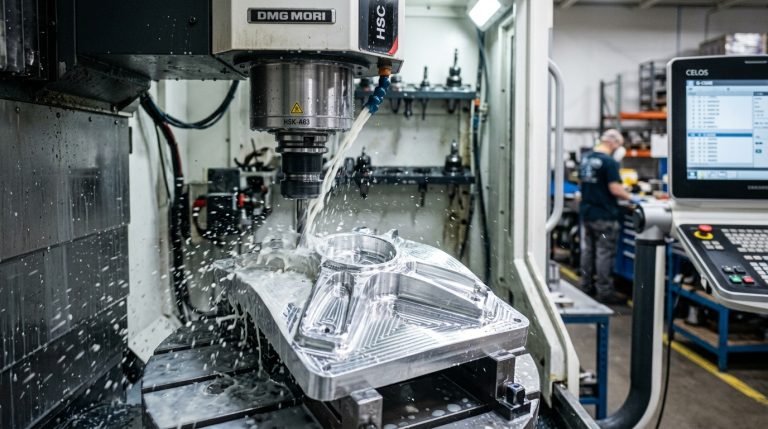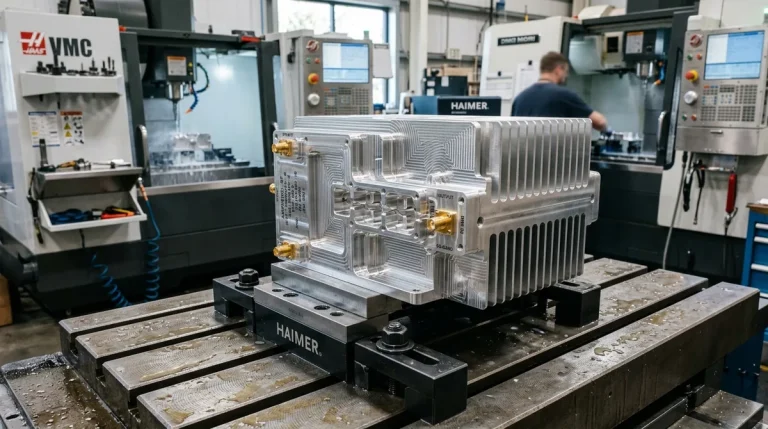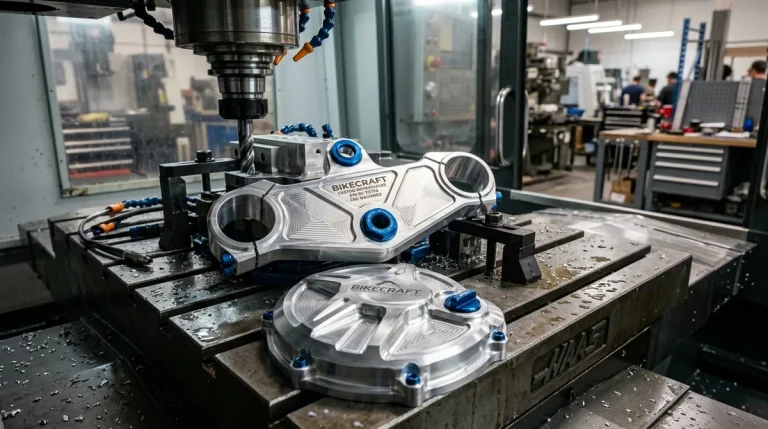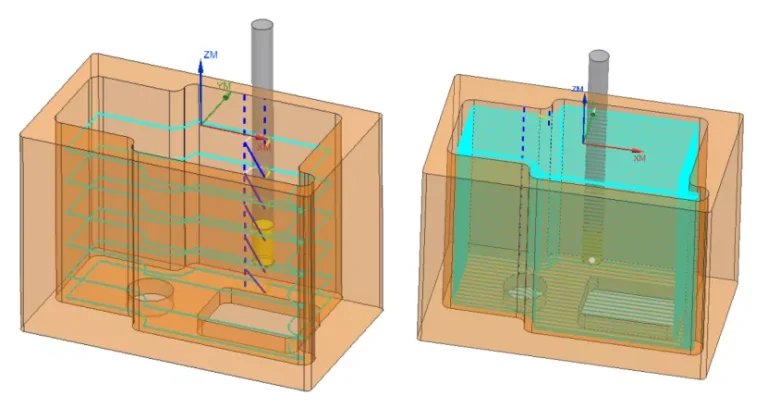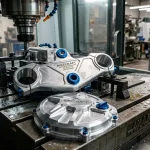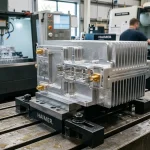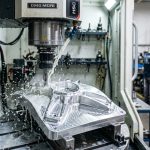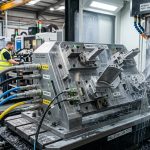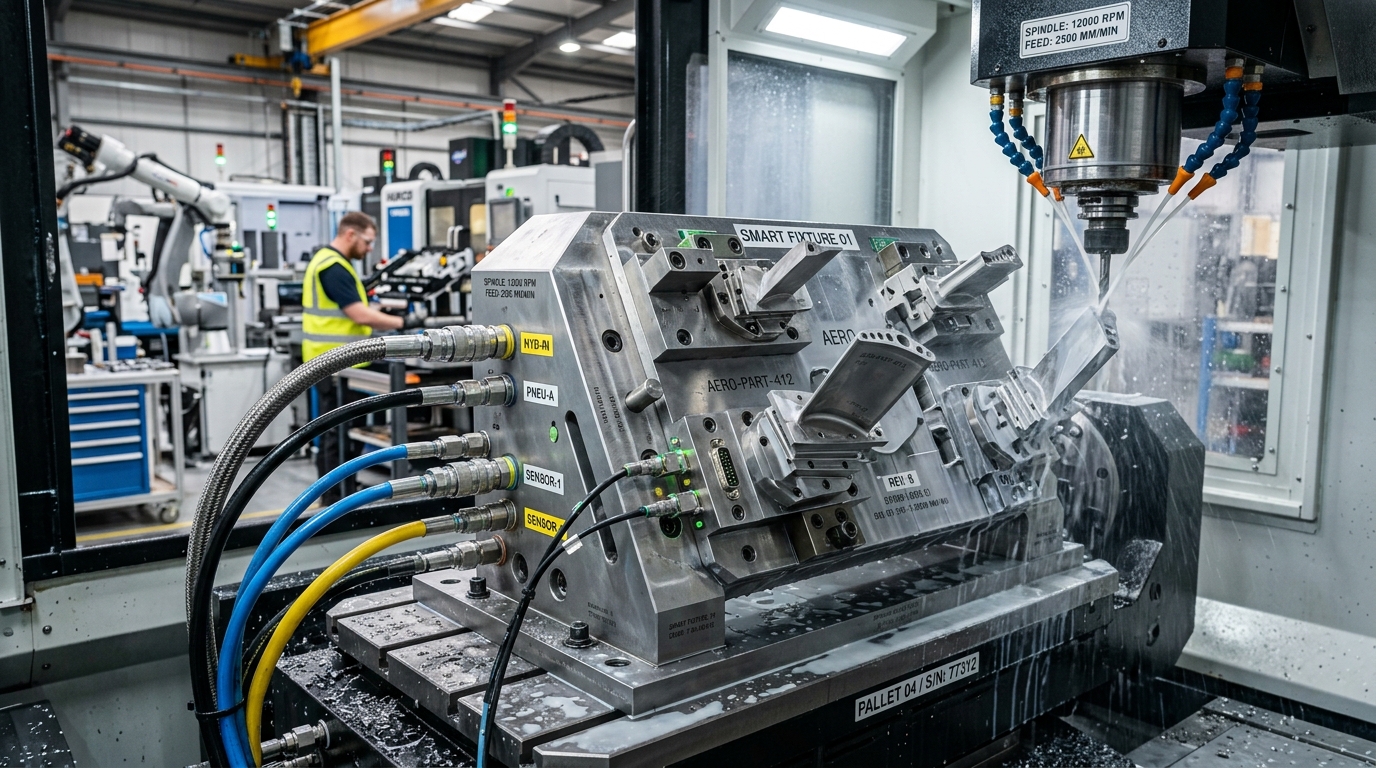
The rapid maturation of Industry 4.0 and autonomous Flexible Manufacturing Systems (FMS) has revolutionized modern machining. Today, multi-axis CNC machine tools, automated tool changers (ATC), and robotic loading arms operate seamlessly in continuous lights-out environments. Yet, for many manufacturing facilities, the primary bottleneck inhibiting true high-mix, low-volume automation remains at the physical interface between the machine table and the raw workpiece: the workholding system.
Traditional manual vises, bespoke bolt-down fixture plates, and modular strap clamps require skilled operators to manually position, torque, and dial in parts. This manual changeover creates substantial spindle downtime and introduces human variability. To achieve uninterrupted automated production, cutting-edge manufacturers rely on intelligent jigs, automated fixtures, and zero-point clamping systems. In this engineering guide, AS Prototypes examines how advanced workholding design unlocks sub-micron repeatability, rapid batch-size-of-one flexibility, and automated lights-out machining.
Deconstructing Jigs vs. Fixtures in Modern CNC Machining
While frequently grouped together, jigs and fixtures serve fundamentally distinct mechanical functions:
- Jigs: Specialized production tools designed to both locate a workpiece and physically guide the cutting tool (traditionally utilizing hardened drill bushings). In modern CNC machining with synchronized servo axes, spindle-guided jigs are less prevalent, but custom assembly and drill jigs remain indispensable for secondary post-machining operations.
- Fixtures: Rigid, high-accuracy workholding assemblies that securely position, support, and clamp a part relative to the machine tool’s coordinate system (X, Y, Z, and rotational axes A/B/C). A precision fixture does not guide the cutting tool; rather, it withstands dynamic multi-axis cutting forces while preserving part geometry without elastic distortion.
Core Technologies Powering Smart Workholding Systems
Transforming passive metal clamps into intelligent, automated workholding interfaces requires the integration of pneumatic, hydraulic, and sensor-driven technologies:
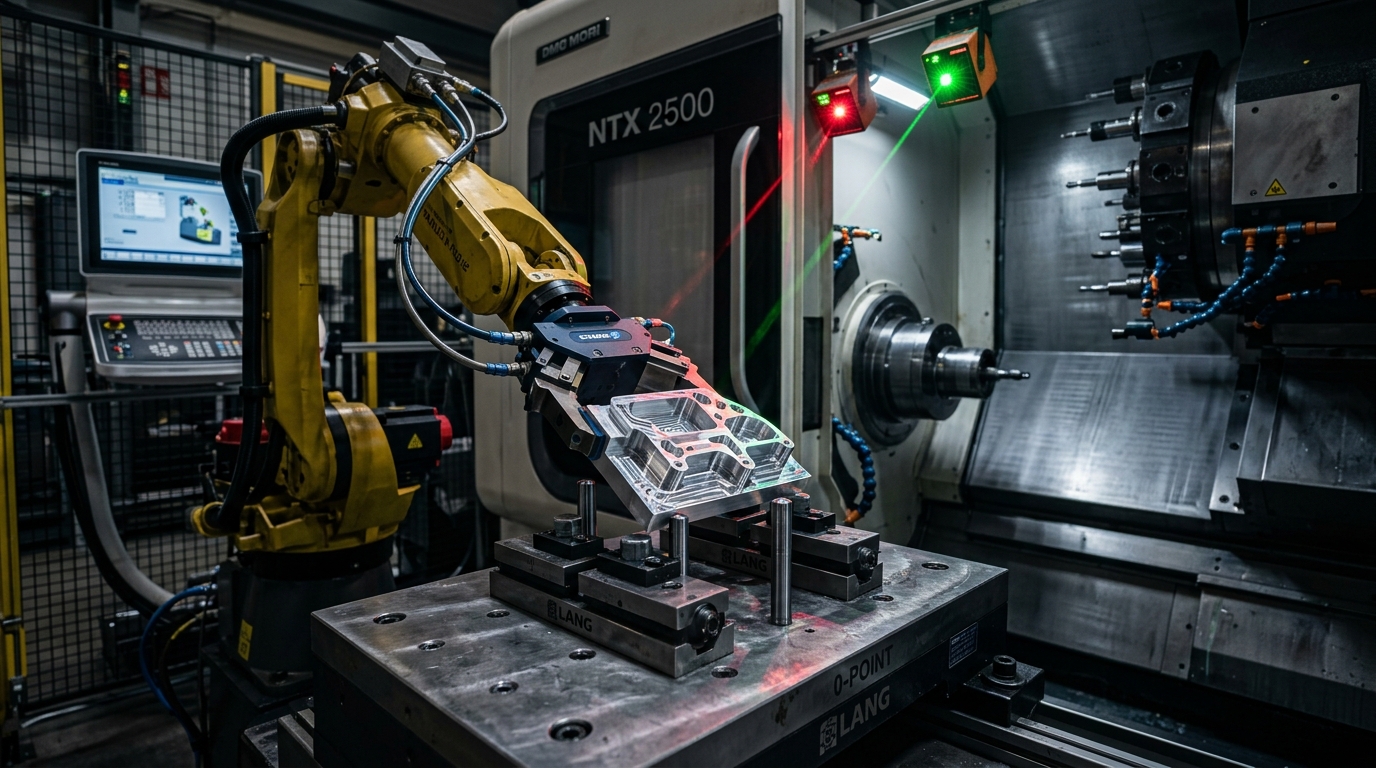
1. Pneumatic & Hydraulic Zero-Point Clamping
Zero-point clamping systems (such as LANG Quick-Point, Schunk Vero-S, and Erowa) represent the cornerstone of modern palletized automation. Rather than aligning workpieces directly on the machine table, parts are pre-clamped onto standardized pallets outside the machine envelope. The pallet is loaded into a pneumatic or hydraulic zero-point receiver in seconds, achieving repeatability of < 0.005 mm (< 0.0002 in) without re-probing work datums.
2. Multi-Sided Tombstone Workholding for 4-Axis & 5-Axis Centers
Mounted onto horizontal machining centers (HMCs) or 5-axis trunnion tables, cast iron or hardened steel tombstones allow 4 to 16 parts to be held simultaneously across multiple faces. By pairing tombstones with automated pallet pools, CNC spindles achieve duty cycles exceeding 85%, dramatically outpacing single-part setups.
3. Sensor-Integrated Smart Telemetry
True Industry 4.0 workholding incorporates active digital feedback:
- Part Seating Proximity Probes: Pneumatic back-pressure sensors verify that the workpiece is flush against locating datum pads before the CNC spindle can cycle start, preventing crashes caused by stray chips.
- Piezoelectric Clamping Force Sensors: Calibrated load sensors monitor clamping pressure in real-time, preventing thin-walled aluminum or plastic aerospace parts from crushing during roughing while ensuring zero slippage under heavy cuts.
4. Custom Soft Jaws & Vacuum Chucking
For delicate, thin-walled, or organic 3D contours, standard hard jaws induce stress concentrations and surface indentation. High-speed CNC machined aluminum or POM soft jaws distribute clamping loads evenly across curved surfaces. For sheet metal panels and flat optical plates, multi-zone porous ceramic vacuum chucks provide uniform downward suction without physical top clamps obstructing cutter access.
Engineering Comparison of Industrial Workholding Systems
Selecting the appropriate fixturing methodology is vital for balancing initial capital investment against setup efficiency and cycle throughput:
| Workholding Technology | Actuation Mechanism | Changeover Time | Locating Repeatability | Ideal Manufacturing Scenario |
|---|---|---|---|---|
| Zero-Point Pallet Systems | Pneumatic / Hydraulic Pull-Stud | < 30 Seconds | < 0.005 mm | Robotic cell loading, automated multi-axis lights-out machining |
| Multi-Sided Tombstones | Mechanical / Hydraulic Multi-Vise | 2 – 5 Minutes | ±0.010 mm | High-volume horizontal machining, batch production of prismatic components |
| Vacuum Grid / Porous Chucks | Continuous Vacuum Suction | 1 – 2 Minutes | ±0.015 mm | Thin aluminum plates, sheet metal brackets, optical acrylic light guides |
| Electro-Permanent Magnetic Tables | Electric Pulse Magnetization | < 1 Minute | ±0.010 mm | 5-sided milling of large ferromagnetic steel mold bases and plates |
| Custom Assembly & Checking Fixtures | Manual Toggle Clamps / Standoffs | < 1 Minute | < 0.005 mm | Metrology CMM inspection, go/no-go quality verification of complex stamped parts |
Custom Inspection Jigs & Checking Fixtures for Metrology
Workholding excellence extends beyond chip-making machine tools. High-precision manufacturing demands dedicated checking fixtures to verify critical dimensions on the factory floor:
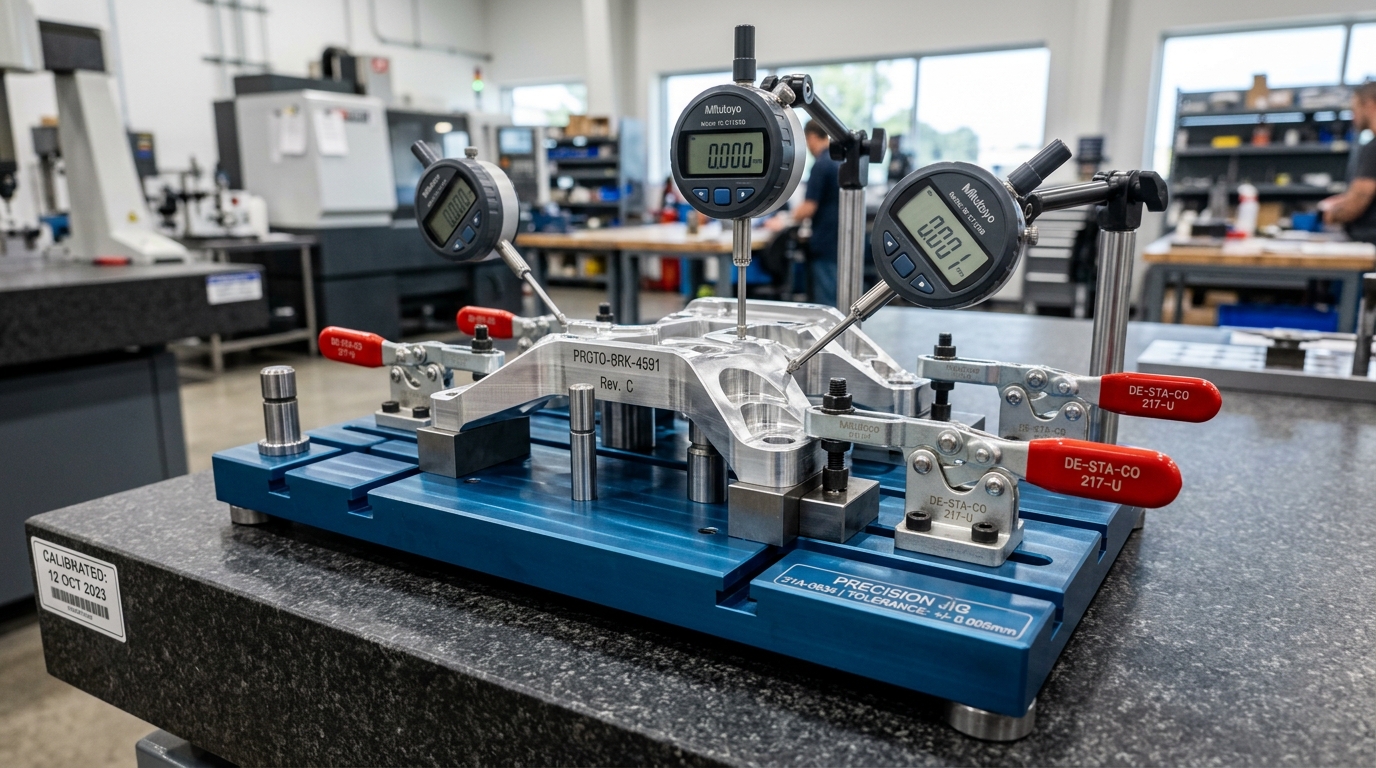
- Automotive & Aerospace Checking Fixtures: Built from hard-anodized 7075 aluminum tool plates and precision-ground D2 tool steel locating pins (hardened to 58–62 HRC), these fixtures locate complex stamped or molded parts at primary car-body datums.
- Integrated Dial Indicator Arrays & Flush-Pin Gauges: Utilizing Mitutoyo digital dial indicators or manual flush-pin stepped gauges, quality control inspectors can evaluate profile tolerances, hole true position, and gap/flushness in seconds.
- CMM Holding Fixtures: Lightweight, modular carbon-fiber and anodized aluminum holding jigs securely present parts to Zeiss 3D touch probes with zero geometric obstruction.
Design Best Practices for Automated CNC Fixtures
When engineering tooling for automated production cells, our team at AS Prototypes applies several vital design rules:
- Rigid 3-2-1 Locating Principle: Restrict all 12 degrees of freedom using 3 primary datum points on the largest plane, 2 secondary locating points, and 1 tertiary clocking stop.
- Swarf & Coolant Shedding Geometry: Design fixture bodies with steep 45° chamfers and generous chip evacuation channels. Pockets that collect chips will inevitably compromise part seating repeatability.
- Replaceable Wear Elements: Always isolate high-wear locating pads, diamond pins, and rest buttons onto replaceable hardened tool steel inserts rather than machining them monolithically into soft aluminum fixture bases.
- Integrated Air Blast Channels: Connect internal compressed air passages through the zero-point stud to purge the locating tapers immediately prior to pallet docking.
Custom Fixture & Tooling Fabrication at AS Prototypes
At AS Prototypes, we do not merely manufacture prototype parts; we engineer the precision tooling, custom jigs, and automated fixtures that make advanced production possible. Our Shenzhen tooling workshop provides end-to-end fixture design, precision CNC machining, vacuum heat treatment, slow-wire EDM cutting, and comprehensive CMM inspection reports.
Need Custom Jigs, Checking Fixtures, or Automated Workholding?
Submit your part CAD files (STEP/IGES) and tooling requirements today. Our experienced tooling engineers will deliver full DFM feedback, 3D fixture assembly concepts, and a rapid quotation within 24 hours.