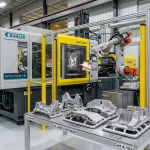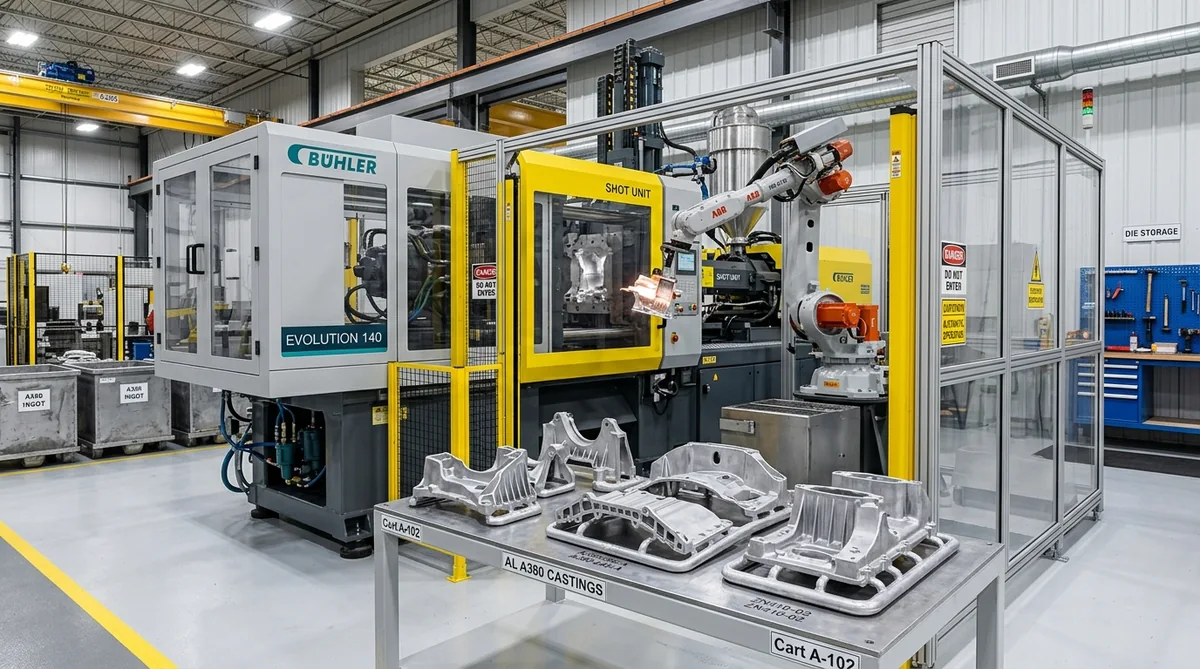
For high-volume metal parts, high pressure die casting (HPDC) delivers unmatched efficiency. It produces complex, thin-walled, and durable metal components. By injecting molten alloys under extreme hydraulic pressure, factories achieve rapid cycle times. Therefore, automotive and electronics manufacturers rely heavily on this process.
Unlike sand casting, the HPDC cycle operates at very high injection speeds. Specifically, velocities often reach 40 to 60 meters per second. This rapid injection fills thin walls before cooling begins. However, controlling turbulent fluid flow requires disciplined mold engineering.
How the High Pressure Die Casting Cycle Operates
The standard HPDC cycle follows five disciplined manufacturing steps:
- Die Preparation: Automated spray heads apply water-based lubricant to open cavity faces. This step cools the steel dies. Furthermore, it ensures smooth part ejection.
- Clamping and Ladling: Heavy hydraulic clamps lock both mold platens together securely. Clamping forces often range from 200 to 4,000 tons. Next, a robotic ladle pours molten metal into the shot sleeve.
- High-Speed Injection: A hydraulic plunger pushes the molten alloy forward in three distinct velocity phases. Finally, extreme intensification pressure packs the metal as it solidifies.
- Rapid Cooling and Ejection: Internal water lines extract thermal energy quickly. Once solidified, the die halves open. Subsequently, ejector pins push the casting clear.
- Trimming and Clean Up: Hydraulic trim presses shear off biscuits, runners, and overflow flash. Consequently, clean raw castings emerge ready for finishing.
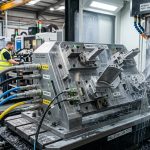
Transitioning from prototyping to volume manufacturing requires careful tooling planning. Our reliable rapid tooling and casting solutions bridge product design and mass production smoothly.
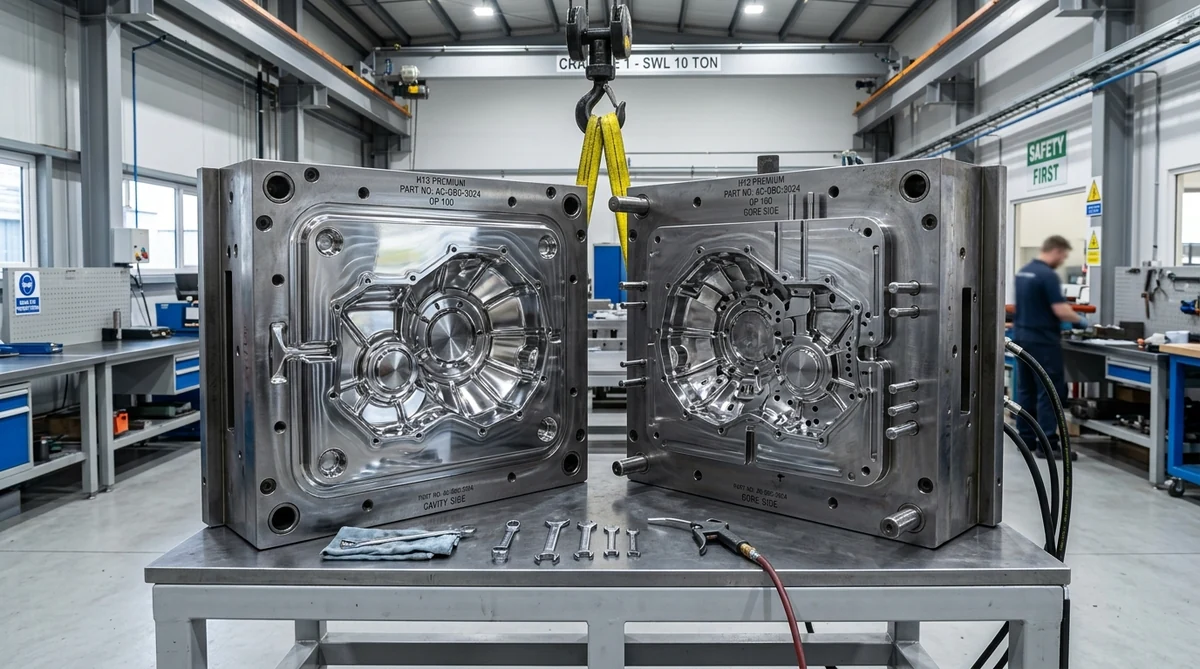
Cold Chamber vs. Hot Chamber Die Casting
Die casting machines utilize two distinct architectures depending on alloy melting temperatures:
- Hot Chamber Die Casting: The injection cylinder stays submerged in molten alloy. As a result, cycle times are extraordinarily rapid. However, this method suits only low-melting metals like zinc and magnesium. Molten aluminum would quickly attack the submerged steel cylinder.
- Cold Chamber Die Casting: Molten metal is ladled into an unheated sleeve for each cycle. Therefore, it easily accommodates aggressive aluminum alloys like A380 and A383. Although cycles take slightly longer, cold chamber machines produce rugged automotive structural parts reliably.
Common Non-Ferrous Alloys in HPDC
Selecting the right alloy requires balancing fluidity, yield strength, thermal conductivity, and cost. The comparison table below outlines key mechanical metrics for common die casting metals:
| Alloy Grade | Base Metal | Tensile Strength (MPa) | Yield Strength (MPa) | Elongation (%) | Thermal Conductivity (W/m-K) | Primary Industrial Application |
|---|---|---|---|---|---|---|
| A380 (ADC10) | Aluminum (Al-Si-Cu) | 324 | 160 | 3.5 | 96 | Gearbox housings, engine brackets, power tools |
| A383 (ADC12) | Aluminum (High Silicon) | 310 | 150 | 2.5 | 92 | Complex thin-wall electronics, LED heat sinks |
| Zamak 3 | Zinc (Zn-Al4) | 283 | 221 | 10.0 | 113 | Precision lock parts, connectors, decorative trim |
| AZ91D | Magnesium (Mg-Al9-Zn) | 230 | 150 | 3.0 | 72 | Ultra-lightweight aerospace shells, steering columns |
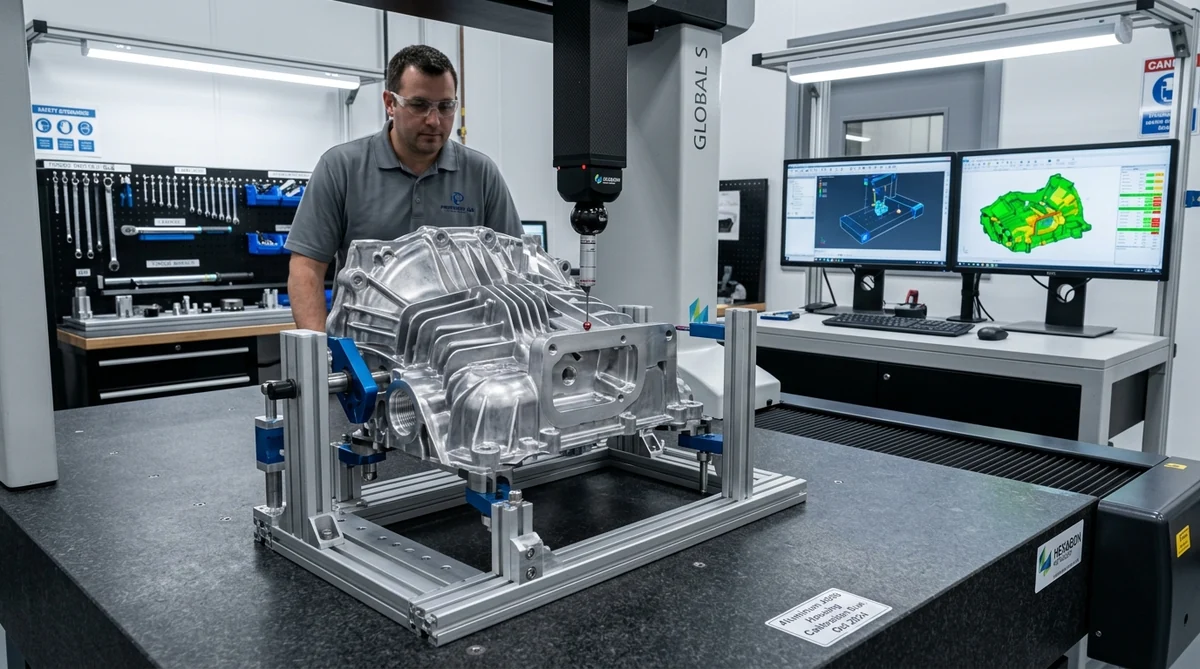
HPDC vs. Alternative Casting Methodologies
While high pressure die casting yields fast output, engineering teams must evaluate upfront tooling investment. The comparison below contrasts HPDC with low pressure and gravity permanent mold casting:
| Process Metric | High Pressure Die Casting (HPDC) | Low Pressure Die Casting (LPDC) | Gravity Permanent Mold Casting |
|---|---|---|---|
| Injection Pressure | Very High (30 – 120 MPa) | Low (0.02 – 0.1 MPa) | Atmospheric Gravity Only |
| Min Wall Thickness | 1.2 – 1.8 mm | 3.0 – 5.0 mm | 4.0 – 6.0 mm |
| Cycle Time | Fast (15 – 60 seconds) | Moderate (3 – 8 minutes) | Slow (5 – 15 minutes) |
| Dimensional Tolerance | ±0.1 mm to ±0.2 mm | ±0.3 mm to ±0.5 mm | ±0.5 mm to ±1.0 mm |
| Tooling Initial Cost | High (H13 Hardened Steel) | Moderate | Low to Moderate |
| Heat Treatment Feasibility | Limited (unless vacuum assisted) | Excellent (T6 heat treatable) | Excellent (Full T6 solutionizing) |
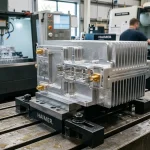
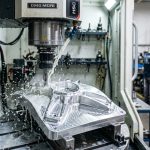
Precision bearing bores and seal glands often require tight finishing. In such cases, our post-cast CNC machining centers machine critical features down to ±0.005 mm.
Hot chamber machines keep the shot cylinder submerged in molten alloy. This design enables fast cycle times for zinc. In contrast, cold chamber machines ladle metal into a separate horizontal chamber. This arrangement prevents molten aluminum from eroding ferrous cylinder components.
We utilize advanced mold flow simulations to design chill vents, vacuum channels, and squeeze pins. Furthermore, maintaining intensification pressures above 800 bar ensures high internal density for pressure-tight housings.
Yes. Raw HPDC components routinely achieve tolerances within plus or minus 0.1 mm to 0.2 mm. However, critical bearing bores and ground mating faces are finished with precision CNC milling.
Scale Up Your Metal Castings with AS Prototypes
Looking to optimize your cast component for weight reduction, thermal management, or rapid production? AS Prototypes provides DFM analysis, mold design, HPDC production, and secondary CNC machining. Upload your 3D CAD files (STEP or IGES) for a thorough manufacturing assessment and quotation within 24 hours.