Robotics Prototyping & Precision Manufacturing Services
Robotic joints, end-effectors, and autonomous mobile robot (AMR) chassis demand maximum rigidity-to-weight ratios and micron-level bearing alignments. AS Prototypes machines high-dynamics robotic components that eliminate backlash, withstand high torsional loads, and accelerate robotic product deployment.
1. The Critical Role of Prototyping and Quick Production in Robotics Development
The creation of new robotics products is traditionally an expensive and lengthy process. However, modern strategies in the progression from concept to commercialization are revolutionizing how these products are launched, focusing on both efficiency and cost reduction.
Rapid prototyping and manufacturing services offer a fast, dependable, and cost-effective way to produce both prototype models that maintain essential features and low-volume production parts for concept validation and market testing of robotic components and systems. This approach facilitates the exploration of innovative concepts, the collection of early user feedback, and the crafting of solutions tailored for specific robotic applications. These prototypes can then undergo testing in lab or real-world environments, expediting their introduction to the market. Moreover, this phase provides critical insights into future production processes, cost projections, schedule management, and quality control measures.
2. Optimal Strategies Enhanced by Prototyping and Manufacturing in Robotics Development
Develop concepts for robotics systems into a feasible scope, focusing on defining essential details and comprehensively grasping the design intent via proof-of-concept prototypes.
Visual presentation models enable designers to showcase the look and aesthetics of their robotic designs to colleagues, clients, and stakeholders, thereby fostering clear and actionable feedback.
Functional prototyping in robotics development, also known as Beta prototyping, allows for testing the form, fit, and function of components. This process helps refine design iterations and enhance system performance. It enables the identification and correction of issues early in the development cycle, significantly reducing business risk before finalizing the product.
Developing engineering prototypes that closely resemble the final robotics system simplifies the process of verifying design, engineering, and manufacturability. This step is crucial before committing significant resources to expensive tooling and production processes.
Rapid manufacturing and custom low-volume production of robotics systems serve as an effective bridge from prototype to full-scale production. This approach accelerates market entry and maintains cost-efficiency, facilitating a smoother transition to commercial availability.
3. Robotics-Automation Engineering Materials & Precision Specifications Matrix
Robotics Structural Materials, Kinematic Alloys & Engineering Polymers Matrix
High-load mechanical benchmarks, strength-to-weight ratios, friction coefficients, precision CNC tolerances, and robotic subsystem applications
| Material Designation | Material Class / Type | Tensile & Yield Strength | Density & Friction Coeff | Precision CNC Tolerance | Robotic Subsystem Applications |
|---|---|---|---|---|---|
| Aluminum 7075-T651 | High-Strength Aerospace Zinc-Alloy | Tensile: 570 MPa Yield: 503 MPa | 2.81 g/cm³ (High Strength-to-Weight) | ±0.005 mm | High-speed robot arm links, harmonic drive mounting flanges, AGV/AMR high-stress drive axles, drone booms. |
| Aluminum 6061-T6 | Structural Silicon-Magnesium Al | Tensile: 310 MPa Yield: 275 MPa | 2.70 g/cm³ (Anodize Friendly) | ±0.020 mm (ISO 2768-mK) | Collaborative robot (Cobot) outer links, base pedestal housings, pneumatic actuator mounts, sensor frames. |
| AISI 4140 Alloy Steel (Q&T) | Chromium-Molybdenum High-Torque | Tensile: 950–1100 MPa Case Hard: HRC 54–60 | 7.85 g/cm³ (High Fatigue Endurance) | ±0.005 mm | Planetary gearbox sun/planet gears, robot joint output splines, heavy-payload wrist shafts, high-torque couplings. |
| Stainless Steel 304 / 316L | Austenitic Washdown Stainless | Tensile: 580–620 MPa Yield: 290 MPa | 7.93 g/cm³ (Washdown & Cleanroom) | ±0.020 mm (ISO 2768-mK) | Food-grade delta robot pickers, pharmaceutical cleanroom arm shrouds, underwater ROV thruster housings. |
| POM-C / Acetal (Delrin) | Low-Friction Engineering Acetal | Tensile: 65 MPa Flex Modulus: 2800 MPa | 1.41 g/cm³ μ 0.20 (Self-Lubricating) | ±0.010 mm | Low-backlash spur gears, linear guide bushings, gripper finger slide pads, conveyor timing sprockets. |
| Carbon-Fiber PEEK (PEEK-CF30) | 30% Carbon-Fiber Reinforced PEEK | Tensile: 220 MPa Flex Modulus: 18 GPa | 1.44 g/cm³ (Extreme Inertia Reduction) | ±0.020 mm (ISO 2768-mK) | Ultra-fast delta robot end-effectors, vacuum suction tool heads, dynamic vision sensor mounting brackets. |
4. On-Demand Manufacturing Capabilities for Robotics Automation
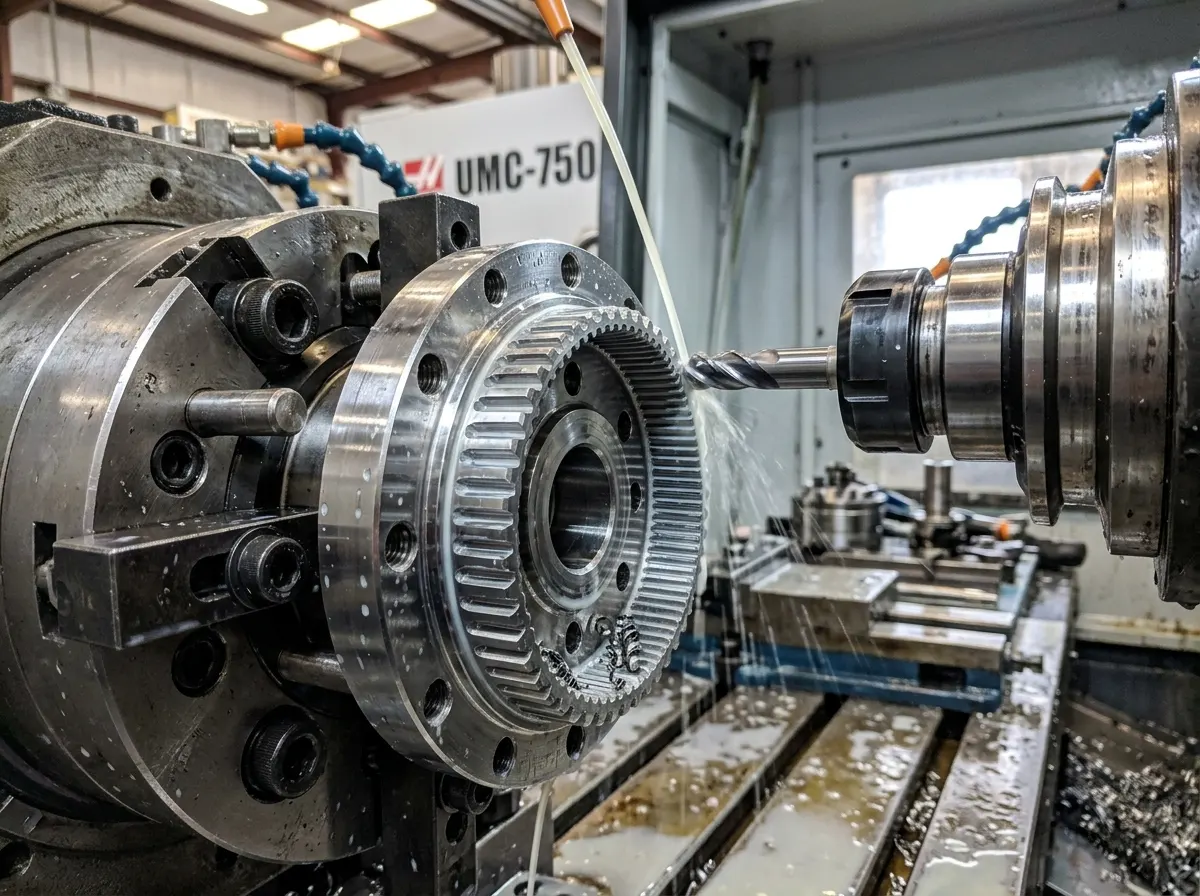
CNC Machining for Robotics Components
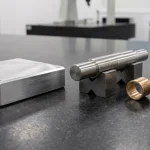
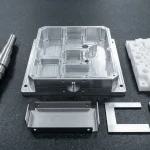
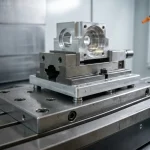
CNC machining is a critical technology in the robotics industry, facilitating the precise and efficient production of complex components essential for various robotics applications. At AS Prototypes, we specialize in CNC machining, employing premium materials such as aluminum and stainless steel to meet exacting specifications with high tolerances. This capability ensures that our machined parts, including robot structural elements and mechanical linkages, meet the rigorous demands of the robotics sector.
Typical applications: 5-Axis Thin-Wall Lightweight Robotic Arm Links (Monolithic Links), Harmonic Drive Reducer Flexsplines (40CrMo), Wave Generator Elliptical Cams, RV Cycloidal Pinwheels & Pin Gear Housings, Precision Servo Motor End-Bells, and Kinematic Joint Mounts.
Typical materials: Aerospace Aluminum 7075-T651 / 6061-T6, Alloy Steel 40CrMo / 4140, Bearing Steel GCr15 (52100), Titanium Ti-6Al-4V, and Engineering PEEK.
3D Printing for Robotics Components
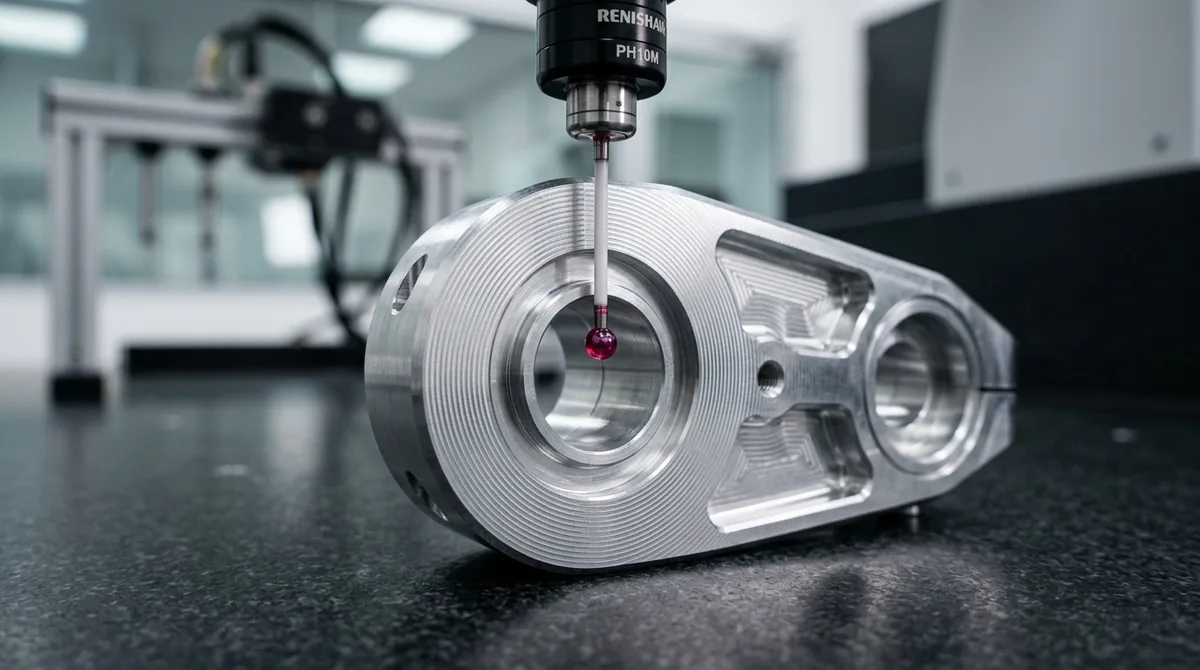
3D printing is revolutionizing the robotics industry at AS Prototypes by enabling the rapid production of complex, customized components such as robot-specific parts, advanced polymers, and precisely tailored robotic tools. We specialize in utilizing robotics-grade materials to ensure each product not only meets precise specifications but also adheres to the highest quality and safety standards required in robotics applications. Typical materials: Titanium, Aluminum, Stainless Steel, Nickel, Polymers (PEEK, ABS), Advanced Composites, and Technical Ceramics.
Typical applications: Actuator Housings, Gripper Assemblies, Chassis Parts, Custom Gears, Structural Supports, Heat Dissipation Systems, Sensor Casings, and Robotic End Effectors.
Vacuum Casting for Robotics Components
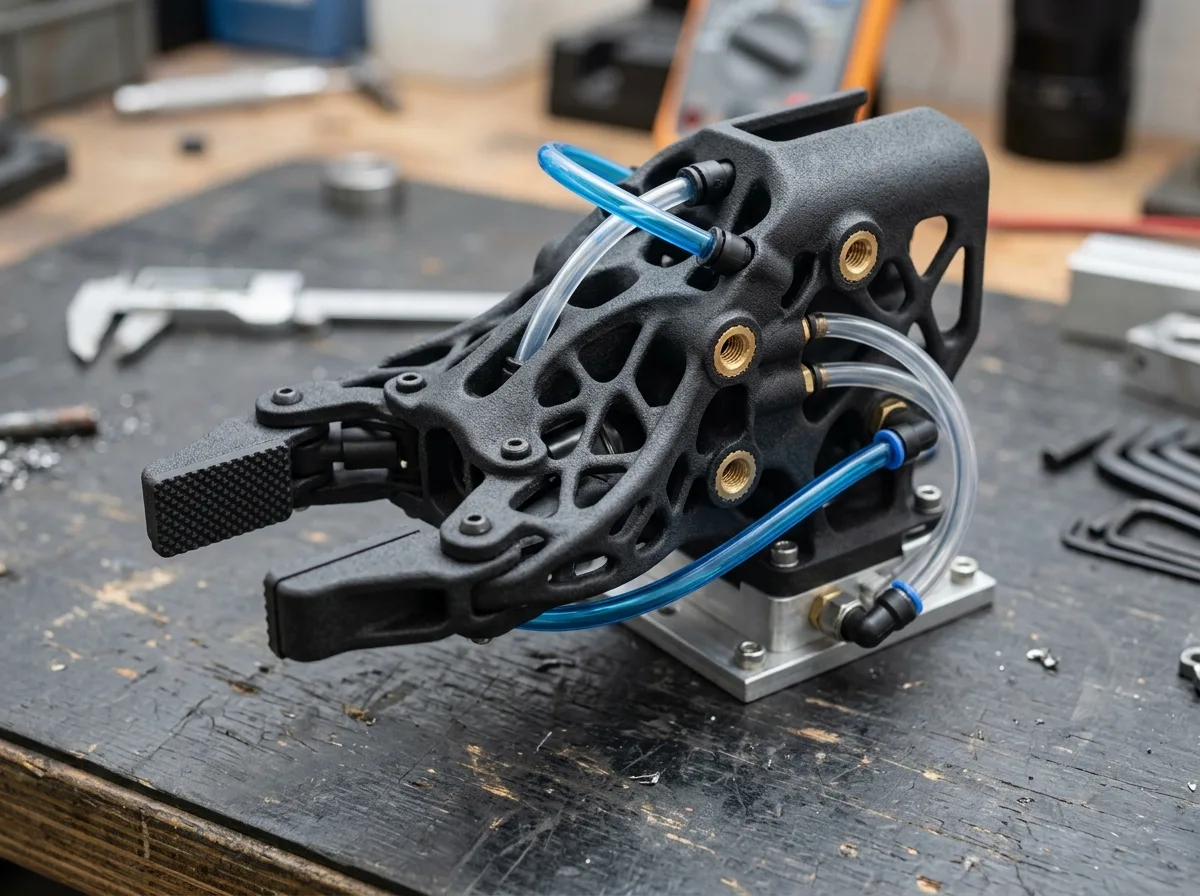
Polyurethane casting presents numerous benefits and applications, making it a valuable technique for the robotics industry, particularly for low-volume production of robotics component housings. This method is ideal for initial product launches before investing in injection molding and tooling, allowing for market research and gathering customer feedback. It also facilitates the early delivery of robotics components. In markets characterized by fast-paced innovation and short product lifecycles, silicone molding used to cast urethane enables manufacturers to quickly iterate and refine their designs without the need to recoup the costs associated with hard tooling. Typical applications: Handheld Robot Teach Pendant Enclosures (Flame-Retardant UL94-V0), LiDAR & Vision Sensor Protective Bumpers (Shore 60A-80A), Dual-Shot Overmolded Ergonomic Grips, and Rapid Pre-Series Robot Cowlings.
Typical materials: Flame-Retardant Polyurethane (UL94-V0), Tough Impact-Resistant ABS-like Polyurethane, Cast Silicone Elastomers (Shore 30A to 80A), and High-HDT Engineering Resins.
Rapid Injection Molding for Robotics Components
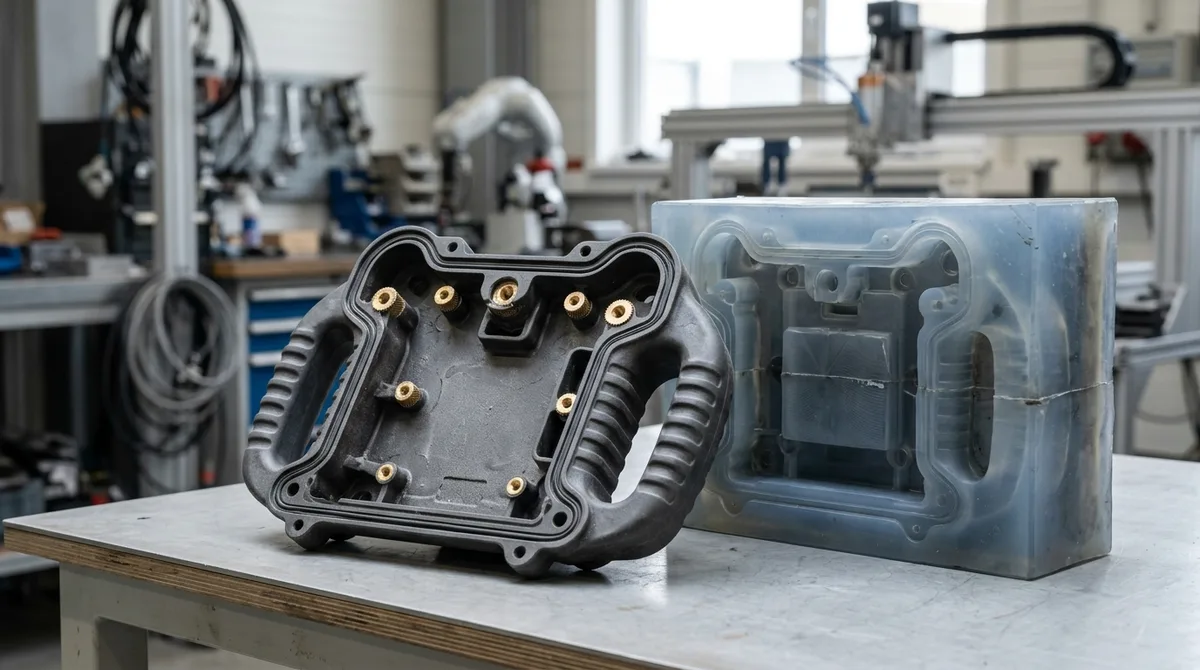
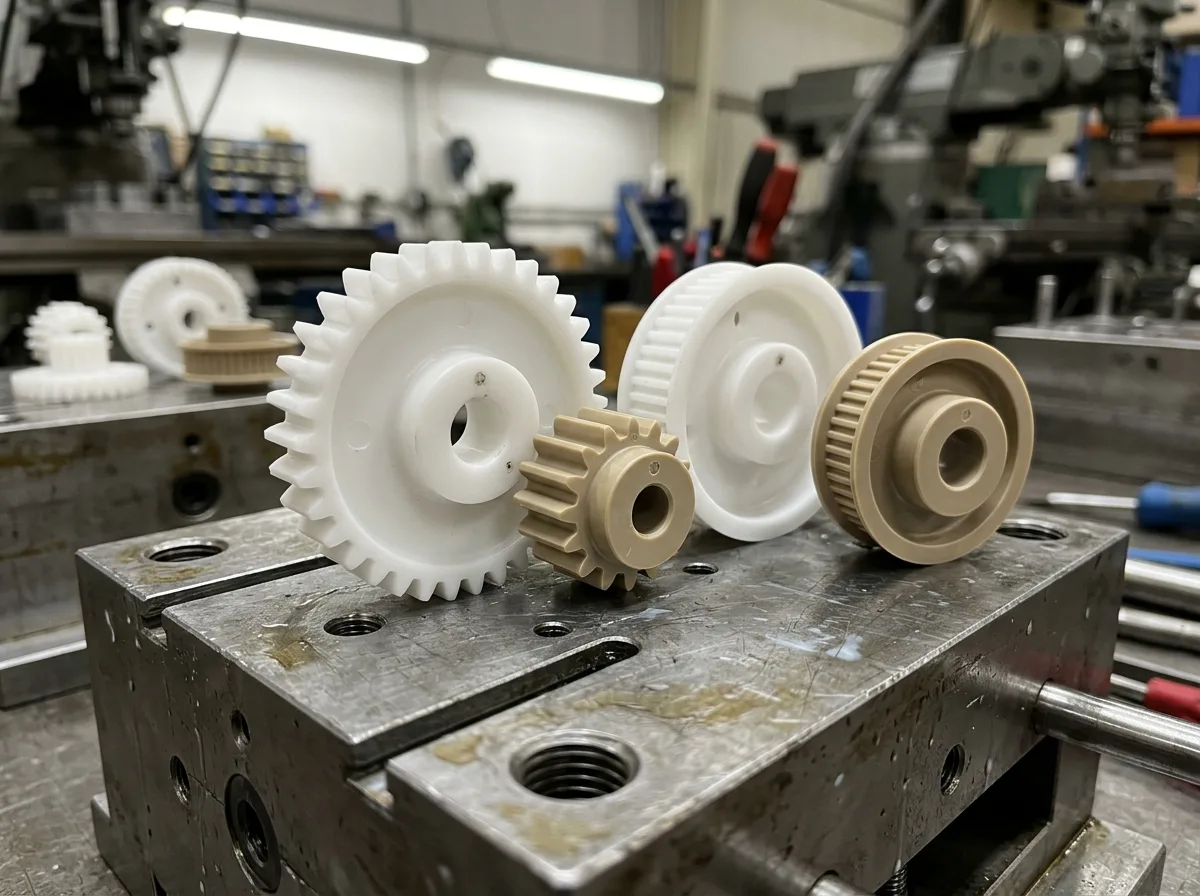
Rapid injection molding is an optimal solution for robotics manufacturers requiring low-volume molded parts. It effectively supports manufacturability analysis, engineering tests, operational evaluations, investor demonstrations, and readiness for production in the advanced phases of robotics component development. Additionally, it serves as an intermediary between prototyping and full-scale production, allowing for the early detection and resolution of issues before transitioning to manufacturing.
Typical applications: Precision High-Wear POM / Delrin and PEEK Spur Gears, Timing Belt Pulleys, Anti-Backlash Planetary Gear Carriers, Internal Wire Routing Spools, and Friction-Resistant Sliding Bearings.
Typical materials: POM (Polyoxymethylene / Delrin 100P/500P), Wear-Resistant PEEK 450G, Glass-Filled Nylon (PA66-GF30), Impact Polycarbonate, and Self-Lubricating Polymers.
Sheet Metal for Robotics Components
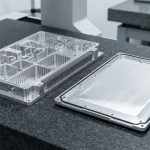
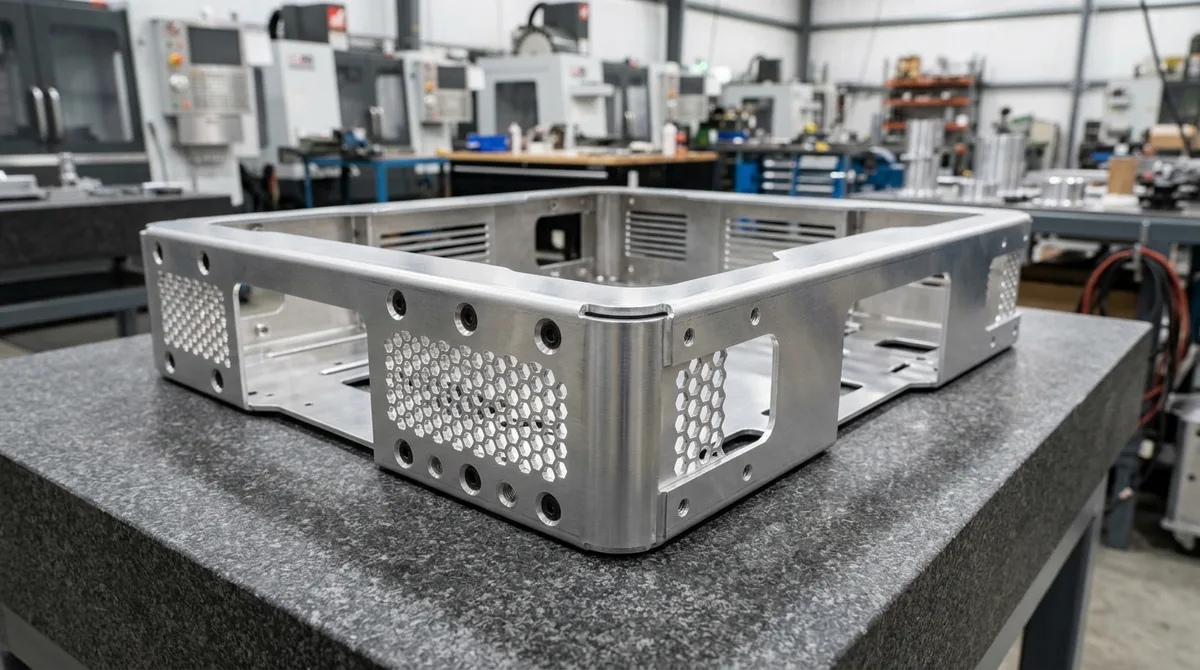
Sheet metal fabrication is a critical technique in the production of robotics components, emphasizing precision and adaptability. This process involves cutting, bending, and assembling metal to create components for devices ranging from robotic frames to enclosures for electronic systems. The ability to meet exact specifications and maintain high tolerances makes sheet metal ideal for complex robotics applications. Additionally, materials like aluminum used in this process are lightweight and corrosion-resistant, supporting the stringent durability and safety standards required in robotics settings. Typical applications: Autonomous Mobile Robot (AMR) Heavy-Duty Base Chassis, AGV Battery Pack Trays, Vibration-Damped LiDAR & Sensor Mounting Towers, Laser-Cut Ventilation Louver Panels, and Internal Electronic Bay Subframes.
Typical materials: Aluminum 5052-H32 / 6061-T6, Stainless Steel 304 / 316L, and Cold-Rolled SPCC Steel with Passivated or Powder-Coated Finishes.
Harmonic Drive Precision & Bearing Bore Fits (C3 Clearance)
In high-dynamic robotic arm joints and AGV drive modules, eliminating angular backlash requires micron-level control over bearing seat bores (H6/h5 fits held within ±0.005 mm) and harmonic gear housing concentricity. To prevent motor shaft binding during thermal expansion, AS Prototypes incorporates engineered C3 radial internal clearances and validates bearing journal runout (TIR ≤ 0.008 mm) on our climate-controlled Zeiss CMM.
Robotics Precision Manufacturing Turnaround & Quality Assurance Schedule
Comprehensive 3D CAD analysis, toolpath machinability check, bearing fit GD&T verification, and native raw material Mill Test Reports (MTR) verification.
Bare machined 7075-T6 monolithic arm links, MJF PA12 lightweight gripper assemblies, and kinematic fit-check functional prototypes.
Includes Type II/III Hardcoat Anodizing (25–50 μm), electroless nickel plating, precision helicoil inserts, and laser marking.
Scalable manufacturing from 10 to 1,000+ units with on-demand Zeiss CMM runout, true position, and full FAIR dimensional inspection.
Ready to Prototype or Scale High-Dynamics Robotics & Automation Systems?
AS Prototypes empowers robotics developers and automation integrators with precision 5-axis CNC machining, micro Swiss-type turning, and carbon-reinforced 3D printing. Critical mounting features on monolithic robotic arm links, harmonic drive flexsplines, and cycloidal gear housings are verified for concentricity and true position on our precision CMM (available upon request).
Frequently Asked Questions
What tolerances can AS Prototypes hold on robotic actuator housings and bearing bores?
We hold bearing bore tolerances down to ±0.005 mm (ISO H6/h5 fits) on high-speed CNC milling and turning centers, verified via Zeiss CMM inspection (available upon request). Dynamic runout is kept within 0.008 mm for continuous high-speed cycloidal drives.
What is the typical lead time for custom robotic prototypes?
Functional CNC prototypes are delivered within 4 to 8 business days ex-factory. Parts requiring specialized surface finishes (anodizing, chemical conversion, or heat treatment) take 7 to 12 business days.