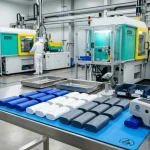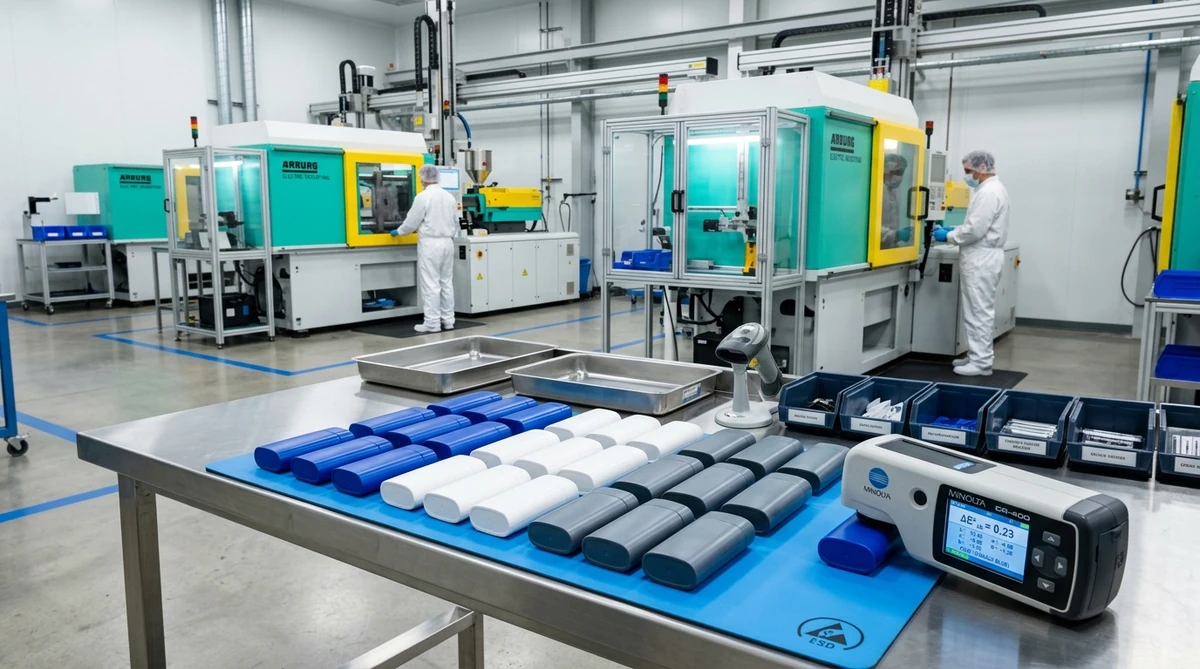
Maintaining reliable injection molding color consistency across high-volume production batches is vital for brand integrity. When assembling multi-piece plastic enclosures, even slight chromatic shifts look unprofessional to consumers. Therefore, medical device and consumer electronics manufacturers mandate strict quantitative color verification.
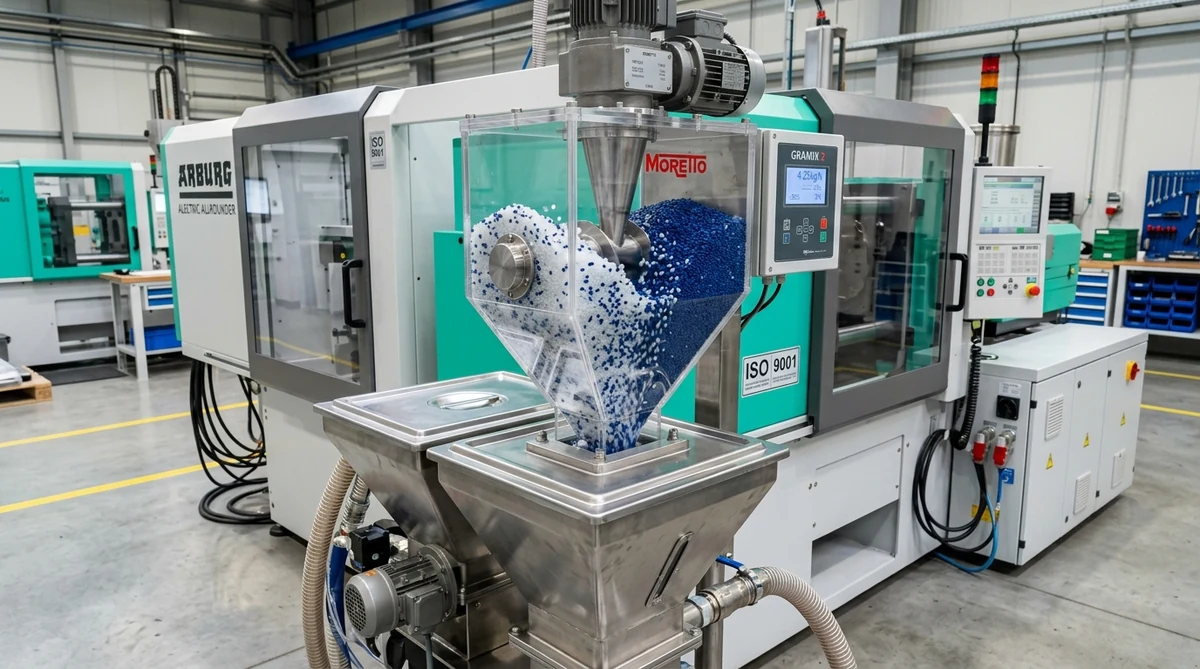
Color variation in molded plastics stems from complex interactions. Specifically, pigment dispersion, barrel heat history, screw shear, and ambient humidity all impact appearance. At AS Prototypes, our precision injection molding services employ closed-loop gravimetric dosing and spectrophotometer audits to eliminate shade drifting.
Understanding Quantitative Color Measurement: The CIELAB Standard
Visual inspection under ambient room light is subjective and unreliable. Consequently, modern quality assurance relies on the international CIELAB color space. A spectrophotometer projects standard D65 daylight onto the molded specimen. It calculates three distinct chromatic coordinates:
- L* (Lightness): Measures luminance from 0 (pure black) to 100 (diffuse white).
- a* (Red/Green Axis): Positive values indicate red, while negative values indicate green.
- b* (Yellow/Blue Axis): Positive values represent yellow, while negative values represent blue.
The total color difference is expressed as Delta E. In high-precision cosmetic enclosures, engineers target a Delta E below 0.8. In contrast, values above 1.5 become noticeable to untrained human eyes under retail lighting.
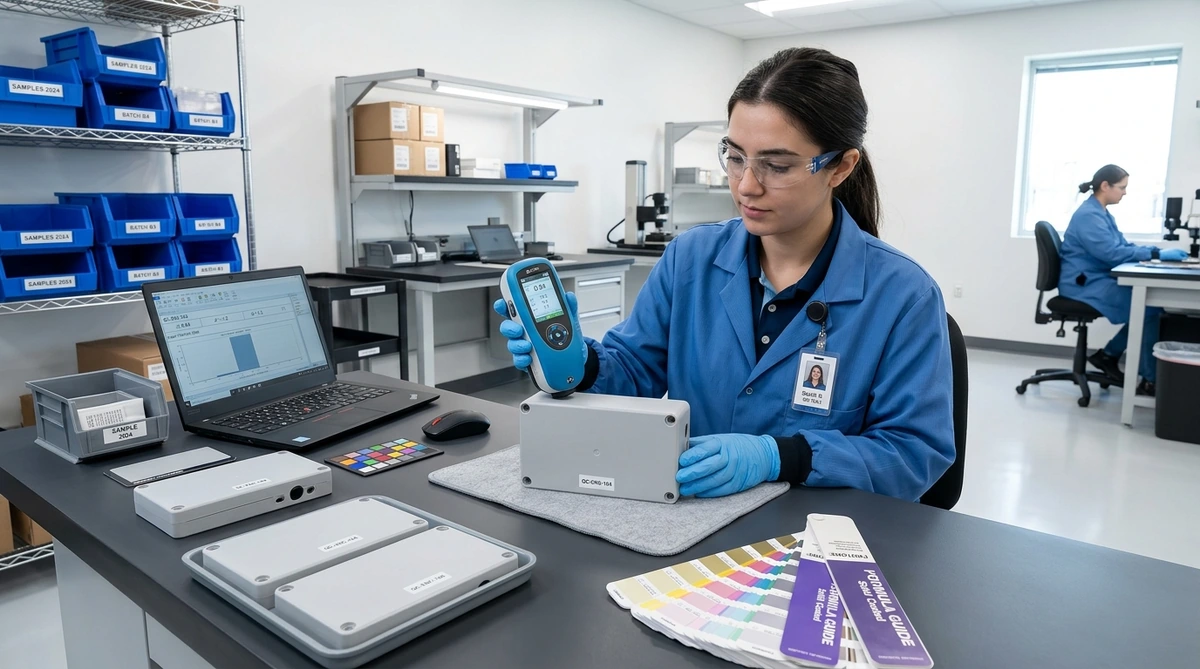
Comparing Plastic Colorant Methodologies
Selecting the appropriate color delivery method directly influences batch repeatability and scrap rates. The table below compares the four primary coloring systems used in production:
| Colorant Methodology | Physical State | Standard Let-Down Ratio | Color Uniformity | Best Production Fit |
|---|---|---|---|---|
| Pelletized Masterbatch | Solid base-polymer-specific carrier pellets (avoid universal EVA/PE carriers in engineering resins to prevent delamination and splay) | 1% – 4% | High (requires proper screw mixing) | Medium to high volume serial molding |
| Pre-Compounded Resin | 100% pre-colored resin pellets | 100% (ready to mold) | Exceptional (flawless dispersion) | Critical optical and medical assemblies |
| Liquid Colorants | Viscous liquid carrier | 0.5% – 2% | Very High (rapid blending) | Translucent PET bottles and thin caps |
| Dry Pigment Powder | Raw micronized powder | 0.1% – 1% | Moderate (prone to dusting/streaks) | Low-cost commodity utility items |
When prototyping pre-series parts before tooling, our polyurethane vacuum casting for color prototypes offers fast Pantone matching.
Troubleshooting Common Molding Color Defects
Color instability usually points to thermal degradation, uneven mixing, or contamination. The troubleshooting guide below presents rapid shop-floor diagnostics and solutions:
| Visual Color Defect | Root Physical Mechanism | Immediate Processing Adjustment | Permanent Mechanical Fix |
|---|---|---|---|
| Color Streaking / Swirls | Incomplete pigment dispersion in the melt | Increase back pressure and screw rotation speed | Install a dispersive mixing screw tip |
| Thermal Discoloration (Yellowing) | Polymer oxidation from excessive residence time | Lower barrel and hot runner zone temperatures by 10°C to 15°C; execute complete purge cycles. Downsize barrel shot capacity and eliminate dead spots in hot runner manifold to prevent pigment degradation. | Downsize barrel capacity to match shot size |
| Batch-to-Batch Drift | Volumetric feeding errors or regrind ratio shifts | Recalibrate feeding auger and test raw moisture | Switch to loss-in-weight gravimetric blenders |
| Gloss Inconsistency | Uneven mold steel surface temperatures | Increase mold cooling water flow rates | Add conformal cooling lines across thick ribs |
Practical Best Practices for Engineering Teams
To secure flawless injection molding color consistency across global supply chains, engineers should adopt three golden protocols:
- Mandate Specific Physical Swatches: Never specify colors using on-screen RGB or CMYK images. Instead, provide physical Pantone or RAL plastic swatch plaques for calibration.
- Limit Regrind Percentages: Thermal recycling degrades heat stabilizers and shifts base polymer yellowness. Therefore, cap regrind at a maximum of 10% for cosmetic components.
- Employ Automated Gravimetric Dosing: Volumetric screw feeders fluctuate as bulk density varies. In contrast, gravimetric blenders weigh every gram continuously, maintaining strict color ratios.
For critical cosmetic housings, engineers typically specify a Delta E below 0.8 to 1.0 against the approved master chip. For non-cosmetic interior structural components, a Delta E up to 2.0 is often acceptable.
When molten resin remains inside a heated barrel during prolonged cycle delays, polymers undergo thermal oxidation. Consequently, heat-sensitive pigments shift toward darker or yellowish tones.
Reground plastic has already experienced thermal degradation and shear stress. Mixing varying ratios of regrind changes the base resin yellowness index, creating unpredictable chromatic drift.
Achieve Perfect Color Consistency with AS Prototypes
Struggling with color variation, gate blush, or splay on custom molded parts? AS Prototypes provides scientific injection molding, custom Pantone color compounding, and spectrophotometer verification for every production run. Upload your 3D CAD files today. Our engineers provide expert DFM guidance and quotes within 24 hours.