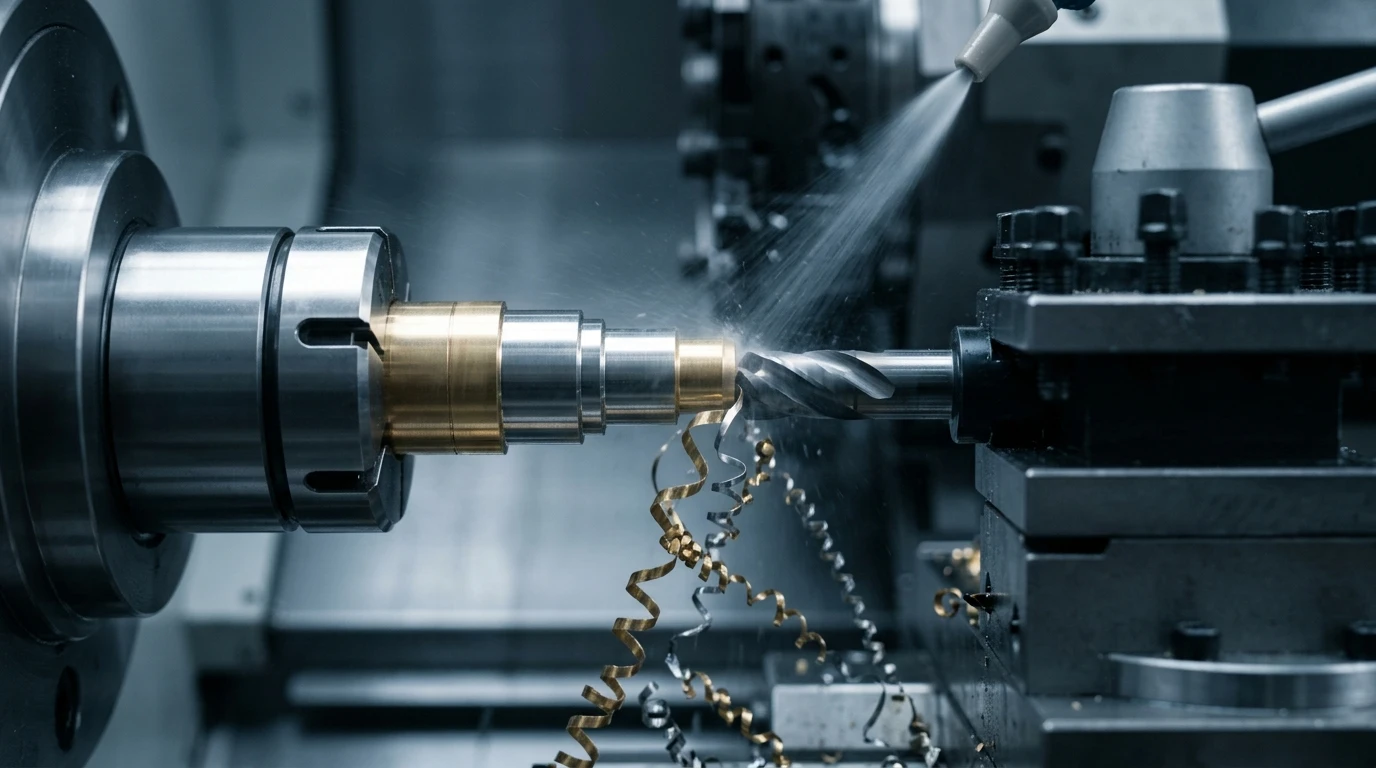
Transforming an innovative hardware concept into a commercially viable, mass-producible product is rarely a linear journey. Hardware startups and enterprise R&D engineering teams routinely navigate a multi-stage gauntlet known as the New Product Introduction (NPI) cycle. At each stage—from early exploratory Proof of Concept (PoC) models through rigorous Engineering Validation (EVT), Design Validation (DVT), and Production Validation (PVT)—the functional requirements placed upon physical prototypes shift dramatically.
One of the most frequent and costly mistakes in hardware development is misaligning the manufacturing process with the project’s current validation gate. Committing $20,000 to production-hardened steel tooling during early ergonomic discovery freezes design iterations prematurely. Conversely, relying on brittle, hygroscopic 3D prints for dynamic drop testing, thermal dissipation analysis, or EMI shielding leads to false failures, wasted engineering hours, and delayed investor milestones.
In this comprehensive engineering guide, AS Prototypes deconstructs how to manage complex hardware prototyping projects. We examine the four standard NPI development phases, evaluate the four primary rapid manufacturing technologies, and outline the decision frameworks required to select the optimal manufacturing pathway at every step of your product roadmap.
The 4 Critical Gates of Hardware Product Development
Successful hardware engineering follows a structured, stage-gated development methodology designed to de-risk mechanical, electrical, and thermal architectures systematically:
- Gate 1: Proof of Concept (PoC) / “Looks-Like” Prototypes: Primary objectives are validating industrial design aesthetics, spatial proportions, hand ergonomics, and investor pitch demonstrations. Mechanical strength and dimensional tolerances are secondary; speed of turnaround (4 to 8 business days) and low unit cost are paramount.
- Gate 2: Engineering Validation Testing (EVT) / “Works-Like” Prototypes: Validates fundamental mechanical function, internal component packaging, thermal performance, PCB mounting, and structural integrity under static load. Parts must match production material properties (e.g., Al 6061-T6, Delrin POM, Stainless Steel) and achieve tolerances down to ±0.01 mm.
- Gate 3: Design Validation Testing (DVT) / Pre-Tooling Verification: Focuses on regulatory compliance testing (FCC, CE, UL, RoHS), environmental stress testing (thermal shock, vibration tables, drop testing, IP67/IP68 ingress protection), and initial consumer focus group evaluations. Workpieces must represent final production materials, surface finishes, and snap-fit mechanics (10 to 100 units).
- Gate 4: Production Validation Testing (PVT) / Bridge-to-Mass-Production: Verifies production tooling, assembly jig ergonomics, cycle times, and statistical process capability (Cpk ≥ 1.33). Typical batch quantities range from 100 to 5,000 units, bridging the gap until high-cavitation steel production molds are qualified.
The 4 Core Prototyping Technologies: Capabilities & Trade-Offs
1. Additive Manufacturing (Industrial 3D Printing)
Additive manufacturing builds components layer-by-layer directly from digital 3D CAD geometry with zero tooling or fixturing investment. In professional hardware prototyping, three technologies dominate:
- Stereolithography (SLA): Utilizes an ultraviolet laser to cure liquid photopolymer resins. Exceptional for smooth surface finishes (Ra ≈ 1.6 μm), optical-grade transparent lenses (PMMA-like), and complex aesthetic concept models. However, SLA parts suffer from UV aging, embrittlement over time, and lower heat deflection temperatures (HDT).
- Selective Laser Sintering (SLS): Sinters thermoplastic powders (typically Nylon PA12 or PA11) into robust, semi-functional parts without requiring support structures. Ideal for complex interior snap-latches, internal ducting, and living hinges.
- Direct Metal Laser Sintering (DMLS): Melts metallic powders (AlSi10Mg, 316L, Ti-6Al-4V) to produce organic, topology-optimized aerospace components with internal conformal cooling passages un-machinable by conventional subtractive tools.
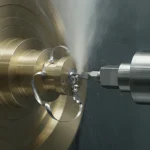
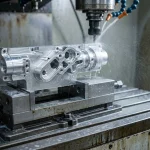
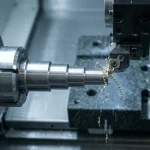
2. Subtractive Precision CNC Machining & Wire EDM
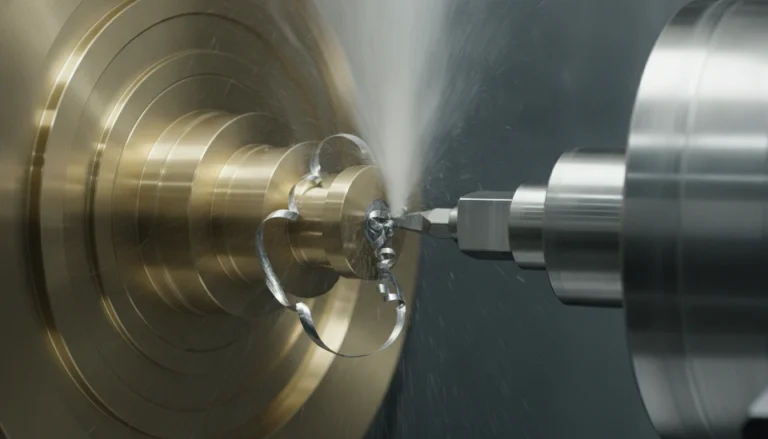
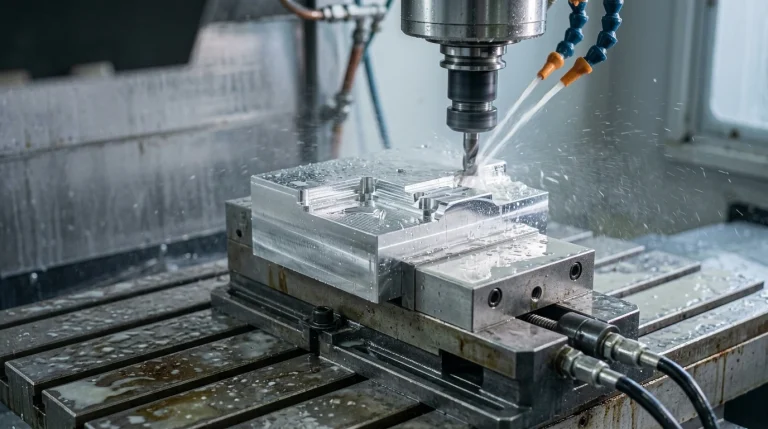
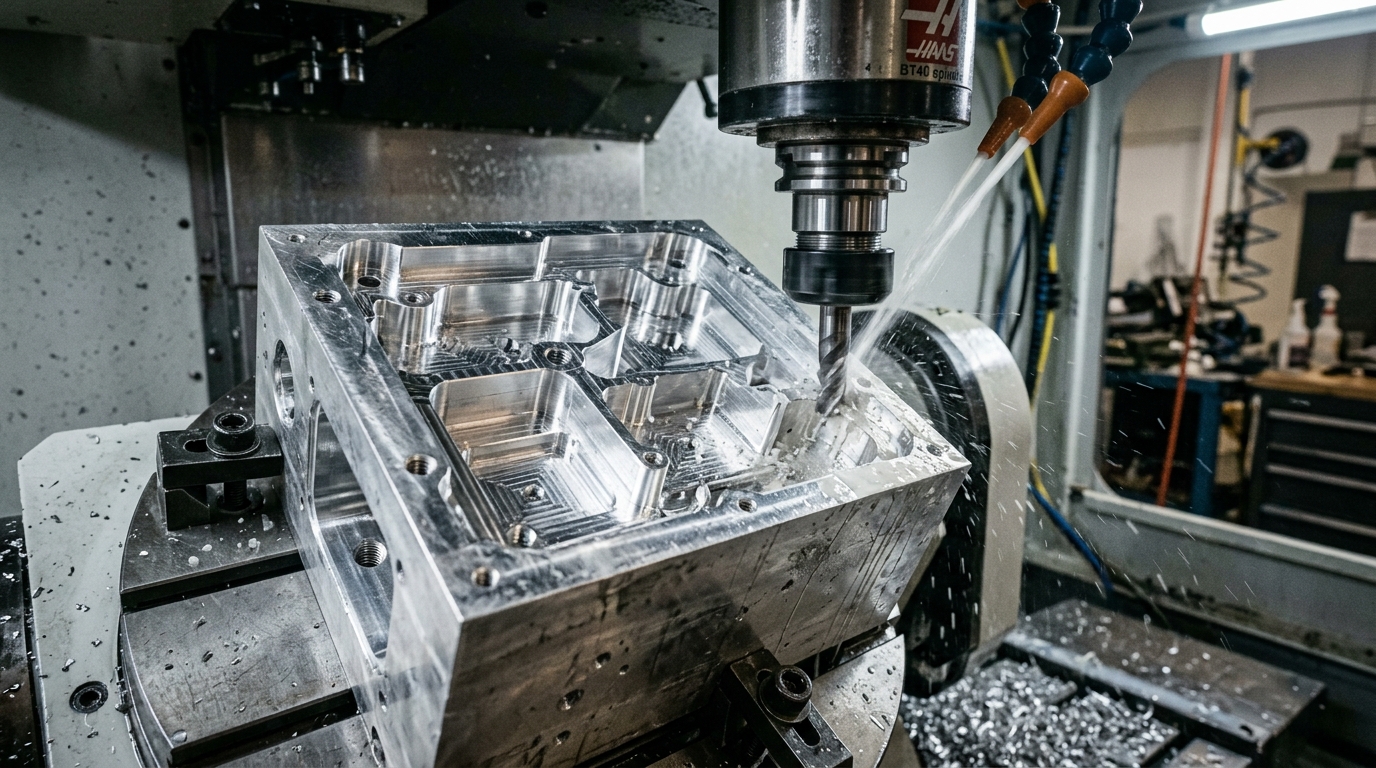
CNC machining is the indisputable foundation of functional EVT and DVT engineering validation. By cutting parts directly from traceable, solid extruded virgin billet stock, CNC machining guarantees 100% isotropic mechanical properties with zero porosity or interlayer weak planes:
- Unmatched Dimensional Precision: Multi-axis CNC milling and high-speed CNC turning hold true precision tolerances of ±0.010 mm to ±0.020 mm (conforming to ISO 2768-fH), with specialized jig grinding and slow-feeding Wire EDM deployed on dedicated bearing seats to hold ±0.005 mm.
- True Engineering Materials: Full spectrum of industrial metals (Aluminum 6061-T6, 7075-T7351, Stainless Steel 303/304/316L, Brass C360, Titanium Grade 5) and high-performance engineering plastics (Delrin POM, PEEK, PBT, Polycarbonate, PTFE).
- Precision Wire EDM Integration: For features impossible to cut with rotating end mills—such as zero-radius sharp internal corners, narrow deep heat-sink fins, and precision internal spline keyways—Wire Electrical Discharge Machining (EDM) achieves pristine sub-micron finishes.
3. Polyurethane Vacuum Casting (The Low-Volume Prototype Hero)
When an engineering team requires 10 to 50 functional plastic parts with production-grade surface textures and molded-in colors, investing in steel injection molds is cost-prohibitive. Silicone rubber vacuum casting bridges this critical gap:
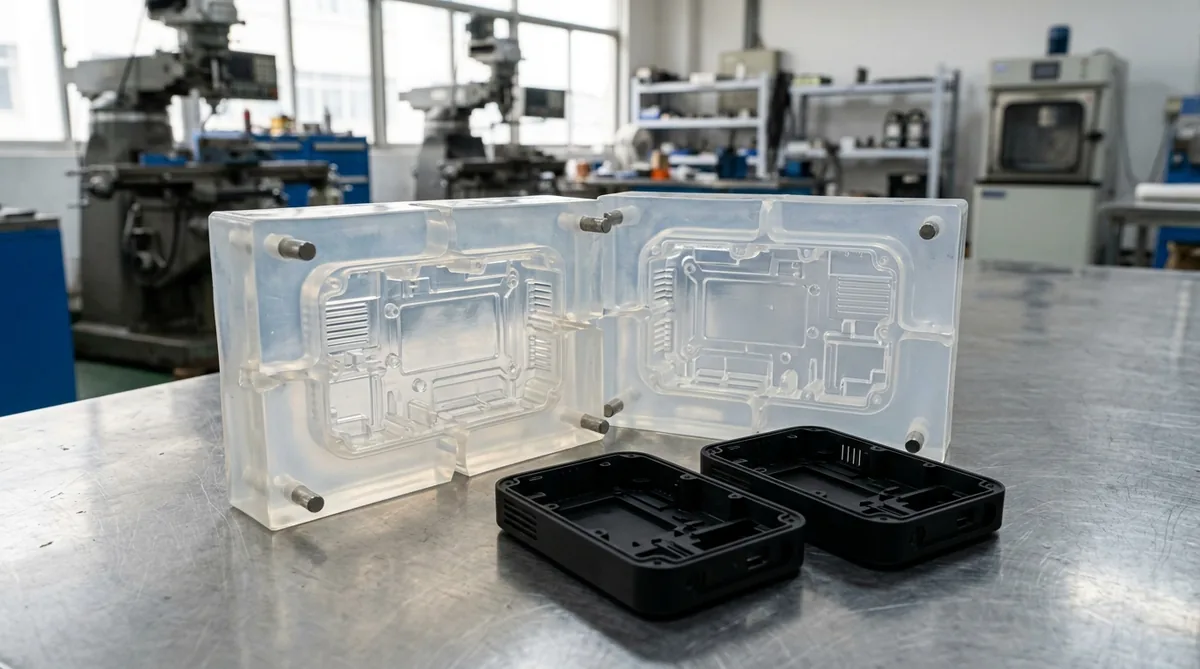
- Silicone Master Molds: A master pattern (typically CNC-machined or high-resolution SLA) is encapsulated in liquid silicone rubber. Once cured, the mold is cut open along the parting line, yielding a soft mold capable of casting 15 to 25 copies before silicone degradation.
- Engineered Polyurethane Formulations: Two-part polyurethane resins chemically replicate production thermoplastics: ABS-equivalent resins (high impact resistance), PP-equivalent resins (flexible with living hinge capability), transparent PC-equivalent resins (high clarity), and elastomeric Shore 30A to 90A rubbers.
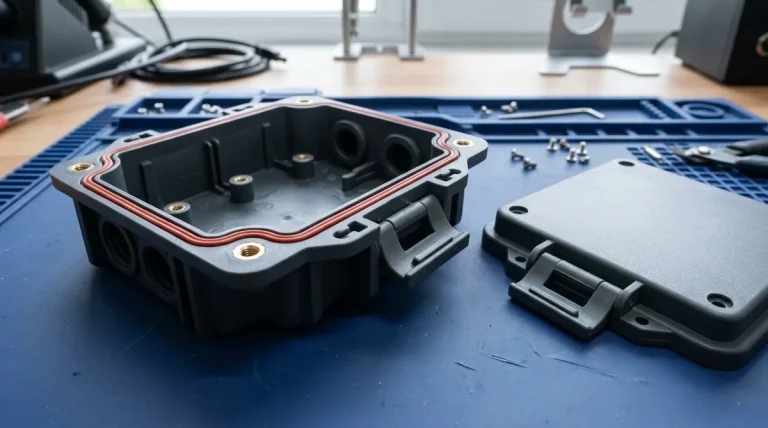
- Co-Molding & Overmolding: Overmolding soft rubber grips onto rigid plastic chassis, installing threaded brass inserts, and casting custom colors with mold-textured VDI/SPI finishes directly in the cast.
4. Rapid Tooling & Bridge Injection Molding
Rapid tooling bridges the divide between low-volume prototyping and mass injection molding. By employing standardized master mold bases (MUD inserts) and machining cavity and core inserts from aircraft-grade Aluminum 7075-T6 or pre-hardened P20 steel, tooling lead times are compressed from 8–12 weeks down to 10 to 15 business days:
- True Production Thermoplastics: Injects authentic production-grade pellets (Glass-Filled Nylon PA66-GF30, Polycarbonate/ABS blends, PBT, POM, Ultem) under full hydraulic pressures and thermal cycles.
- DFM & Tooling Risk Elimination: Validates gate locations, knit lines, sink marks, wall thickness transitions, and mold shrinkage dynamics before investing in multi-cavitation production steel tooling.
- Economic Sweet Spot: Ideal for bridge production quantities from 100 to 5,000+ units, supporting clinical trials, pilot market rollouts, and initial inventory shipments.
Comprehensive Engineering Matrix: Prototyping Process Comparison
| Prototyping Technology | Ideal NPI Stage | Optimal Batch Size | Material Mechanical Isotropy | Standard Tolerances | Tooling / Setup Cost | Typical Lead Time |
|---|---|---|---|---|---|---|
| Industrial 3D Printing (SLA / SLS) | Concept / PoC / Early EVT | 1 to 5 pieces | Anisotropic (Z-axis layer adhesion limits) | ±0.15 mm to ±0.25 mm | $0 (No tooling required) | 4 to 8 business days |
| Precision CNC Machining | EVT / Functional DVT | 1 to 50 pieces | 100% Isotropic (Solid extruded billet) | ±0.010 mm to ±0.050 mm (down to ±0.005 mm via precision grinding/EDM) | Low (CAM setup & soft fixtures) | 3 to 7 business days |
| Polyurethane Vacuum Casting | DVT / Pre-Production Pilot | 10 to 50 pieces | Homogeneous cast thermoset polyurethane | ±0.10 mm to ±0.15 mm | Low ($500 to $2,000 per silicone tool) | 5 to 10 business days |
| Rapid Tooling (Aluminum / P20) | PVT / Bridge Production | 100 to 5,000+ pieces | 100% True Molded Thermoplastic | ±0.025 mm to ±0.050 mm | Moderate ($3,000 to $12,000) | 18 to 35 business days |
AS Prototypes Project Management: Streamlining Your Hardware Roadmap
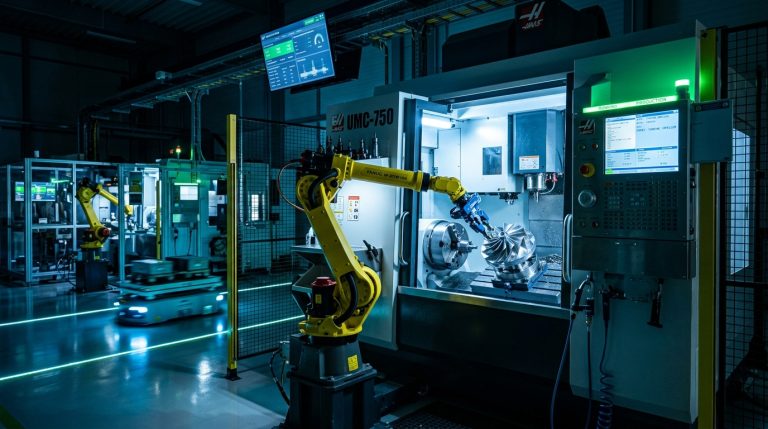
Executing a complex multi-component hardware project requires tight synchronization across disparate manufacturing disciplines. At AS Prototypes, our dedicated engineering project managers guide your design through every milestone:
- Cross-Process DFM Consultation: We analyze your CAD files to determine where CNC machining, sheet metal fabrication, and vacuum casting can be combined synergistically to minimize total landed project cost.
- Comprehensive Surface Engineering Under One Roof: Prototypes often require specialized finishing—Type II/III anodizing, powder coating, chemical passivation, electroplating, EMI shielding copper paint, and laser engraving. We manage all finishing in-house, ensuring coating thicknesses are factored into pre-machining CAM toolpaths.
- Full Metrology Inspection Reports: Every critical prototype shipment includes formal Dimensional Inspection Reports, CMM coordinate verifications, and raw material mill test Material Test Reports (MTRs) to support your internal DVT sign-offs.
EVT (Engineering Validation Test) confirms basic form, fit, and functional architecture. DVT (Design Validation Test) proves product durability, environmental sealing, and cosmetic finishes using production-intent processes. PVT (Production Validation Test) verifies pilot manufacturing line yields and tooling cycle efficiency.
When validation demand exceeds 50 to 100 functional plastic parts, rapid aluminum bridge tooling becomes substantially more cost-effective per part than CNC machining, while producing molded parts with identical material shrinkage and weld-line integrity.
Standard CNC metal parts conform to ISO 2768-mK (±0.1 mm), with critical bearing datums held to ISO 2768-fH (±0.01 to ±0.02 mm). Cast urethane parts achieve ±0.15 mm per 100 mm, while sheet metal brackets achieve ±0.2 mm.
Bring Your Hardware Prototyping Project to Life with AS Prototypes
Whether you are fabricating a single proof-of-concept visual model, 25 functional CNC-machined aerospace enclosures, or 2,000 bridge-to-production injection molded assemblies, AS Prototypes delivers the precision, speed, and engineering rigor your project demands.
Our multidisciplinary team provides instant DFM feedback, transparent multi-process quote comparisons, and rapid turnaround times to keep your development timeline ahead of schedule.
Upload 3D CAD Files for Instant Prototyping DFM & Multi-Process Quote →