Steel is one of the strongest materials in modern hardware design. However, plain carbon steel rusts rapidly when exposed to air and moisture.
This is why galvanized sheet metal is a top choice for industrial fabrication. By bonding a protective zinc layer to steel, you stop red rust and extend product life.
Consequently, hardware engineers rely on zinc-coated steel for robust enclosures, chassis, and brackets. In addition, galvanized steel costs much less than solid stainless steel.
At AS Prototypes, our custom sheet metal fabrication shop forms and lasers galvanized parts daily. In this guide, we explore coating types, shop rules, and design tips for your next project.
How Galvanized Steel Stops Rust
Galvanizing protects steel through two distinct physical mechanisms.
First, the zinc layer creates a tough physical barrier. It seals the base steel away from water, salt, and oxygen.
Second, zinc provides sacrificial cathodic protection. Zinc is chemically more active than iron. Therefore, if a scratch cuts through the coating, zinc corrodes first.
Furthermore, corroded zinc forms a thin patina of zinc carbonate. This self-healing film seals small scratches and halts deeper corrosion.
Key Types of Galvanized Sheet Metal
Different manufacturing processes yield distinct zinc coating properties.
Hot-dip galvanizing immerses cleaned steel coils into molten zinc at 450 degrees Celsius. In contrast, electro-galvanizing uses electricity to deposit a very thin, uniform zinc layer.
Moreover, galvannealed steel heats the zinc coating to form an iron-zinc alloy. This produces a matte gray finish with superior paint grip and spot weldability.
| Coating Process | Zinc Thickness | Surface Appearance | Weldability | Best Application |
|---|---|---|---|---|
| Hot-Dip Galvanized (HDG) | 45 to 85 μm | Spangled or smooth crystalline | Moderate (requires fume extraction) | Outdoor cabinets, HVAC ducting, and brackets. |
| Electro-Galvanized (EG) | 5 to 15 μm | Very smooth, uniform silver | Good (minimal zinc vapor) | Indoor consumer electronics and chassis. |
| Galvannealed (ZF / GA) | 10 to 20 μm | Matte gray, spangle-free | Excellent (iron-zinc alloy) | Automotive body panels and painted boxes. |
| Pre-Galvanized Mill Sheet | 15 to 30 μm | Consistent mill finish | Standard spot welding | Server racks, cable trays, and framing. |
Best Practices for Fabricating Zinc-Coated Steel
Working with coated sheet metal requires proper tooling adjustments.
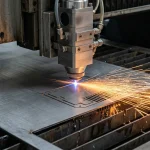
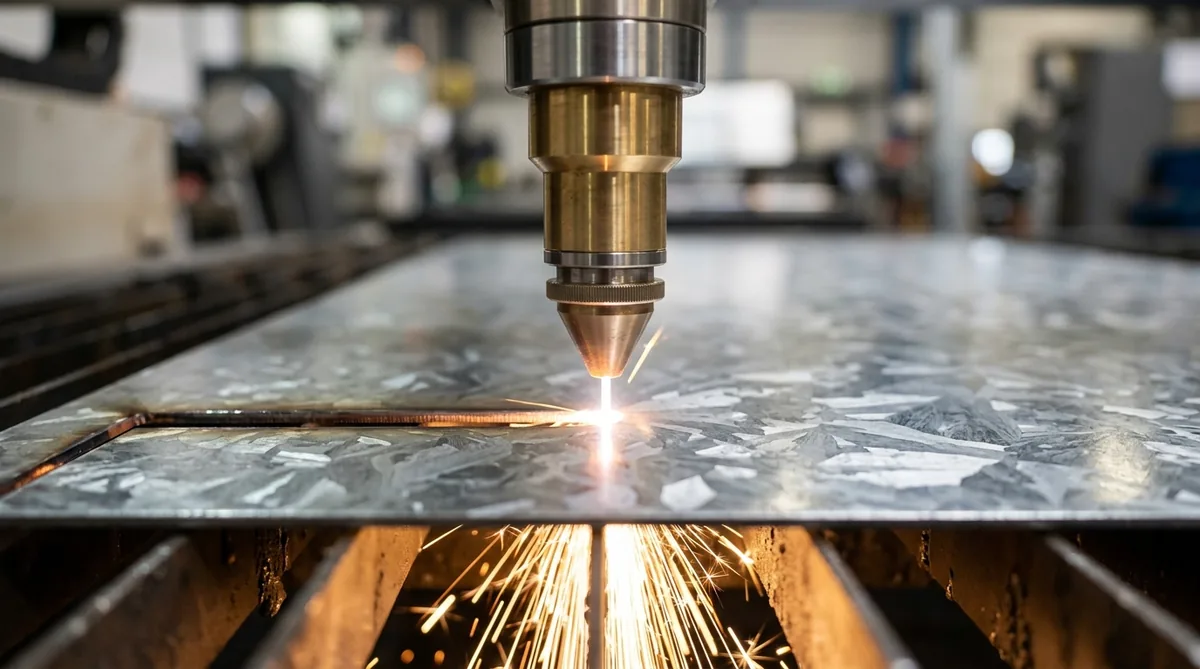
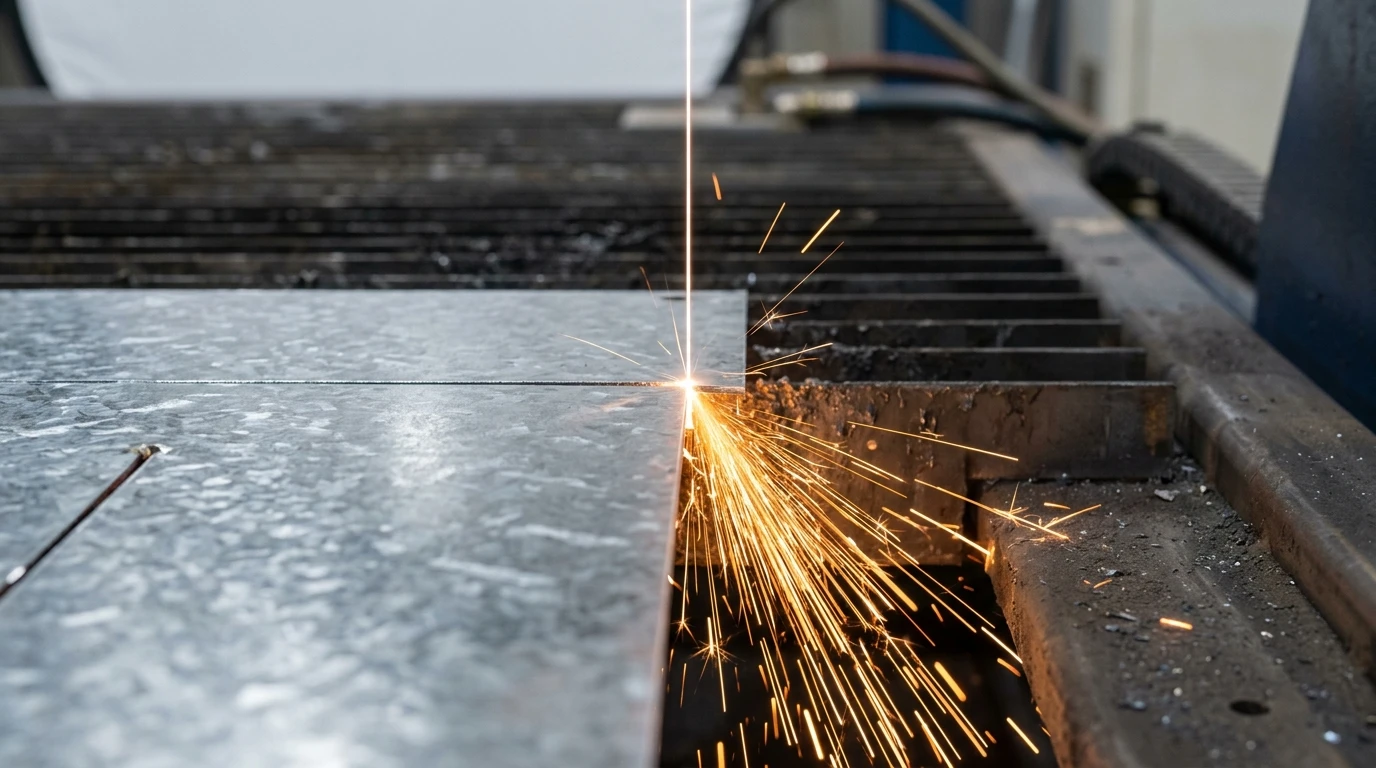
Due to zinc’s low boiling point (907°C) relative to steel’s melting point (1530°C), laser interaction triggers violent zinc vaporization. AS Prototypes utilizes high-pressure nitrogen assist gas (16–20 bar) to rapidly evacuate molten metal and zinc vapors downward, preventing explosive lens-damaging back-spatter and yielding completely oxide-free, dross-free cut edges.
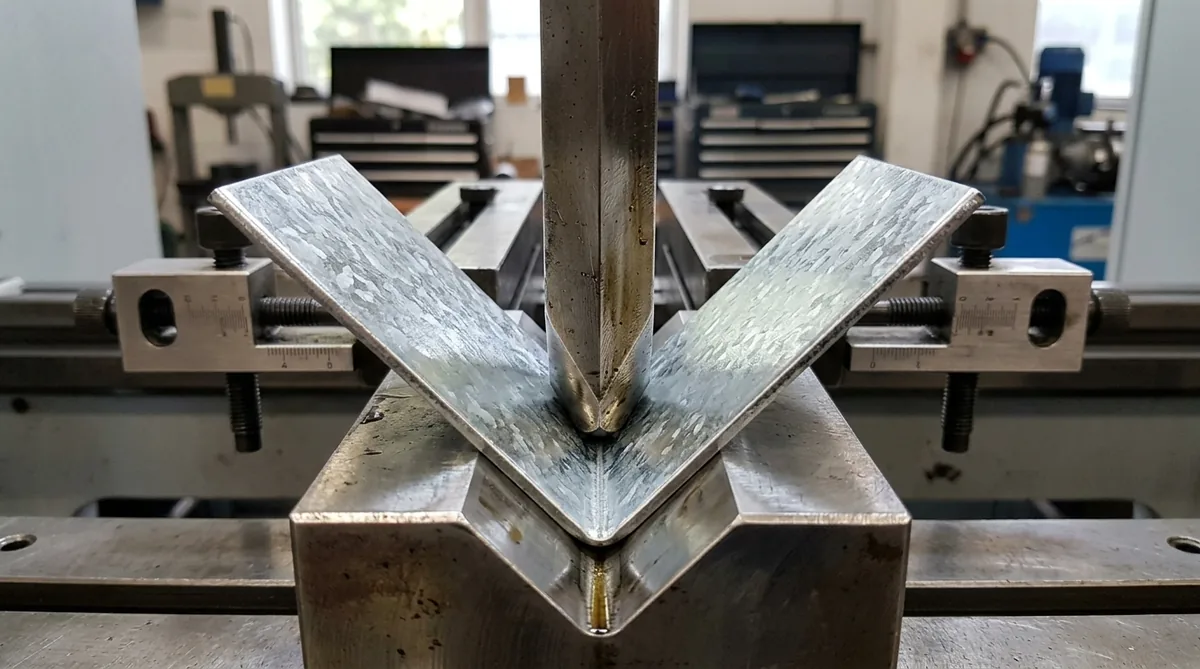
When bending sheet parts, tool radius matters. If your inside bend radius is too sharp, the zinc layer may micro-crack or peel.
Therefore, our press brake operators use an inside bend radius equal to the sheet thickness. In addition, review our guide to industrial surface finishes for post-fabrication powder coat options.
| Sheet Gauge | Nominal Thickness | Zinc Class (ASTM) | Min Bend Radius | Typical Product Use |
|---|---|---|---|---|
| 12 Gauge | 2.67 mm (0.105 in) | G90 (275 g/m²) | 2.7 mm | Heavy mounting brackets and outdoor bases. |
| 16 Gauge | 1.52 mm (0.060 in) | G60 / G90 | 1.5 mm | Electronic enclosures and server rack chassis. |
| 18 Gauge | 1.21 mm (0.048 in) | G60 (180 g/m²) | 1.2 mm | Control panels, covers, and appliance shells. |
| 20 Gauge | 0.91 mm (0.036 in) | G40 / G60 | 1.0 mm | HVAC air ducts and lightweight internal shields. |
Quality Control and Thickness Inspection
Consistent zinc coverage is vital for long-term corrosion resistance.
Our quality control team inspects every batch with magnetic thickness gauges. In addition, technicians run cross-hatch adhesion tests on painted assemblies.
Consequently, your parts meet strict ASTM A653 and ISO 1461 standards. Furthermore, detailed inspection reports accompany every shipment.
Yes. However, the surface must be clean of oils and passivated. Using galvannealed steel or applying a vinyl-wash primer ensures superior paint adhesion.
On thin sheet gauges (≤ 1.5 mm), zinc’s galvanic throwing power bridges the narrow laser kerf, providing cathodic self-healing protection. For heavy gauges (such as 12-gauge / 2.7 mm HDG) exposed to harsh outdoor C3–C5 environments, edge passivation or cold zinc-rich coatings (conforming to ASTM A780) are applied to prevent edge-creep corrosion.
Galvannealed steel undergoes post-dip heat treatment that alloys iron into the zinc layer. It gives a matte finish that welds and paints far easier.
Need Custom Galvanized Sheet Metal Fabrication?
AS Prototypes delivers high-precision laser cutting, CNC bending, and complete sheet metal assembly with tight tolerances. Upload your CAD drawings today for fast DFM feedback and an instant quote.
Upload CAD Files for Instant Quote