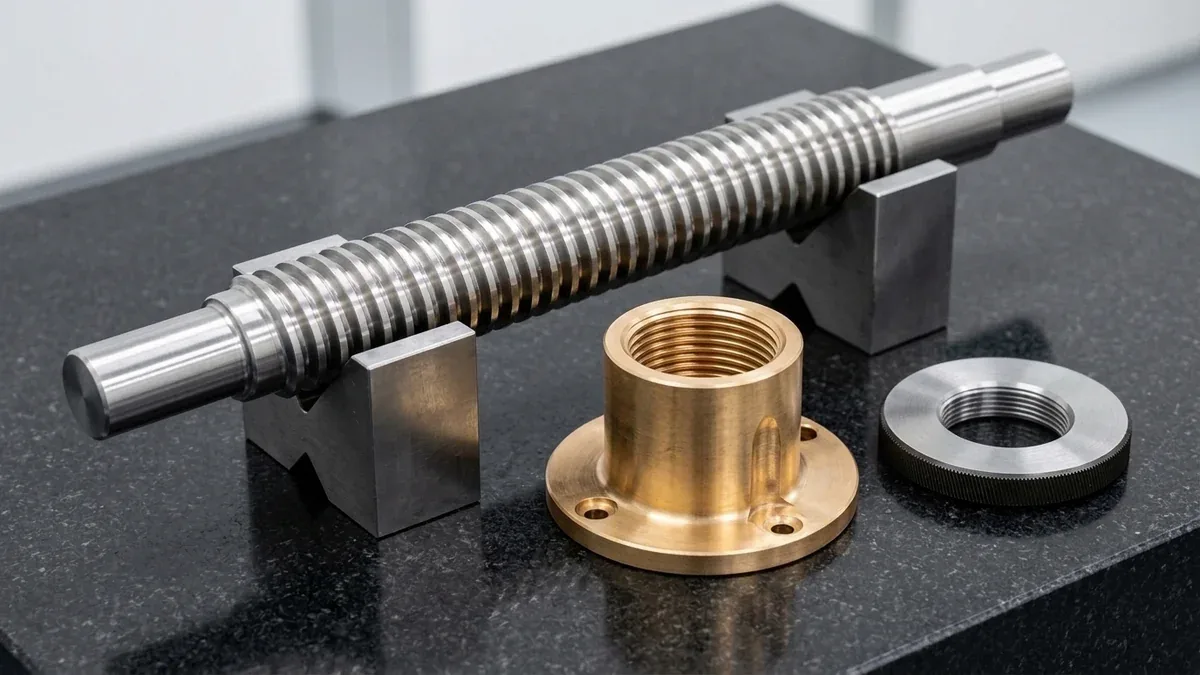
Few mechanical failures are as sudden, destructive, and frustrating as metal galling. An assembly technician or automated nutrunner tightening a stainless steel bolt or assembling a precision linear slide suddenly feels the components freeze solid midway through rotation.
Attempting to back the fastener out only shears the bolt head off or tears deep, jagged gouges into the mating threads. This catastrophic seizure is not caused by dirt or cross-threading—it is the result of solid-state friction-induced cold welding. In precision manufacturing, mastering metal galling causes and prevention ensures repeatable dimensional stability and predictable production scaling.
In high-reliability mechanical assemblies—especially in aerospace fuel valves, marine subsea actuators, vacuum chambers, and medical implants—uncontrolled metal galling results in mission failure, astronomical downtime, and destroyed assemblies. At AS Prototypes, our materials and CNC manufacturing engineers systematically engineer out galling risks at the CAD design, alloy selection, and surface treatment stages.
In this technical guide, we dissect the tribological mechanics of galling, explain why materials like austenitic stainless steel and titanium are uniquely susceptible, and present comprehensive engineering solutions: from purpose-built anti-galling alloys and hardness differential rules to advanced QPQ nitriding, PVD DLC coatings, and optimized thread tolerances.
- 1. What Is Metal Galling? The Tribological Mechanics
- 2. Why Are Stainless Steel and Titanium the Most Galling-Prone Metals?
- 3. The 4 Pillars of Galling Prevention
- 4. Material Pairing Galling Susceptibility Matrix
- 5. Engineering Case Study: Subsea Offshore Valve Actuator Seizure
- 6. Anti-Galling Engineering Checklist for Designers
- 7. Why Choose AS Prototypes for Wear-Resistant Precision Machining?
- 8. Technical Engineering FAQ
1. What Is Metal Galling? The Tribological Mechanics
Metal galling is a severe form of adhesive wear that occurs when two unlubricated metallic surfaces slide against each other under heavy contact pressure. Under microscopic inspection, even the most exquisitely polished metal surface is covered in jagged peaks and valleys called asperities.
According to the classic Bowden and Tabor adhesion model, the real contact area (Ar) between two surfaces is only a minute fraction of the apparent geometric area (Aapparent). When normal load (W) is applied, the contact stress at individual microscopic asperity tips exceeds the compressive yield strength (H) of the material, causing instant local plastic deformation.
The 3 Stages of Galling Breakdown
- Passive Film Breakdown: Stainless steels, titanium, and aluminum rely on microscopic passive oxide films (Cr2O3, TiO2, Al2O3, typically 2 to 5 nm thick) to resist corrosion and separate raw crystal lattices. Under sliding shear friction and contact pressure, these brittle oxide skins fracture and scrape away.
- Interfacial Cold Welding: Bare, unoxidized metallic crystal lattices are forced into intimate atomic contact (<1 nm distance). Electron sharing occurs across the boundary, creating solid-state micro-welds across the asperities.
- Subsurface Shearing and Seizure: As relative motion continues, the strength of the atomic micro-weld frequently exceeds the shear strength of the softer base metal. Instead of shearing cleanly along the original interface, the junction tears chunks of metal out from below the surface of one part and lumps them onto the opposing surface. These transferred lumps act as aggressive wedges, creating violent gouging, thermal runaway, and complete mechanical seizure within fractions of a second.
2. Why Are Stainless Steel and Titanium the Most Galling-Prone Metals?
Certain metallurgical crystal structures and physical properties dramatically elevate galling risk:
- Austenitic Stainless Steels (AISI 304, 316, 316L): Austenitic stainless steels possess a Face-Centered Cubic (FCC) crystal lattice. FCC metals have 12 active slip systems, making them exceptionally ductile with a low work-hardening exponent. Crucially, stainless steel is an exceptionally poor conductor of heat (thermal conductivity k ≈ 15 W/m · K, compared to 160 W/m · K for aluminum and 400 W/m · K for copper). Frictional heat generated at sliding asperities cannot dissipate, causing instantaneous flash temperatures exceeding 500°C that trigger rapid micro-welding.
- Titanium Alloys (Ti-6Al-4V, Grade 2): Titanium exhibits an extreme chemical affinity to self-weld to other metals, low thermal conductivity (k ≈ 6.7 W/m · K), and a high coefficient of friction (μ > 0.45). Sliding two unlubricated titanium components together will reliably gall within less than ten revolutions under even moderate hand torque.
- Aluminum Alloys (6061-T6, 7075-T6): While aluminum has high thermal conductivity, its native aluminum oxide (Al2O3) skin is ceramic-hard (Mohs hardness 9) resting on an exceptionally soft aluminum substrate. Under pressure, the soft substrate deforms, the hard oxide crust shatters like ice on mud, and the abrasive oxide particles grind into the sliding interface, inducing violent tearing.
3. The 4 Pillars of Galling Prevention
Eliminating galling requires a multi-layered engineering approach addressing material pairing, thermochemical surface treatments, mechanical geometry, and assembly lubrication:
1. Metallurgical Dissimilarity and the 5–10 HRC Differential Rule
The cardinal sin of mechanical design is pairing two identical, soft austenitic stainless steel parts together under high contact pressure (e.g., a 316 stainless bolt in a 316 stainless tapped hole). Identical alloys share identical crystal lattice parameters, maximizing atomic mutual solubility and micro-welding affinity.
- Hardness Differential: Mating sliding metals should always maintain a minimum hardness differential of at least 50 HB (approx. 5 to 10 HRC). The harder surface burnishes the asperities of the softer surface rather than allowing mutual plastic interlocking.
- Dedicated Anti-Galling Alloys (Nitronic 60 / UNS S21800): When stainless corrosion resistance is non-negotiable, specify Nitronic 60. Alloyed with 8% manganese and 4% silicon, the silicon forms a tough, self-healing oxide glaze that prevents metal-to-metal bonding even under extreme contact pressures exceeding 350 MPa. Nitronic 60 mated against 316L or 17-4 PH completely eliminates galling.
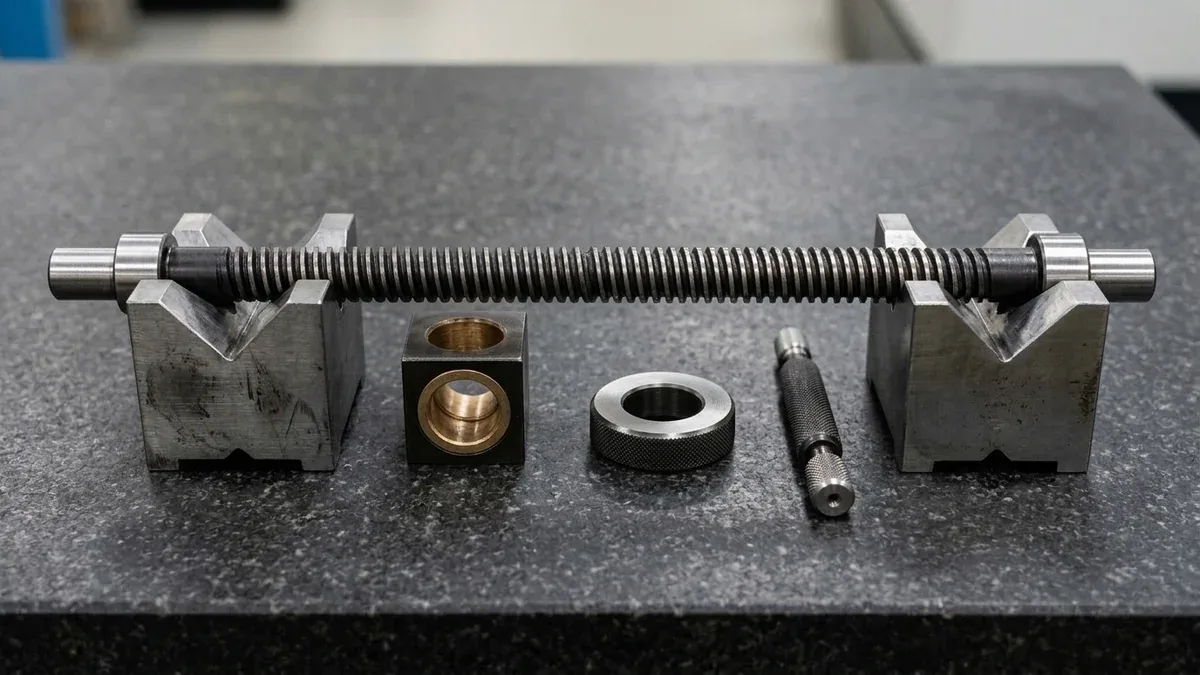
- Bronze Bearing Pairs: Mating stainless steel or hardened alloy steel shafts with phosphor bronze (C54400), aluminum bronze (C95400), or leaded bronze bushings provides a sacrificial, low-shear junction where galling cannot physically propagate.
2. Thermochemical Surface Treatments and Hard Thin-Film Coatings
When design constraints demand identical base alloys, surface modification breaks the metallic bonding mechanism entirely:
- Ferritic Nitrocarburizing (QPQ / Melonite): A thermochemical diffusion process that saturates the surface with nitrogen and carbon at 570°C, producing a non-metallic epsilon (ε) iron nitride compound layer (15 – 25 μm thick) with hardness >1,000 HV (>68 HRC) and friction coefficient μ < 0.15. Because the outer layer is ceramic iron nitride, metallic cold welding is physically impossible.
- Diamond-Like Carbon (DLC) PVD: Depositing a 1.5–3.0 μm amorphous carbon film delivers diamond-like hardness (2,500 – 3,500 HV) and graphite-like solid lubrication (μ ≈ 0.05 – 0.10), completely shielding titanium and stainless steel from metal-to-metal contact.
- Electroless Nickel-PTFE (EN-PTFE): Chemical co-deposition of 20% to 25% microscopic PTFE particles embedded inside a nickel-phosphorus matrix, providing permanent dry lubricity and galling immunity on sliding tracks.
- Silver Plating (AMS 2410): The aerospace industry standard for high-temperature turbine fasteners operating up to 800°C. Silver exhibits low shear strength and does not cold-weld to stainless or Inconel at extreme temperatures.
3. Fastener Dynamics and Thread Engineering
Thread galling accounts for over 70% of all field failures. The geometric spiral of a screw thread acts as an enormous mechanical force multiplier, concentrating intense normal forces and sliding friction along the pitch line.
- Never Use High-Speed Power Impact Wrenches on Stainless Fasteners: Driving a 316 stainless bolt with an 18V impact wrench rotating at 2,500 RPM generates instant localized frictional heating exceeding 400°C in less than one second. The threads seize and break instantly. Always use hand ratchets or speed-limited electric drivers (≤30 RPM) with calibrated torque limiters.
- Cold-Rolled vs. Single-Point Cut Threads: Cold-rolled threads possess continuous, unbroken grain flow, work-hardened surfaces, and burnished root/crest finishes (Ra < 0.4 μm) that exhibit twice the galling threshold of cut threads.
- Specify Class 2A / 2B Fits with Anti-Seize Clearance: Tight Class 3A/3B thread tolerances leave insufficient room for anti-seize lubricants. Specifying looser 2A/2B or 6g/6h fits ensures adequate flank clearance.
4. High-Performance Lubrication and Anti-Seize Compounds
Lubrication prevents galling by creating a physical barrier film between microscopic asperities:
- Molybdenum Disulfide (MoS2) Solid Film Lubricant: Possesses a layered hexagonal crystal lattice where sulfur-molybdenum-sulfur lamellae slip easily over one another under shear stress, sustaining contact pressures exceeding 2,000 MPa without squeezing out.
- Nickel / Copper Anti-Seize Pastes: High-solids colloidal suspensions of metallic flakes in grease. Even if extreme thermal exposure evaporates the synthetic oil base, the metallic flakes remain in the thread flanks to prevent direct crystal lattice contact.
4. Material Pairing Galling Susceptibility Matrix
The following engineering matrix details the galling threshold stress and recommended prevention strategies across common material sliding pairs:
| Material Pair (Part A vs Part B) | Galling Threshold Stress | Galling Risk Level | Physical Mechanism | Recommended Engineering Fix |
|---|---|---|---|---|
| 304 Stainless vs. 304 Stainless | < 14 MPa (2 ksi) | Severe / Critical | Identical FCC lattice, poor heat dissipation | Substitute Nut to Nitronic 60 or apply QPQ / Anti-seize |
| 316 Stainless vs. Nitronic 60 | > 345 MPa (> 50 ksi) | Extremely Low | Silicon/manganese self-glazing protective oxide | Ideal standard for marine and chemical valves |
| Ti-6Al-4V vs. Ti-6Al-4V | < 10 MPa (< 1.5 ksi) | Catastrophic | Extreme chemical affinity, low thermal conductivity | Mandatory PVD DLC coating or anodic oxidation + MoS2 |
| 17-4 PH (H900) vs. 316 Stainless | ~ 45 MPa (6.5 ksi) | Moderate | Hard martensitic structure vs soft austenitic matrix | Adequate for low-speed; apply solid film lubricant |
| Hardened Steel (4140 QPQ) vs. C954 Bronze | > 280 MPa (> 40 ksi) | Negligible | Dissimilar metallurgy; sacrificial bronze shear film | Industry standard for high-load pivot bushings |
5. Engineering Case Study: Subsea Offshore Valve Actuator Seizure
The Problem
An offshore energy client experienced catastrophic failure of a subsea hydraulic emergency shutdown valve actuator. The design utilized an AISI 316L stainless steel drive stem (45 mm diameter) rotating inside an internal AISI 316L valve bonnet guide bore under a 22 MPa radial side load.
During ocean-floor qualification testing, the actuator seized completely solid after only 48 continuous open/close cycles. Disassembly revealed severe adhesive galling gouges 1.2 mm deep along the shaft, with chunks of 316L torn out and friction-welded to the bonnet housing.
AS Prototypes Engineering Solution
- Alloy Substitution: Redesigned the stationary internal bonnet sleeve to verified Nitronic 60 (UNS S21800), maintaining identical PREN corrosion resistance while breaking the identical-lattice bonding mechanism.
- Low-Temperature Carburizing (Kolsterising): Subjected the 316L drive stem to proprietary low-temperature surface diffusion (<420°C). This diffused interstitial carbon into the austenite lattice without precipitating chromium carbides, boosting surface hardness to 1,250 HV (approx. 72 HRC) to a depth of 30 μm while preserving full marine corrosion resistance.
- Plateau Honing: Replaced the original smooth ground finish (Ra = 0.1 μm) with a cross-hatch plateau honed finish (Ra = 0.35 μm, Rpk = 0.15 μm, Rvk = 0.8 μm). The plateau micro-valleys retained synthetic marine grease, preventing hydrodynamic film breakdown.
The Results
- Endurance Testing: The re-engineered actuator completed 25,000 full-stroke test cycles under full 22 MPa load with zero measurable wear or scoring.
- Torque Consistency: Breakaway actuation torque remained steady at 18.5 N · m (a 40% reduction compared to the initial un-galled baseline).
- Subsea Deployment: Successfully deployed to North Sea offshore platforms with long-term maintenance-free field reliability.
6. Anti-Galling Engineering Checklist for Designers
To eliminate galling failures before parts reach the factory floor, apply these foundational engineering rules:
- Never Pair Like with Like in Stainless or Titanium: Always specify a hardness differential of at least 5 to 10 HRC, or pair austenitic stainless steel with Nitronic 60, 17-4 PH, or bronze.
- Avoid Super-Smooth Mirror Finishes on Sliding Surfaces: While counterintuitive, ultra-smooth surfaces (Ra < 0.1 μm) maximize real contact area (Ar) and squeeze out lubricants, accelerating cold-welding. Maintain a plateau finish (Ra = 0.3 – 0.6 μm) with cross-hatch valleys to retain oil/grease.
- Enforce Assembly Speed Limits: For stainless steel and titanium threaded fasteners, mandate hand tightening or restrict powered tool speeds to under 30 RPM. Never allow impact guns on unlubricated stainless threads.
- Mandate Anti-Seize Paste on Technical Drawings: Explicitly specify approved anti-seize compounds (e.g., nickel-based or MoS2 paste compliant with MIL-PRF-907F) on production drawing notes.
7. Why Choose AS Prototypes for Wear-Resistant Precision Machining?
Preventing galling requires deep metallurgical comprehension, proven surface engineering workflows, and rigorous metrology validation.
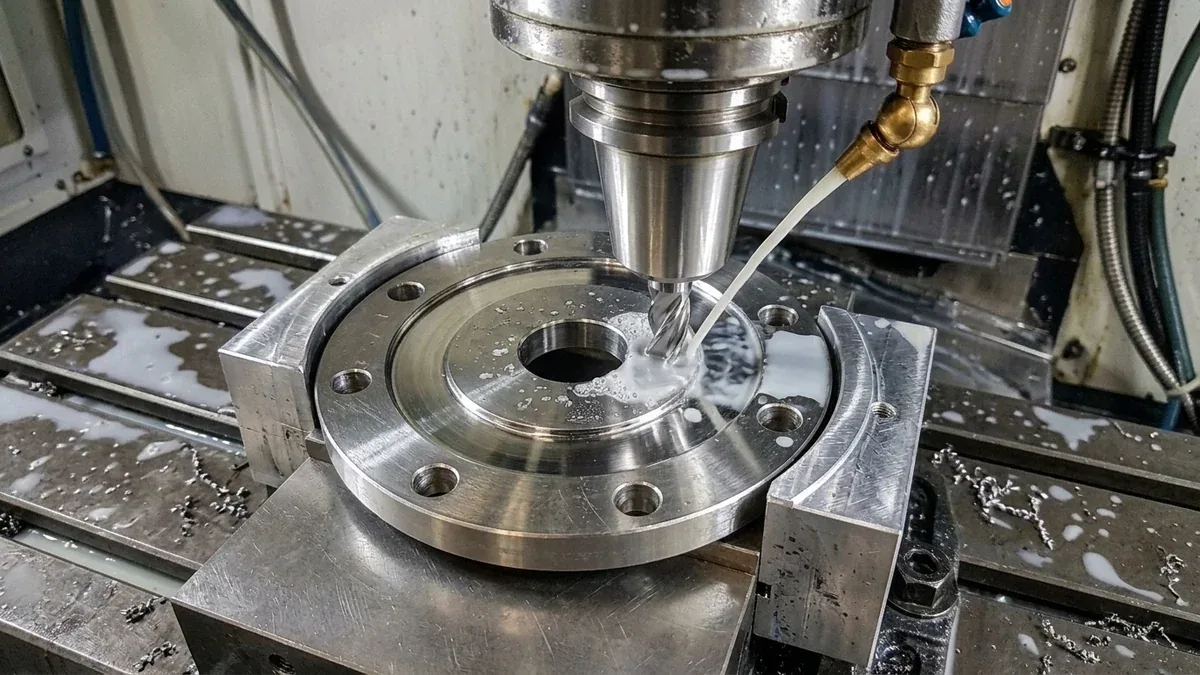
At AS Prototypes, we combine high-precision 3/4/5-axis CNC machining with complete post-processing: vacuum heat treatment, QPQ salt-bath nitrocarburizing, PVD DLC coating, electroless nickel plating, and ISO 4287 surface roughness and ASTM E18/E384 hardness verification. Whether you are developing subsea oil and gas valves, aerospace actuators, or surgical instruments, our engineers ensure your sliding assemblies operate reliably without risk of seizure.
8. Technical Engineering FAQ
Austenitic stainless steels, titanium, and aluminum rely on ultra-thin, self-healing passive oxide films (such as Cr2O3, TiO2, or Al2O3) for corrosion protection. Under high sliding contact stress without lubrication, microscopic surface asperities shear through this brittle oxide film, exposing nascent, chemically active ductile metal that instantaneously cold-welds and tears across the mating interface.
Pairing two identical alloys with matched crystal lattices and plasticity (such as a 304 stainless bolt in a 304 tapped housing) maximizes atomic cohesion and adhesive cold-welding. Maintaining a minimum hardness differential of 50 HB (approximately 5 HRC)—for example, pairing a precipitation-hardened 17-4 PH (H900, 40 HRC) shaft against a Nitronic 60 or bronze bushing—disrupts work-hardening symmetry and prevents seizure.
For aluminum components, MIL-A-8625 Type III hardcoat anodizing (especially with PTFE impregnation) creates a 50 µm ceramic-hard barrier (> 450 HV) that eliminates aluminum-on-aluminum seizure. For stainless and tool steels, Diamond-Like Carbon (DLC) PVD coatings (friction coefficient µ < 0.10), plasma nitriding, electroless nickel-PTFE co-deposition, and MoS2 dry-film lubricants provide durable anti-galling protection.
Rough, torn thread flanks with micro-burrs concentrate contact pressure onto isolated asperity peaks, accelerating passive film rupture. CNC single-point thread turning with polished carbide inserts or helical thread milling produces smooth, burr-free flank surfaces (Ra ≤ 0.8 µm / 32 µin) with accurate pitch diameter clearance, substantially reducing friction torque during fastener assembly.
Partner with Our Precision CNC Machining & Engineering Team
Eliminate thread seizure, adhesive wear, and tolerance stack-up risks with verified alloy pairing, QPQ/DLC surface treatments, and precision CNC machining. Upload your 3D CAD files (STEP/IGES) and 2D GD&T drawings for a comprehensive shop-floor DFM review and custom quotation.
Upload 3D CAD for Engineering DFM & RFQ