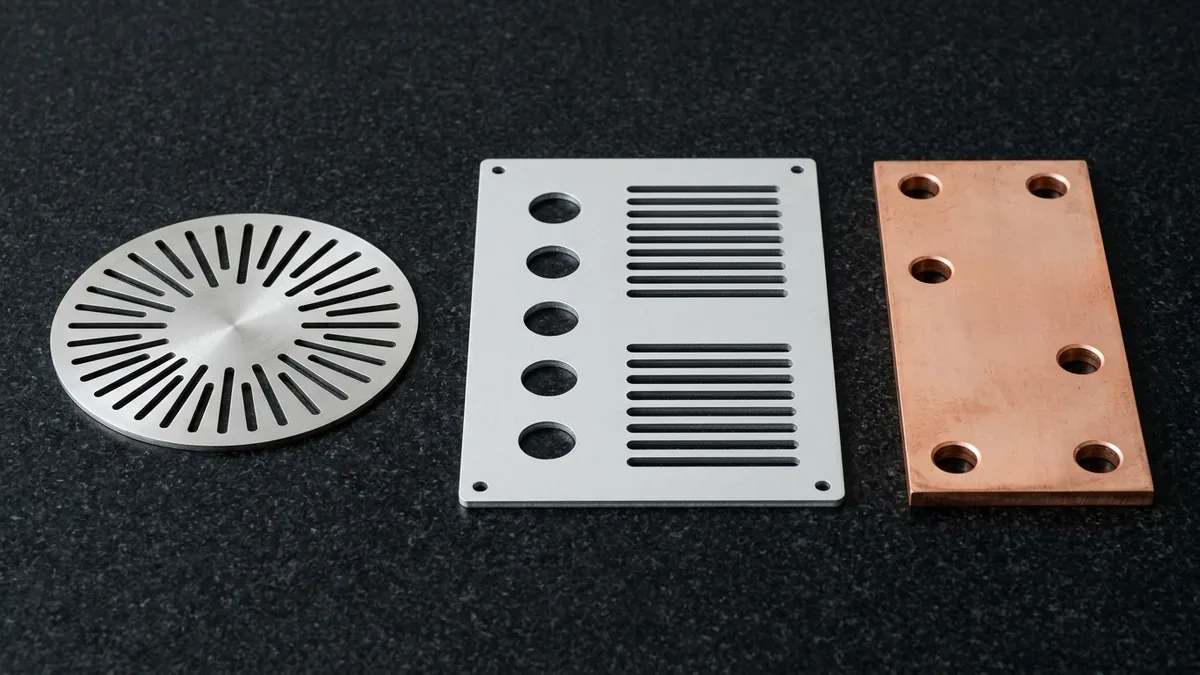
Modern sheet metal fabrication relies fundamentally on thermal beam profiling. Specifically, partnering with verified precision laser cutting services ensures tight part tolerances and clean edge finishes. Understanding cutting dynamics enables engineers to design cost-effective sheet metal enclosures.
High-power CNC laser cutters focus concentrated optical energy to melt or vaporize sheet metal stock. Simultaneously, a pressurized assist gas evacuates the molten kerf. Therefore, parts emerge with minimal burrs, precise hole pitch, and zero mechanical tool wear.
At AS Prototypes, our sheet metal fabrication division couples multi-kilowatt fiber lasers with CNC press brakes. Furthermore, our modern equipment list features automated optical inspection systems holding tight ±0.05 mm tolerances.
1. Laser Technology Comparison: Fiber vs. CO2
Thermal cutting equipment builders utilize different laser sources depending on material reflectivity and thickness.
First, fiber lasers dominate contemporary sheet metal production. Because solid-state fibers operate at a 1.064 μm wavelength, metal absorption rates remain exceptionally high. Consequently, fiber lasers slice thin to medium sheets three times faster than gas lasers.
Second, CO2 lasers emit at a 10.6 μm wavelength. While historically popular for thick plate, they consume significantly more electrical power. In addition, internal mirror delivery systems require constant optical realignment.
Third, fiber lasers excel when processing highly reflective non-ferrous alloys. For example, modern fiber cutters process brass, copper, and bright aluminum without back-reflection damage.
| Laser Attribute | Fiber Laser (Solid-State) | CO2 Laser (Gas Tube) |
|---|---|---|
| Operating Wavelength | 1.064 μm (High metal absorption) | 10.6 μm (Lower metal absorption) |
| Electrical Efficiency | 35% – 45% wall-plug efficiency | 8% – 12% efficiency |
| Cutting Speed (< 4 mm) | 2× to 3× faster travel rates | Moderate cutting speeds |
| Reflective Metals | Cuts copper, brass, and aluminum easily | Prone to destructive optical back-reflection |
| Optical Maintenance | Zero alignment mirrors; fiber cable delivery | Frequent mirror cleaning and beam calibration |
2. Assist Gas Selection: Nitrogen vs. Oxygen
The choice of assist gas dictates cut edge chemistry and post-processing costs.
Specifically, nitrogen provides an inert shielding blanket during cutting. The high-pressure nitrogen jet blows away molten metal mechanically without chemical combustion. As a result, the cut edge remains completely oxide-free and ready for powder coating.
In contrast, oxygen induces an exothermic combustion reaction. While this assists in cutting heavy carbon steel plates over twenty millimeters, it leaves a hard iron oxide crust. Consequently, welders must grind oxygen-cut edges before welding to prevent porosity.
| Material Grade (Standard Stock) | Standard Stock Gauge Range | Standard Cut Tolerance | Precision Laser Tolerance |
|---|---|---|---|
| Stainless Steel (304 / 316L) | 0.3 mm – 10.0 mm | ±0.10 mm | ±0.05 mm |
| Aluminum 5052-H32 (Bent Chassis) / 6061-T6 (Flat Only) | 0.8 mm – 6.0 mm (5052-H32) | ±0.12 mm | ±0.05 mm |
| Carbon Steel: SPCC/SECC (0.5–3.0 mm) & SPHC/Q235 (3.0–12.0 mm) | 0.5 mm – 12.0 mm | ±0.10 mm | ±0.05 mm |
| T2 Copper & H62 Brass | 0.2 mm – 5.0 mm | ±0.15 mm | ±0.08 mm |
3. Design for Manufacturing (DFM) Rules
To optimize sheet metal cutting and press-brake forming quality, follow these core DFM design principles:
First, maintain minimum hole diameters equal to or greater than sheet thickness (D ≥ 1.0t). When holes measure smaller than material thickness, laser piercing generates excessive thermal buildup and taper.
Second, position holes at least two material thicknesses plus the bend radius away from bend lines (D ≥ 2t + R). Otherwise, hydraulic press brake tooling stretches adjacent cutouts into ovals.
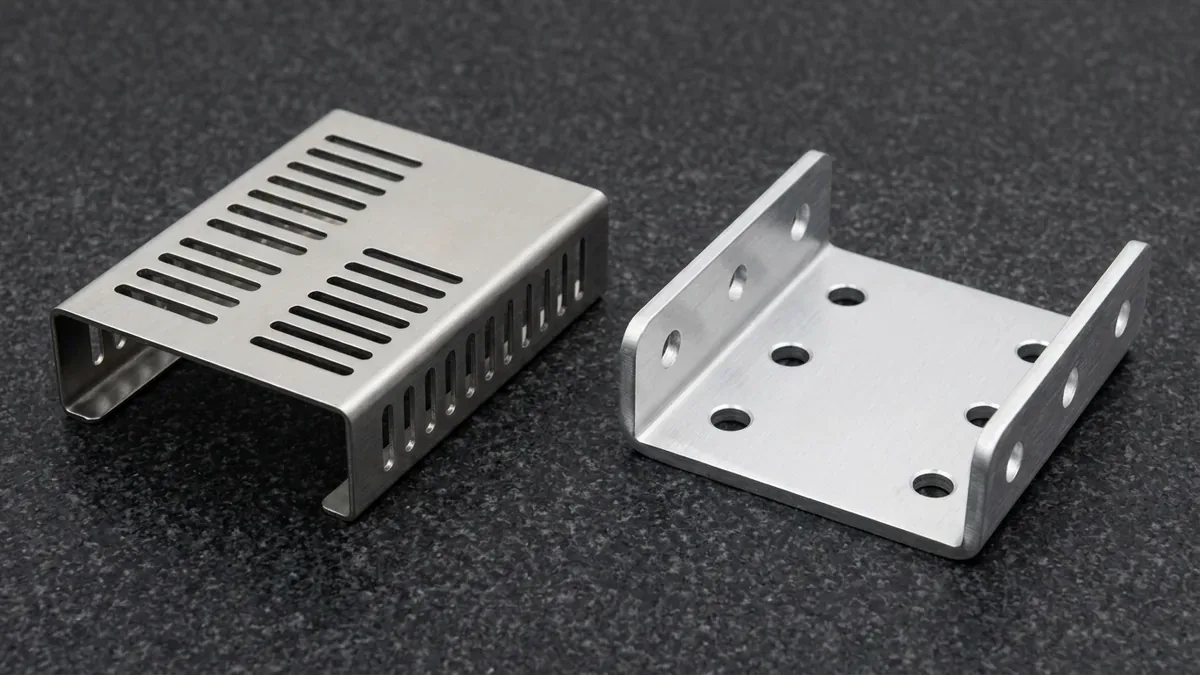
Third, always specify ductile 5052-H32 aluminum (minimum bend radius R ≥ 1.0t) rather than precipitation-hardened 6061-T6 for bent sheet metal enclosures and brackets; 6061-T6 sheet exhibits low cold formability and cracks sharply along the outer bend tangent unless bent at large radii (R ≥ 3t–6t). Additionally, incorporate micro-tabs on delicate miniature blanks to prevent parts from tipping between laser slats.
4. Technical Engineering FAQ
High-pressure nitrogen (18–22 bar) acts as an inert shielding gas that evacuates molten metal mechanically without exothermic oxidation. Consequently, cut edges on 304/316L stainless steel and 5052-H32 aluminum remain bright, oxide-free, and immediately ready for TIG/laser welding or electrostatic powder coating without secondary edge grinding.
As a reliable shop-floor DFM rule, the minimum laser-cut hole diameter should be at least 1.0× the sheet thickness (D ≥ 1.0t). Attempting to laser-pierce holes smaller than the material gauge causes molten blowback and kerf taper; if tight H7 dowel holes or small-diameter features are required, we laser-cut a pilot hole and post-ream or drill on a 3-axis VMC to ±0.010 mm.
Yes. Modern solid-state fiber lasers operating at a 1.064 μm wavelength exhibit high optical absorption in non-ferrous metals and include back-reflection isolators, cutting T2 copper and H62 brass sheets (0.2 mm to 5.0 mm standard stock gauges) cleanly within ±0.08 mm profile tolerance.
Engineer Precision Custom Sheet Metal Enclosures & Brackets
Eliminate bend springback, hole distortion, and assembly interference before cutting metal. Upload your 3D CAD files (STEP/IGES) and 2D flat-pattern drawings for a dedicated sheet metal DFM review and custom production quotation.
Upload CAD Files for Sheet Metal DFM & Quote