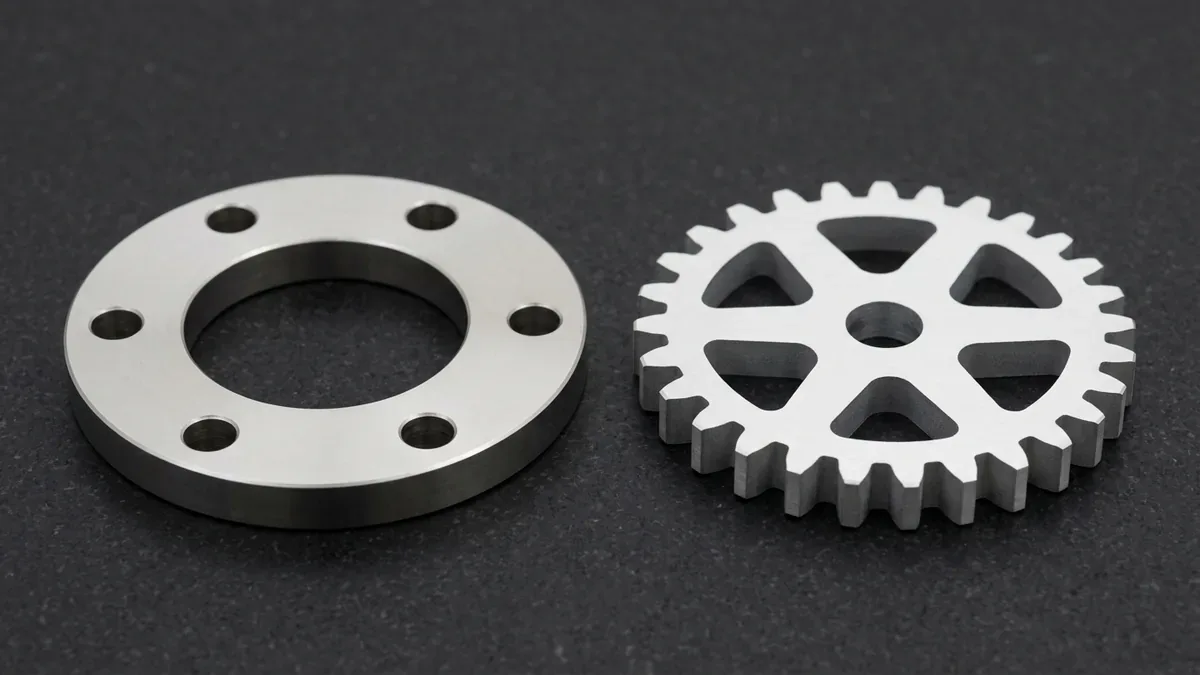
Thermal cutting technologies frequently induce unwanted residual stress, metallurgical phase shifts, and localized material distortion. Consequently, mechanical design engineers turn to the cold waterjet cutting process. Ultra-high-pressure water streams erode tough alloys at supersonic velocities without elevating workpiece temperatures. Therefore, waterjet cutting eliminates heat-affected zones, preserves temper states, and streamlines downstream machining.
From thin gasket laminates to massive titanium structural billets, waterjet machining handles virtually every solid engineering material. However, achieving tight tolerances requires understanding fluid dynamics, abrasive media delivery, and nozzle kerf compensation. This comprehensive engineering guide examines operating mechanics, kerf taper control, and cost-effective design rules.
1. Operating Mechanics: Pure Waterjet vs Abrasive Waterjet
Waterjet systems operate by pressurizing filtered water up to 60,000 psi or 90,000 psi using hydraulic intensifier pumps. Specifically, this immense fluid pressure forces water through a microscopic sapphire or diamond orifice. As a result, the fluid stream accelerates to velocities exceeding Mach 3.
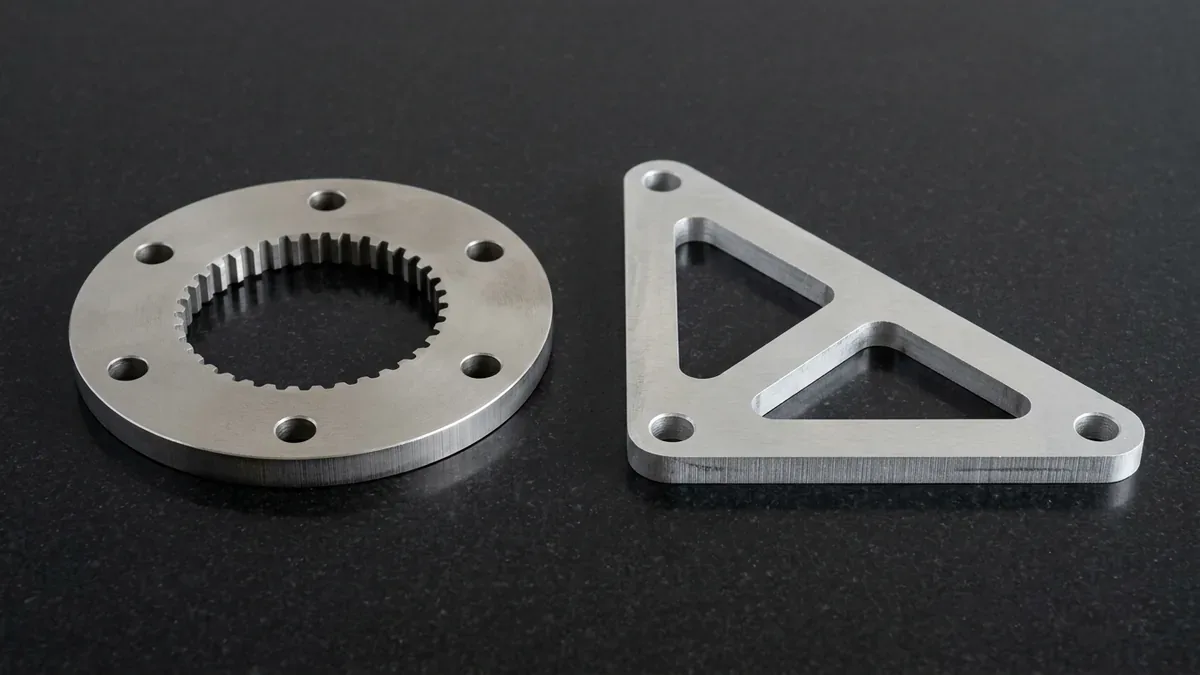
For soft materials like closed-cell foam, rubber gaskets, and paper composites, pure water streams slice clean contours. Conversely, hard structural alloys require abrasive waterjet cutting. In this method, fine alluvial garnet abrasive particles mix into the supersonic stream inside a tungsten carbide nozzle. Thus, microscopic erosion shears through hardened tool steels, titanium, and carbon fiber composites with ease.
Furthermore, because the erosion mechanism generates negligible heat, waterjet cutting prevents microscopic edge embrittlement. Similarly, structural aluminum retains its native temper, eliminating the annealing damage common with laser cutting.
2. Thermal Distortion Comparison: Waterjet, Laser, and EDM
Selecting the optimal sheet cutting or profile blanking method requires weighing cutting speeds, thermal risks, and edge tolerances. To illustrate, review the manufacturing comparison below.
| Process Technology | Max Practical Thickness | Heat-Affected Zone (HAZ) | Typical Part Tolerance | Primary Material Compatibility |
|---|---|---|---|---|
| Abrasive Waterjet | Up to 200 mm (8 inches) | None (Cold mechanical erosion) | ±0.08 mm to ±0.15 mm | All metals, composites, ceramics, stone |
| Fiber Laser Cutting | Up to 25 mm (Steel / Aluminum) | 0.1 mm to 0.5 mm thermal zone | ±0.05 mm to ±0.10 mm | Ferrous sheet metal, selected aluminum alloys |
| Wire EDM Machining | Up to 300 mm (Conductive alloys) | Microscopic recast layer (<0.005 mm) | ±0.005 mm ultra-precision | Hardened steels, titanium, carbide alloys |
| CNC Milling Surfacing | Limited by tool reach & setups | Minimal (Coolant-assisted cutting) | ±0.010 mm to ±0.025 mm | Machinable metals, engineering thermoplastics |
3. Managing Kerf Taper and Edge Quality Standards
As a supersonic waterjet penetrates deeper into thick stock, its kinetic energy gradually dissipates. Consequently, the resulting kerf naturally exhibits a slight taper angle from top to bottom.
To eliminate this taper, modern 5-axis waterjet heads dynamically tilt the cutting nozzle during contouring. Therefore, the cut face achieves true 90-degree perpendicularity across thick plates. Furthermore, combining waterjet blanking with secondary precision sheet metal fabrication ensures exceptional dimensional consistency.
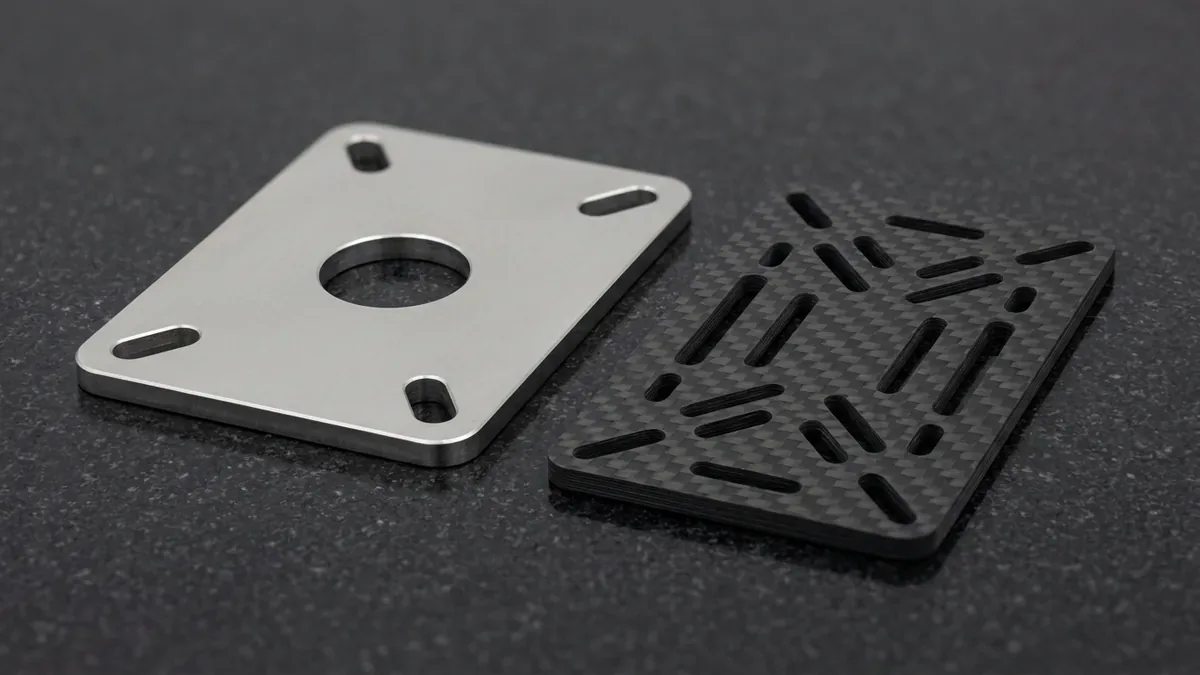
In addition, engineers categorize abrasive waterjet cut edges into five standardized quality tiers, designated Q1 through Q5. Specifically, higher quality levels reduce feed rates to produce mirror-like surface finishes. Conversely, lower quality levels deliver rapid separation cuts for stock preparation.
To optimize manufacturing costs, review the edge quality classification matrix below.
| Edge Quality Level | Surface Roughness (Ra) | Relative Cutting Speed | Edge Perpendicularity | Recommended Application |
|---|---|---|---|---|
| Q1: Separation Cut | Ra 12.5 μm to 25 μm | 100% (Fastest feed rate) | Pronounced striations, >2° taper | Rough billet sizing, raw stock blanking |
| Q2: Through Cut | Ra 6.3 μm to 12.5 μm | 75% of maximum speed | Moderate bottom striations | Weldments, internal structural brackets |
| Q3: Medium Quality | Ra 3.2 μm to 6.3 μm | 50% of maximum speed | Standard production cut, minimal taper | Sheet metal enclosures, mounting plates |
| Q4: High Quality | Ra 1.6 μm to 3.2 μm | 35% of maximum speed | Smooth cut face, tight perpendicularity | Aerospace brackets, mating flanges |
| Q5: Precision Quality | Ra 0.8 μm to 1.6 μm | 20% of maximum speed | Mirror-like, zero detectable striations | Finished visible edges, gasket sealing lands |
For ultra-critical features requiring tight ±0.010 mm tolerances, our machinists pre-cut blanks with waterjet. Afterwards, we execute finishing passes with slow wire EDM. This blended manufacturing sequence lowers overall tooling wear while safeguarding part accuracy.
4. Technical Engineering FAQ
Waterjet cutting relies entirely on cold supersonic mechanical erosion from 60,000–90,000 PSI water and 80-mesh garnet abrasive particles. Consequently, workpiece temperatures remain near ambient room temperature, preventing heat-affected zone (HAZ) hardening, carbide precipitation in stainless steels, or temper loss in 6061-T6 and 7075-T651 aluminum plates.
Dynamic 5-axis cutting heads automatically tilt the mixing nozzle into the jet stream by a calculated compensation angle (typically 0.5° to 2.0°) based on material thickness and Q3–Q5 feed speed. Therefore, all V-shaped taper is transferred exclusively into the scrap skeleton, leaving the finished part wall perpendicular within ±0.05 mm to ±0.10 mm.
Pure waterjet cutting (operating with a 0.10 mm to 0.25 mm jewel orifice and zero garnet abrasive) excels at soft, non-metallic sheet materials such as silicone and EPDM gaskets, closed-cell foams, rubber elastomers, and thin polymers, delivering a narrow 0.15 mm kerf without embedded abrasive grit.
Engineer Precision Waterjet-Cut Profiles & Structural Plate Parts
Eliminate heat-affected zones, kerf taper, and thermal edge distortion before cutting metal or composites. Upload your 2D DXF/DWG flat patterns and 3D CAD files (STEP/IGES) for a dedicated waterjet cutting and secondary machining DFM review and custom quotation.
Upload CAD & DXF Files for Waterjet DFM & Quote