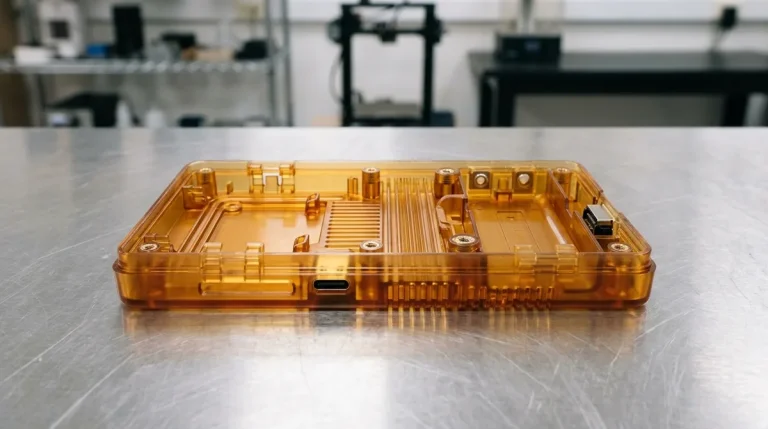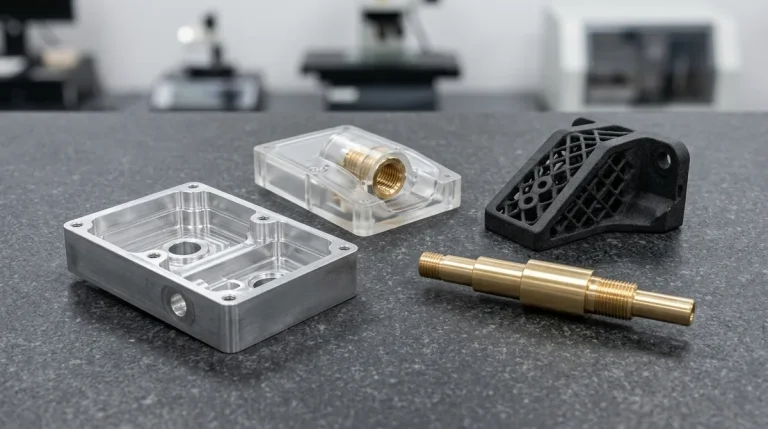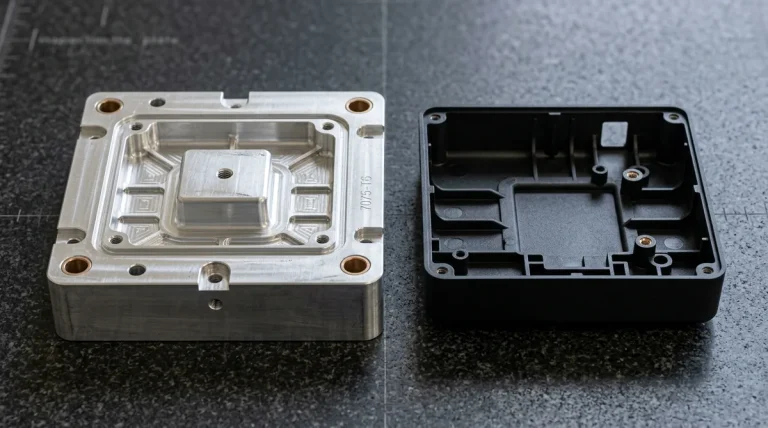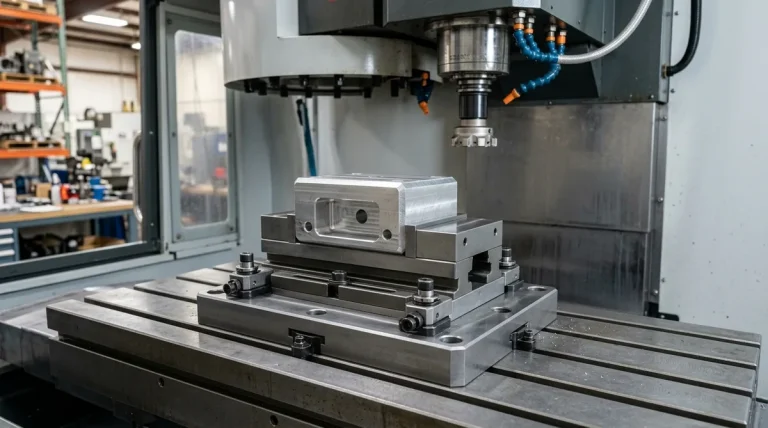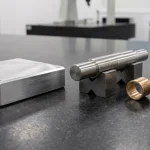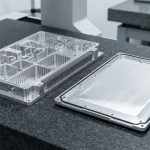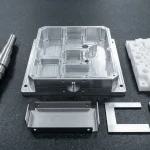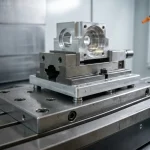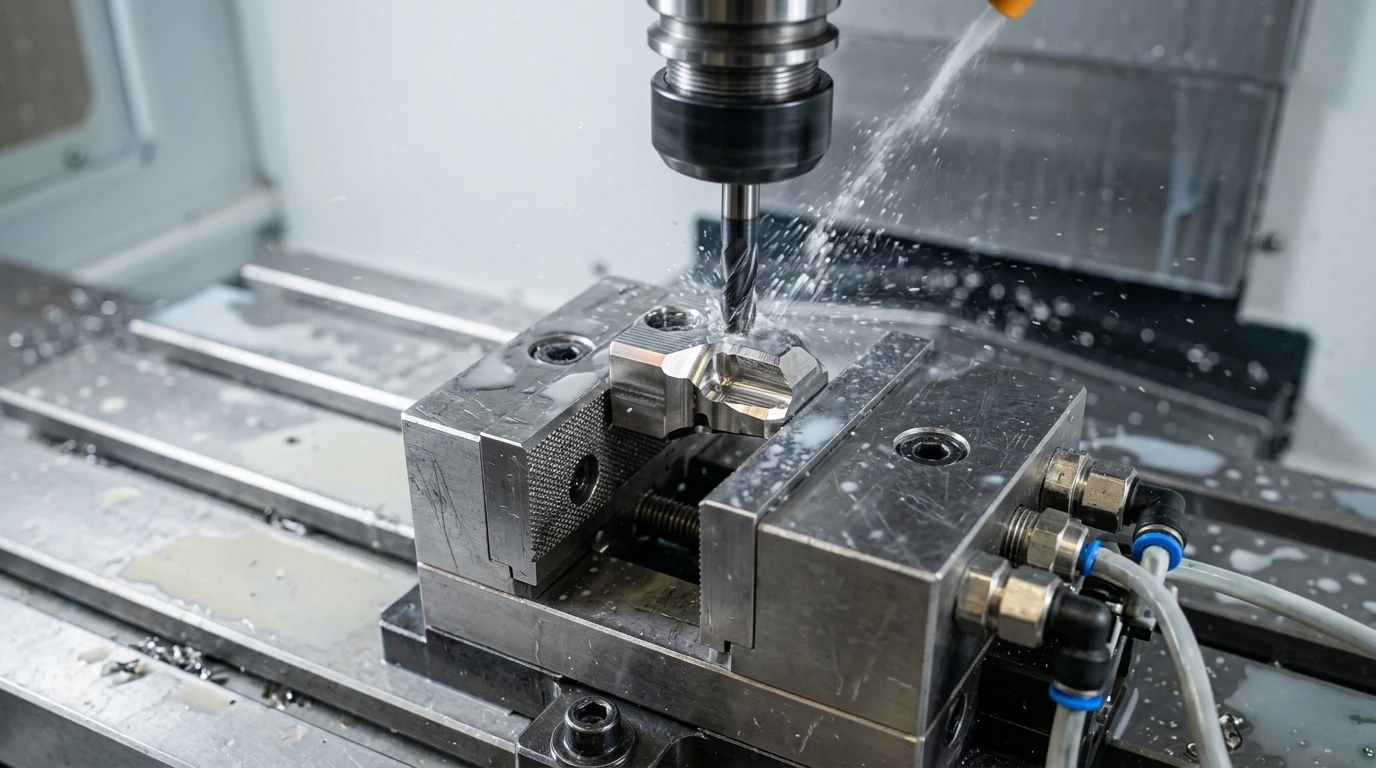
Medical device CNC machining occupies the most exacting echelon of precision subtractive manufacturing, demanding micro-inch geometric repeatability, medical-grade biocompatible metallurgy, and zero-defect surface finishes. From miniature titanium pedicle screws and implantable PEEK spinal cages to multi-link robotic endoscopic surgical tools, life-critical components cannot tolerate micro-burrs, tool chatter, or chemical residue. In our dedicated medical device manufacturing facility, utilizing high-precision Swiss-type machining centers and cleanroom post-processing protocols ensures components satisfy stringent surgical and clinical performance demands.
1. Biocompatible Materials for Medical Device Machining
Implantable and intraoperative medical instruments require raw materials that exhibit exceptional corrosion resistance in saline bodily fluids, zero cytotoxicity, and mechanical stiffness matching natural human bone structure:
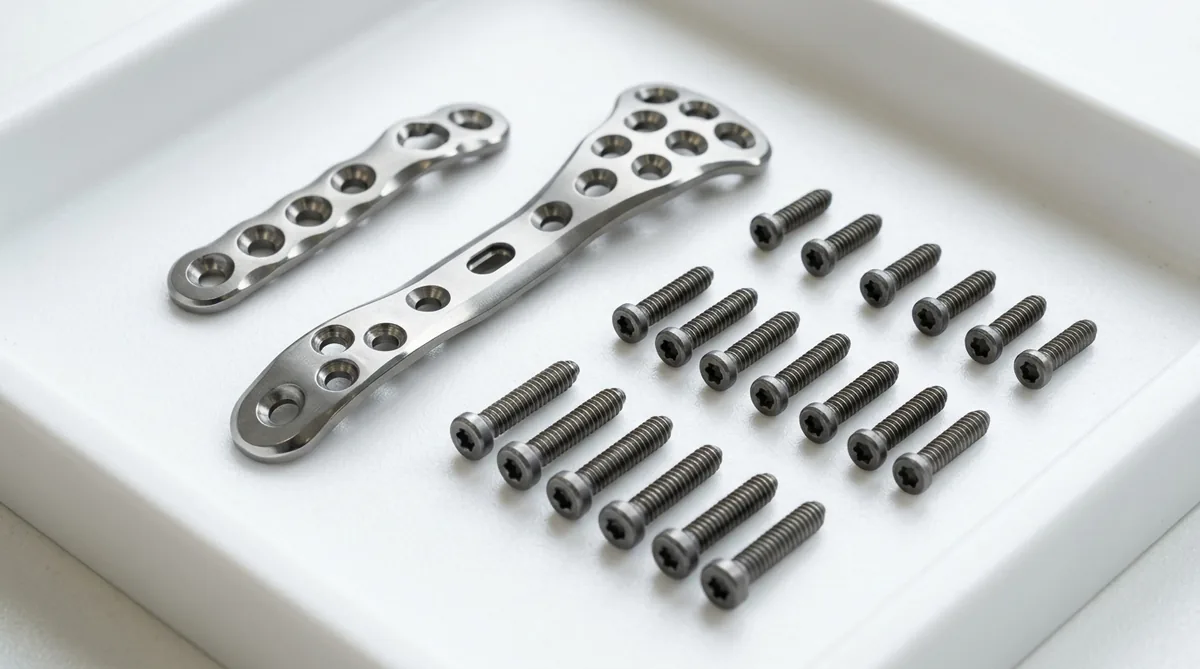
- Titanium Grade 5 ELI (Ti-6Al-4V ELI / ASTM F136): Extra Low Interstitial grade delivering superior fracture toughness, fatigue strength, and osseointegration. Ideal for orthopedic bone plates, dental abutments, and trauma reconstruction hardware.
- Medical-Grade PEEK (Polyetheretherketone / ASTM F2026): An advanced high-performance thermoplastic offering an elastic modulus (E ≈ 3.6 GPa unfilled; carbon-fiber-reinforced grades approach 18 GPa, comparable to cortical bone). Naturally radiolucent (transparent to X-ray and CT imaging), PEEK is the premier choice for spinal fusion cages and neurosurgical implants.
- Stainless Steel 316LVM (ASTM F138): Vacuum Arc Remelted (VAR) austenitic stainless steel with minimized sulfur and carbon content, eliminating non-metallic micro-inclusions. Widely deployed in arthroscopic shavers, trocars, and micro-scissors.
- Cobalt-Chromium-Molybdenum (CoCrMo / ASTM F75 / F1537): Exhibits outstanding wear resistance, low coefficient of friction, and high hardness (> 35 HRC). The benchmark alloy for high-load articulating joints such as artificial hip femoral heads and knee condyles.
| Medical Material Grade | Elastic Modulus (GPa) | Yield Strength (MPa) | Machinability / Tooling Dynamics | Primary Medical Applications |
|---|---|---|---|---|
| Ti-6Al-4V ELI | 114 | 795 | Low thermal conductivity; high-pressure coolant required | Orthopedic screws, dental implants, bone plates |
| Medical PEEK (Optima) | 3.6 – 4.0 | 100 | Razor-sharp polished single-crystal tooling; vortex air cooling | Spinal fusion spacers, suture anchors, heart valve rings |
| Stainless Steel 316LVM | 193 | 690 (Cold worked) | Work hardens rapidly; positive rake variable-pitch cutters | Endoscopic forceps, orthopedic drill bits, scalpel handles |
| CoCrMo (ASTM F1537) | 210 – 230 | 850 – 1,050 | High abrasiveness; CBN (Cubic Boron Nitride) grinding | Femoral knee joints, hip stems, dental frameworks |
2. Swiss-Type Lathes & Multi-Axis Micro-Machining Kinematics
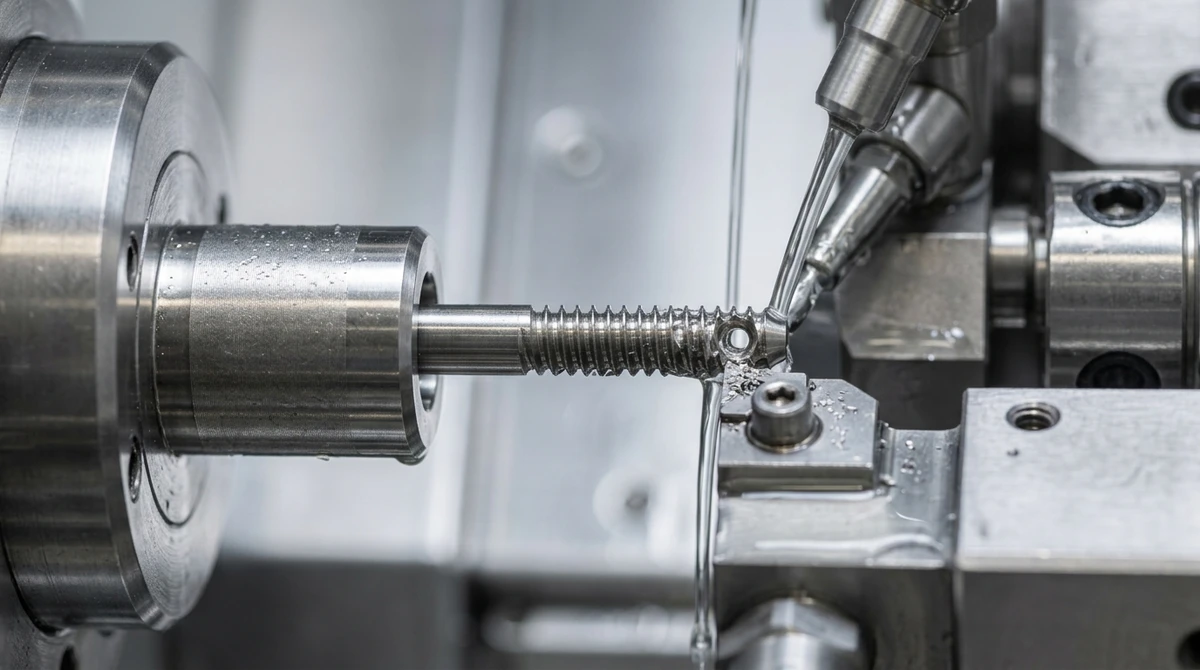
Miniature medical fasteners and surgical catheter shafts frequently exhibit high length-to-diameter aspect ratios (L/D > 15:1). Traditional lathes cause slender workpieces to deflect under radial cutting pressure:
- Guide Bushing Synchronization: Swiss-type screw machines feed the bar stock axially through a tungsten carbide guide bushing, with turning tools cutting immediately adjacent to the bushing face (within 1.0 mm). This eliminates part deflection, enabling the production of micro-pins down to Ø0.2 mm with tolerances within ±0.010 mm.
- Simultaneous Dual-Spindle Micro-Milling: Modern Swiss lathes feature driven live tooling operating at 12,000 to 24,000 RPM. Sub-spindles seamlessly grip the turned part for back-end cross-drilling, hex-socket broaching, and thread whirling in a single chucking.
- Thread Whirling for Cannulated Screws: Rather than single-point threading, high-speed thread whirling rings equipped with multi-tooth carbide inserts rotate eccentrically around the bar. This generates deep, burr-free bone screw thread profiles with pristine surface integrity without inducing work hardening.
3. Cryogenic Deburring, Surface Passivation & Inspection
In medical device manufacturing, a loose microscopic burr entering a surgical patient’s bloodstream represents a catastrophic event. Post-machining finishing follows stringent cleanroom decontamination:
- Cryogenic Nitrogen Deburring: Precision PEEK and soft polymer implants are blasted with micro-polycarbonate media under liquid nitrogen vapor (-130°C). Micro-burrs embrittle and snap cleanly away without altering critical part dimensions.
- Electrochemical Polishing & Ultrasonic Passivation: Stainless steel 316LVM and titanium instruments undergo multi-stage nitric or citric acid ultrasonic passivation (ASTM A967), dissolving free iron atoms and boosting the chromium/titanium oxide passivation layer.
- Optical Non-Contact Metrology: Multisensor vision measuring centers and 3D confocal laser profilometers verify micro-hole diameters, pitch concentricity, and surface roughness (Ra ≤ 0.2 µm) with micron-level repeatability.
| Inspection & Cleaning Step | Testing Protocol / Standard | Target Quality Metric | Critical Surgical Role |
|---|---|---|---|
| Micro-Burr Inspection | 50× Optical Microscope Inspection | 100% Zero burr at thread crests/roots | Prevents foreign body embolisms in tissue |
| Citric Passivation | ASTM A967 / ASTM F1089 | Passes Copper Sulfate & Boil Test | Eradicates surface iron contamination & rust |
| Bioburden & Particulate | Multi-stage ultrasonic cleanroom wash | Residual hydrocarbons < 0.01 mg/cm² | Ensures biocompatibility prior to gamma/ETO sterilization |
| Dimensional FAIR | Zeiss CMM / Keyence Optical Comparator | 100% GD&T feature conformity | Guarantees seamless surgical tool assembly |
4. Cleanroom DFM Guidelines for Medical Hardware Designers
Collaborating early with our machining engineers during CAD development prevents costly manufacturing re-engineering:
- Avoid Micro Blind Bores with Flat Bottoms: Ultrasonic wash cavitation and cleaning fluids can become entrapped in blind flat-bottomed micro-holes. Incorporate generous 118° or 135° drill point transitions or through-holes to enable complete fluid flushing.
- Specify Standard Metric Thread Pitches: Where possible, utilize standard ISO metric threads or standardized medical screw standards (e.g., ISO 5835 orthopedic screws) rather than custom non-standard lead profiles to allow thread-whirling tooling reuse.
- Radiused Transitions on PEEK Features: PEEK is notch-sensitive under cyclic mechanical fatigue. Specify minimum internal fillet radii of R ≥ 0.4 mm at all shoulder transitions.
Swiss-type CNC lathes support the bar stock right next to the cutting tool using a guide bushing, eliminating part deflection under cutting forces. This enables the machining of ultra-slender parts with length-to-diameter ratios exceeding 20:1, while achieving precision tolerances (±0.010 mm) and burr-free threads via high-speed thread whirling.
Parts undergo an engineered multi-stage cleaning protocol: solvent vapor degreasing, ultrasonic multi-tank immersion in deionized water with biocompatible medical detergents, citric acid passivation (ASTM A967), and final cleanroom packaging to eliminate particulate and bioburden contamination.
No. Standard chlorinated or petroleum-based cutting fluids can chemically contaminate implantable medical PEEK. In our facility, PEEK implants are machined using cold-air vortex guns, pure deionized water mist, or specialized USP Class VI approved synthetic water-soluble lubricants.
Documentation and Traceability for Medical Prototype Parts
Medical prototype programs require every part to be traceable to a material heat or resin lot, a documented process route and a recorded inspection result, so that design-verification data remains defensible during later regulatory review.
- Material lot control: Titanium, stainless steel and PEEK stock is purchased with mill test reports or lot documentation, and the lot number is linked to each part serial number.
- Process route sheets: Each part carries a route sheet listing machining operations, deburring, cleaning and passivation steps, including which machine and fixture were used.
- Inspection records: CMM or optical reports list measured values for critical features, such as bore diameters and thread pitch diameters, rather than only pass or fail statements.
- Cleaning and packaging records: Passivation per ASTM A967 and ultrasonic cleaning steps are recorded by batch, and parts are packaged to prevent contamination before they reach the customer.
We provide these records on request for prototype and pilot builds, and the customer remains responsible for incorporating them into their own quality system, which keeps the data package consistent as a program moves from first prototypes toward formal design verification.
Precision Medical Device CNC Machining with AS Prototypes
Bring your life-critical medical devices and surgical instruments to life with our precision Swiss turning, 5-axis micro-milling, and cleanroom finishing capabilities. Our team delivers medical-grade biocompatible components with unmatched precision and surface purity.
Upload your medical 3D CAD files (STEP, IGES, or Parasolid) today for a confidential engineering DFM review and quotation: