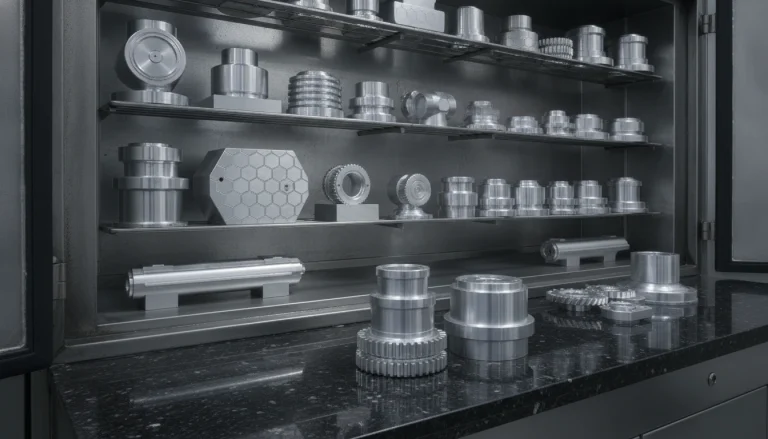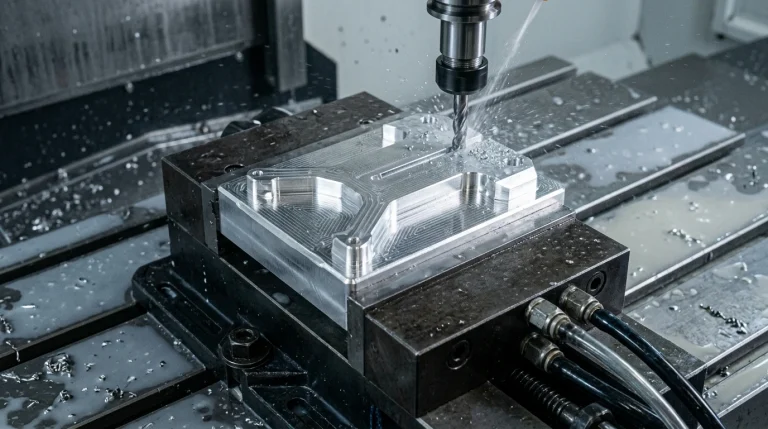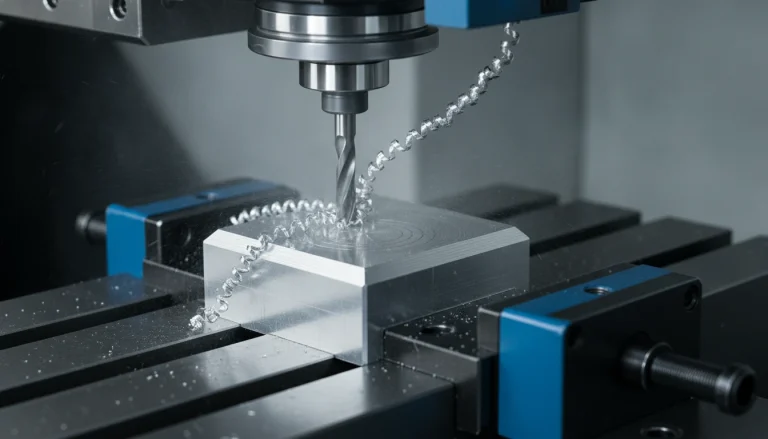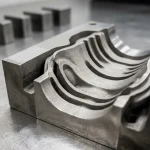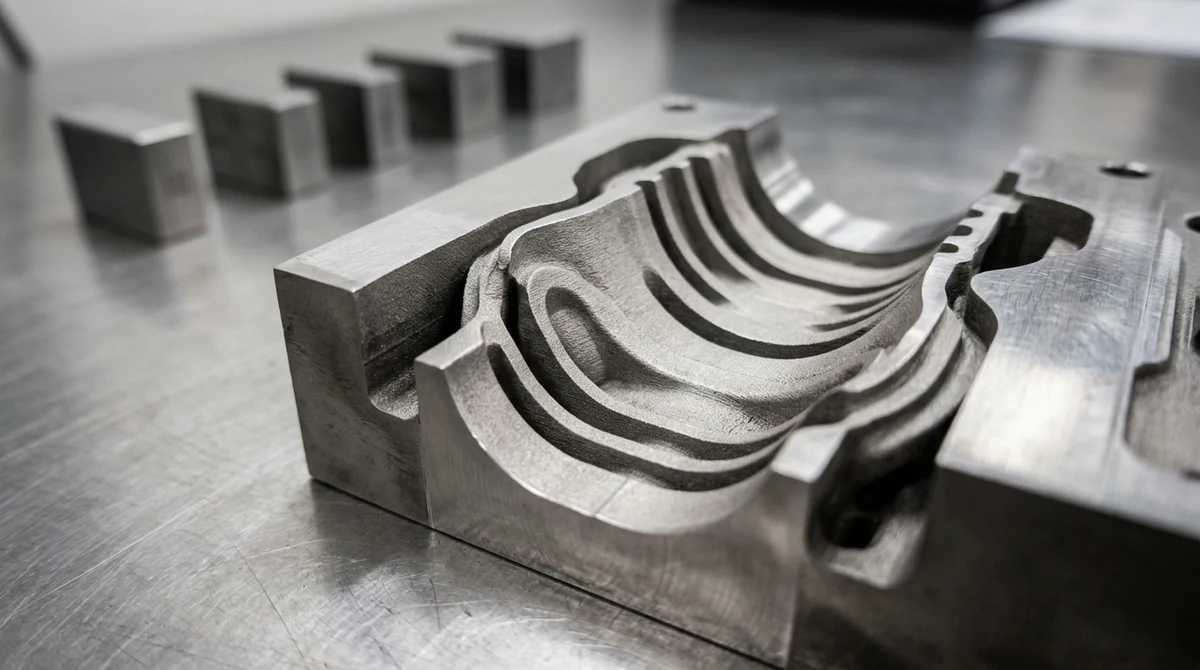
Building steel tooling for plastic parts traditionally demands weeks of EDM and CNC milling. However, modern fast-paced hardware development cannot wait months for first-article test parts.
Here is where 3D printed molds revolutionize injection molding. By printing mold inserts directly from CAD data, teams cut tool build times from months to days.
Consequently, hardware creators produce authentic injection molded parts in real resins for pilot trials. In addition, additive tooling unlocks curved cooling lines that traditional drills cannot machine.
At AS Prototypes, our injection molding services blend additive tooling with modular steel bases. In this guide, we break down resin inserts, DMLS conformal cooling, and rapid tool economics.
Why 3D Printed Molds Transform Tooling Lead Times
Traditional hardened tool steel molds require extensive lead time and high capital investment. For example, complex core and cavity sets can easily take six to ten weeks to build.
If you uncover a gate location error during T1 trials, mold modifications cause costly project delays. Furthermore, welding and re-machining tool steel wastes thousands of dollars.
In contrast, 3D printed molds use modular inserts. By fitting printed resin or steel inserts into master unit die frames, you eliminate raw block machining. Therefore, your team tests real parts in days at a fraction of standard tooling costs.
| Tooling Strategy | Tooling Material | Average Lead Time | Typical Shot Life | Conformal Cooling |
|---|---|---|---|---|
| SLA Photopolymer Inserts | High-Temp Ceramic-Filled Resin | 4 to 8 business days (T1 molded parts) | 20 to 100 shots | External air cooling only |
| DMLS Tool Steel Inserts | 1.2709 Maraging Tool Steel | 10 to 18 business days (Printing, stress-relief, EDM & T1) | 50,000+ shots | Fully conformal 3D channels |
| CNC Machined Aluminum | QC-10 or Alumec 89 Alloy | 1 to 2 weeks | 5,000 to 10,000 shots | Straight gun-drilled lines only |
| Production Hardened Steel | H13 / S136 Tool Steel | 4 to 8 weeks | 500,000+ shots | Cross-drilled with baffles |
DMLS Metal Printing and Conformal Cooling Channels
In high-volume injection molding, cooling time accounts for more than 60 percent of the total cycle.
Traditional gun drilling can only create straight cooling holes. As a result, deep ribs and core corners stay hot, leading to sink marks and part warpage.
In contrast, direct metal laser sintering builds steel inserts layer by layer. Explore our specialized metal 3D printing services to see how we print 1.2709 maraging tool steel with 99.8 percent density.
Consequently, our engineers design conformal cooling passages that follow the exact curved contours of your part. Therefore, cycle times drop by up to 40 percent. In addition, molded parts stay flatter and free of internal stress.
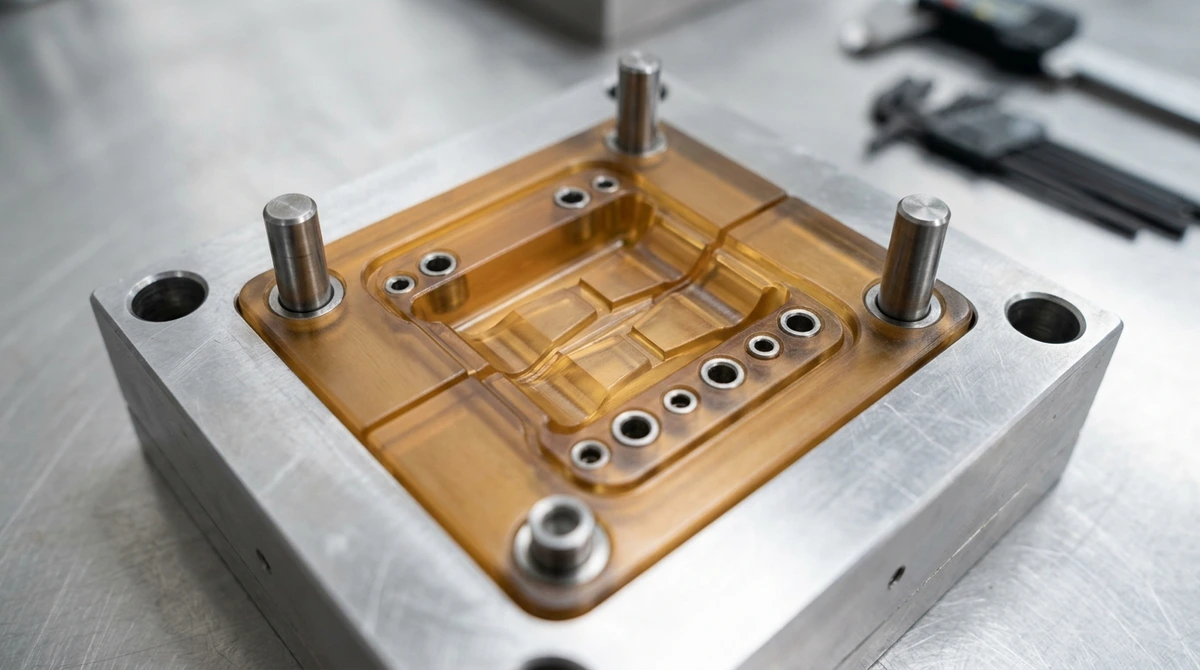
SLA Photopolymer Inserts for Ultra-Fast Prototype Runs
Do you only need 20 to 50 parts for fit checks, consumer trials, or regulatory tests? In that scenario, metal tooling is often unnecessary.
Instead, SLA 3D printed inserts offer the quickest and cheapest solution. We print core and cavity inserts using ceramic-reinforced high-temperature resins with a heat deflection temperature above 230 degrees Celsius.
| Printing Process | Recommended Material | Heat Deflection Temp | Compatible Resins | Best Use Case |
|---|---|---|---|---|
| SLA (Stereolithography) | Ceramic-filled High Temp Resin | 238 °C (0.45 MPa) | PP, PE, TPE, ABS | Rapid T1 functional validation parts delivered within 4 to 8 business days. |
| DMLS (Metal PBF) | Maraging Steel / 316L / CuCrZr | 550+ °C (Hardened 52 HRC) | All plastics (PC, PEEK, PA-GF) | Conformal cores for mass production tools. |
| PolyJet Jetting | Digital ABS Plus | 85 to 95 °C | TPE, EVA, low-melt PP | Overmolding gasket test inserts. |
| SLS Powder Bed | Nylon PA12 Glass-Filled | 160 °C | Wax and silicone casting | Investment casting patterns and thermoforming. |
Operating Guidelines for Rapid Tooling
Operating printed molds requires slight adjustments compared to hardened steel tooling.
First, technicians use longer cooling cycles for resin inserts. This is because polymer resin transfers heat slower than metal. In addition, lower clamp pressures protect fine parting lines from crushing.
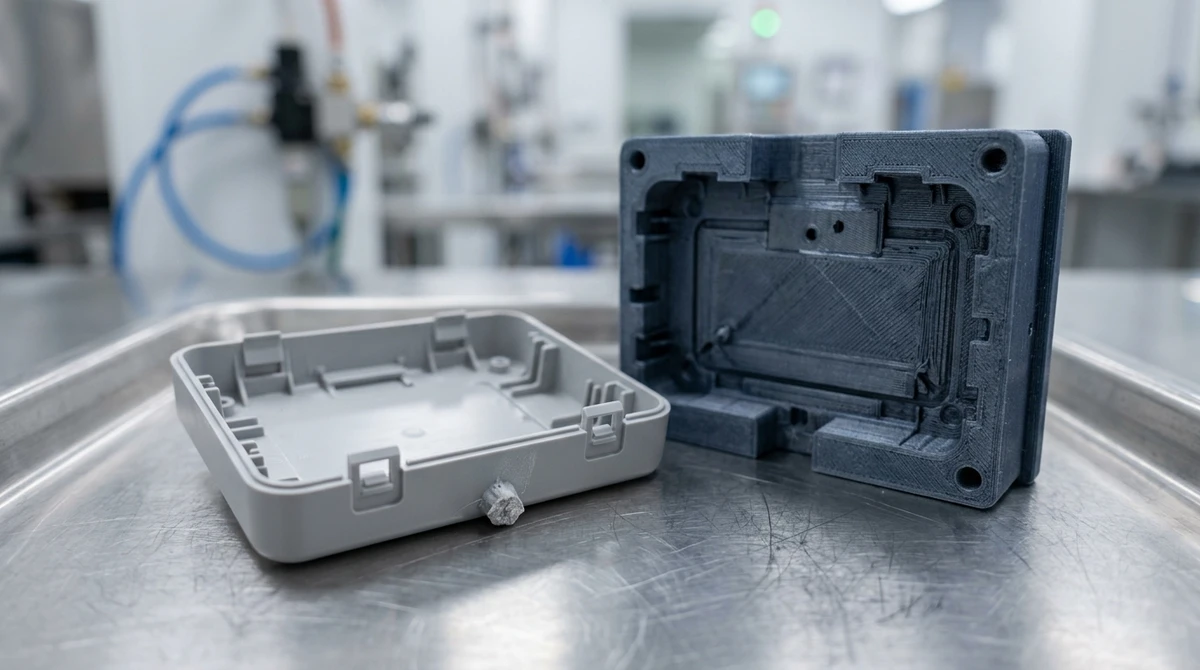
Second, generous draft angles of two to three degrees make demolding effortless. As a result, parts eject cleanly without sticking or scuffing delicate printed cavity walls.
Yes. Using ceramic-filled high-temperature resins or DMLS tool steel, 3D printed molds withstand high melt temperatures and injection pressures.
SLA high-temperature resin inserts typically yield 30 to 100 parts depending on resin melt temperature, wall thickness, and draft angles.
Conformal cooling channels are curved fluid passages printed directly inside mold cores. They match complex part contours and speed up mold cooling by up to 40 percent.
Need Fast Prototype Molds or Production Tooling?
AS Prototypes provides rapid tooling, high-precision injection mold manufacturing, and small-batch production runs. Upload your 3D CAD files today for a comprehensive DFM mold analysis and an instant quote.
Upload CAD Files for Instant Quote