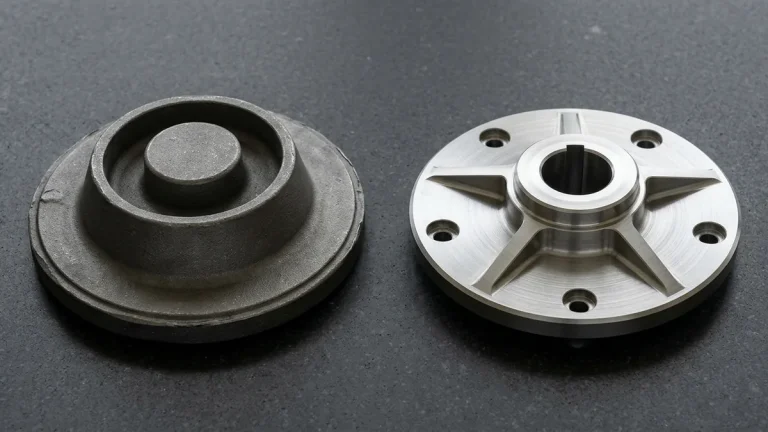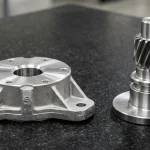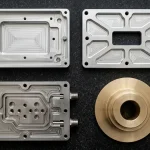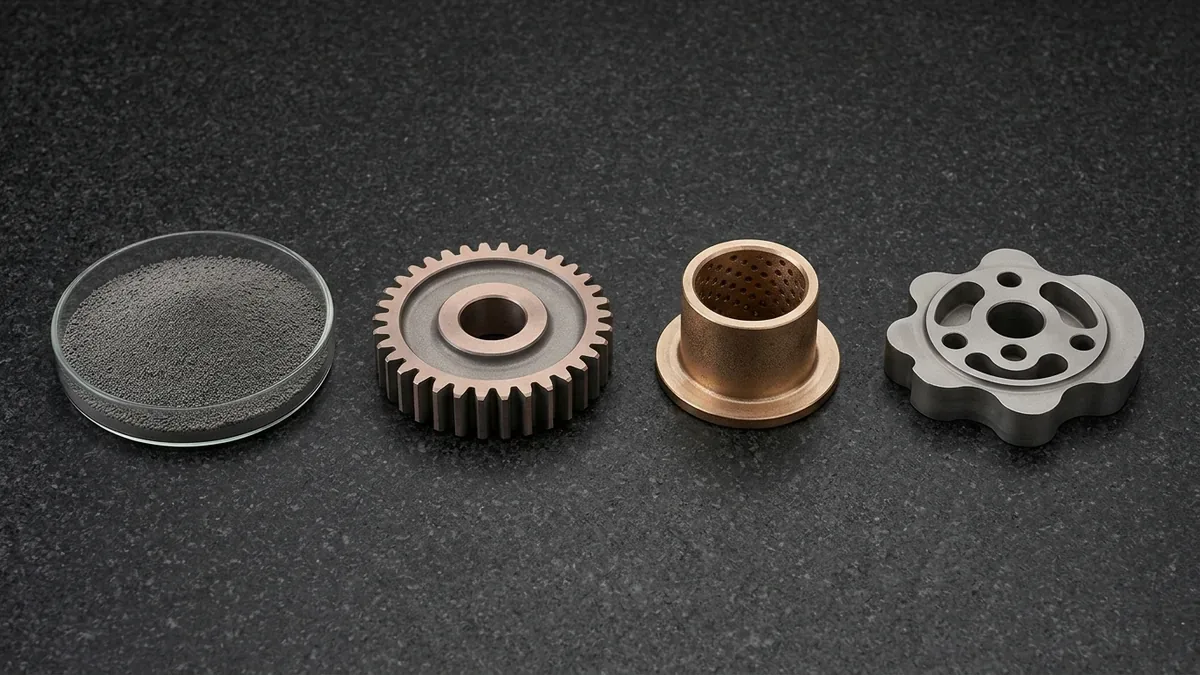
Producing complex structural hardware with minimal raw material waste requires advanced metallurgical consolidation techniques. Therefore, understanding modern powder metallurgy allows manufacturing engineers to mass-produce intricate gears, bushings, and magnetic cores efficiently. Powder metallurgy encompasses forming solid metallic components from fine elemental or pre-alloyed powders. By bypassing traditional ingot casting and heavy bulk subtractive milling, material utilization frequently exceeds ninety-five percent.
The manufacturing process relies on precision mechanical die compaction followed by thermal sintering in controlled atmospheric furnaces. During thermal soaking, atomic diffusion welds microscopic powder particles together without melting parent alloys completely. Furthermore, modern industrial advancements have converged traditional press-and-sinter methods with metal 3D printing services. In this engineering guide, we examine compaction kinematics, sintering mechanisms, and critical DFM rules.
Article Engineering Navigation
1. Powder Preparation: Gas Atomization and Powder Blending
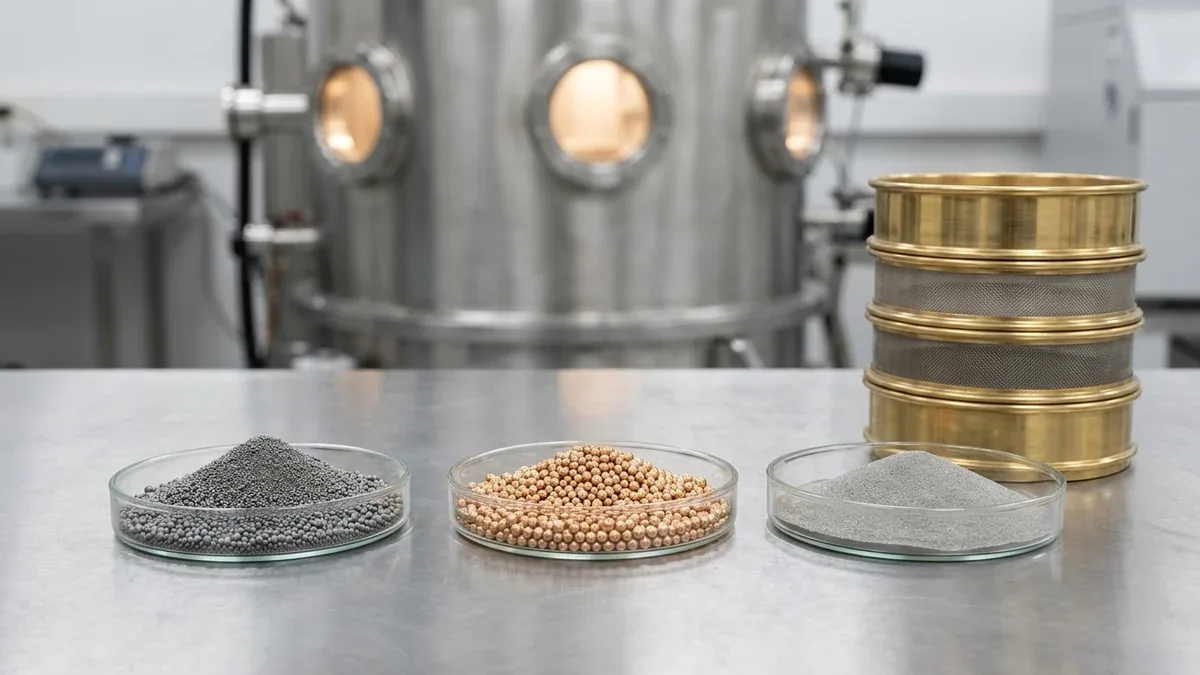
The metallurgical integrity of any sintered component begins with powder morphology. High-pressure inert gas atomization produces spherical micro-particles exhibiting excellent flowability. In contrast, water atomization yields irregular, nodular particles that provide superior green compaction strength during mechanical pressing. Powder diameters typically range from ten to one hundred and fifty microns depending on target density.
Following atomization, powders undergo precise mechanical blending with organic solid lubricants and secondary alloying additions. Lubricants minimize frictional galling against hardened carbide compaction dies. Furthermore, graphite additions diffuse into pure iron particles during subsequent sintering, creating high-strength pearlitic steel microstructures. In shop-floor practice, precise powder formulation dictates ultimate mechanical tensile properties.
2. Compaction Mechanics and Thermal Sintering Physics
Mechanical compaction transforms loose alloy powder into a rigid green compact possessing geometric coherence. Multi-action hydraulic presses exert uniaxial pressures between four hundred and eight hundred megapascals inside hardened tool steel cavities. Consequently, mechanical interlocking and localized cold welding bind powder grains tightly. However, green parts remain delicate and must be transferred gently into sintering furnaces.
Sintering occurs below the base metal’s absolute melting temperature, typically between seventy and ninety percent of solidus. In continuous mesh belt furnaces, parts travel through preheat, high-heat, and cooling zones under protective dissociated ammonia atmospheres. At elevated temperatures, solid-state diffusion forms metallurgical necks between adjacent particles, shrinking pore volumes. As a result, components achieve high structural density and robust impact resistance.
The operational sequence and critical engineering variables across powder metallurgy stages are detailed below.
| Process Stage | Primary Equipment | Key Operating Variables | Physical Transformation |
|---|---|---|---|
| Powder Atomization | Inert gas / water atomization towers | Nozzle pressure, melt superheat | Molten alloy disintegrated into fine powder droplets |
| Mechanical Compaction | Rigid hydraulic / mechanical punch presses | Tonnage pressure (400 to 800 MPa) | Loose powder compacted into green preform |
| High-Heat Sintering | Continuous mesh belt / vacuum furnaces | Temperature (1120°C to 1350°C), gas atmosphere | Solid-state atomic diffusion and pore neck formation |
| Secondary Coining / Sizing | Precision closed-die sizing presses | High-pressure restrike calibration | Dimensional tolerance calibration and surface densification |
| Oil Impregnation | Vacuum vessel soaking chambers | Vacuum depth, viscosity of synthetic oil | Controlled interconnected porosity filled with lubricant |
3. Material Alloys and Sintered Density Envelopes
Sintered mechanical performance correlates directly with final component density. Standard press-and-sinter iron-copper-carbon alloys achieve densities between 6.8 and 7.2 grams per cubic centimeter. While minor micro-porosity remains, it serves advantageous functional purposes in self-lubricating bronze bearings. Pores retain lubricating oil under capillary forces, discharging fluid automatically when rotational friction generates heat.
However, highly stressed automotive gears demand near-full theoretical density exceeding ninety-eight percent. To eliminate residual voids, engineers employ secondary copper infiltration or high-temperature hot isostatic pressing. In addition, when low-volume prototypes require complex internal channels, AS Prototypes deploys DMLS additive powder fusion. Moreover, secondary precision CNC machining finishes critical bearing journals and tapped threads to exact tolerances.
4. Design for Powder Metallurgy (DFM) Guidelines
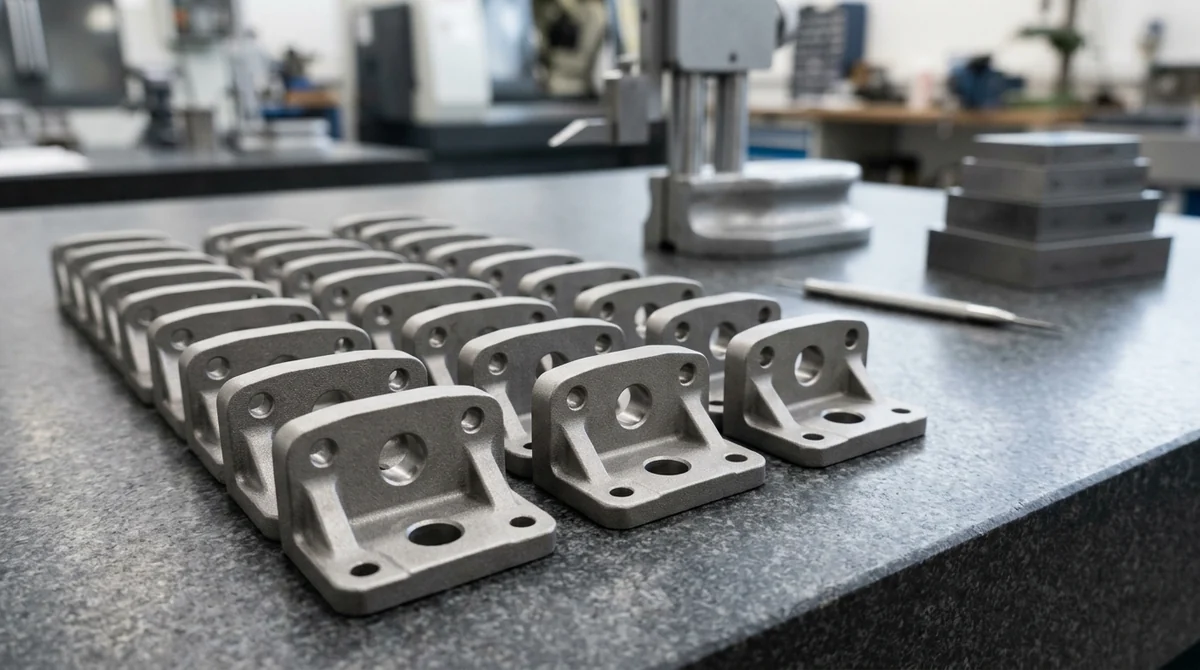
Designing components for powder compaction requires strict adherence to vertical punch kinematics. Because metal powders do not flow hydraulically like liquid plastics, tooling punches press exclusively along the vertical axis. Therefore, parts cannot incorporate external undercuts, radial cross-holes, or reverse tapers without secondary CNC machining.
Furthermore, engineers specify generous corner chamfers rather than feather edges on tool punches. Feather punch edges chip prematurely under hundreds of tons of repeated compaction pressure. In addition, wall thicknesses should exceed 1.5 mm to prevent density gradients across tall features. AS Prototypes collaborates closely with design teams to refine component geometry, ensuring seamless manufacturability and low unit production costs.
The comparative mechanical benchmarks across common sintered alloys are summarized in the table below.
| Material Designation | Base Alloy Chemistry | Sintered Density (g/cm³) | Tensile Strength (MPa) | Apparent Hardness |
|---|---|---|---|---|
| FC-0208 Copper-Steel | Fe + 2.0% Cu + 0.8% C | 6.8 to 7.1 | 450 to 580 | HRB 75 to 85 |
| FN-0205 Nickel-Steel | Fe + 2.0% Ni + 0.5% C | 7.0 to 7.3 | 520 to 690 | HRB 80 to 92 |
| SS-316L Sintered Stainless | Austenitic 316L Stainless Powder | 6.7 to 7.1 | 380 to 480 | HRB 60 to 75 |
| CT-1000 Porous Bronze | 90.0% Cu + 10.0% Sn | 6.4 to 6.8 | 130 to 180 | HRH 35 to 50 |
| FL-4405 Prealloyed Steel | Fe + 0.85% Mo + 0.5% C | 7.2 to 7.4 | 750 to 950 | HRC 25 to 35 |
5. Technical Engineering FAQ
What are the primary economic benefits of powder metallurgy over CNC machining?
Powder metallurgy achieves over 95% material utilization with virtually zero scrap waste. Consequently, for high-volume production above 20,000 parts, powder pressing dramatically lowers unit costs compared to machining solid billets.
Why do sintered parts contain residual porosity?
During solid-state sintering, powder particles bond without melting entirely. Microscopic voids remain between grains, yielding five to fifteen percent porosity. However, secondary hot isostatic pressing (HIP), resin impregnation, or copper infiltration eliminates interconnected voids to restore pressure tightness and fatigue strength.
Can powder metallurgy produce external threads or cross-holes?
No. Mechanical compaction punches move vertically in rigid dies. Furthermore, external threads, side holes, and undercuts cannot be pressed directly. Therefore, these geometric features require secondary 3-axis or 4-axis CNC machining and tapping operations after sintering.
Partner with Our Precision Metallurgy, DMLS & CNC Engineering Team
Optimize sintered alloy selection, DMLS metal printing, and secondary CNC machining tolerances before production begins. Upload your 3D CAD files (STEP/IGES) and 2D GD&T drawings for a comprehensive shop-floor DFM review and custom quotation.
Upload 3D CAD for Engineering DFM & RFQ