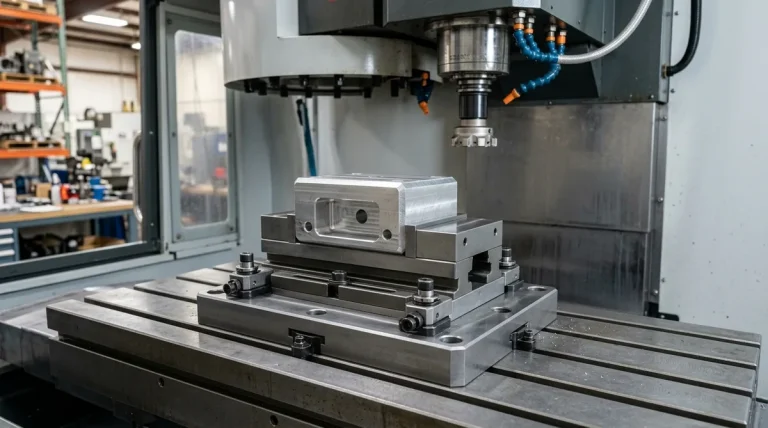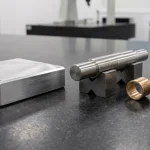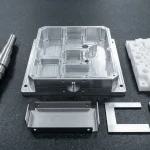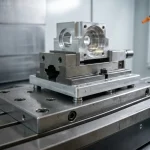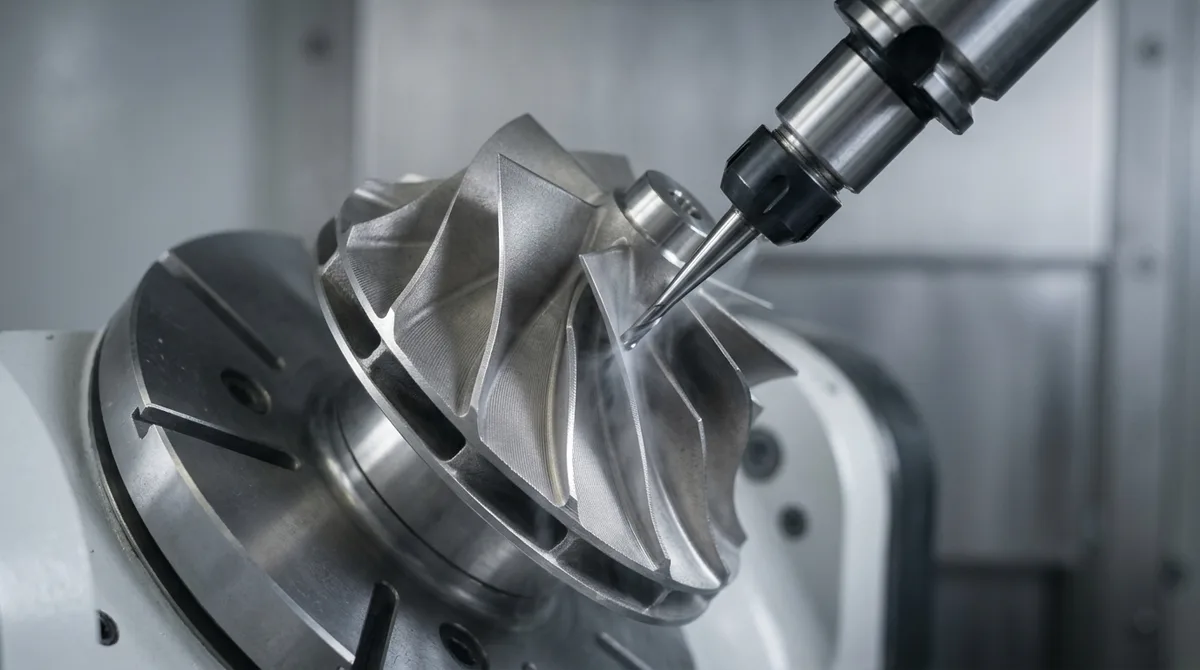
Deploying AI in CNC manufacturing is redefining modern precision machining, transitioning traditional subtractive shops from reactive parameter adjustments to predictive, closed-loop cyber-physical intelligence. Rather than posing a threat to skilled machinists, artificial intelligence empowers engineering facilities to eliminate catastrophic cutter failures, optimize cutting dynamics on high-temperature superalloys, and automate complex CAM toolpathing. At our machine shop, we integrate edge-computing neural networks and high-frequency spindle telemetry into our precision CNC machining operations and multi-axis 5-axis machining centers to deliver unmatched accuracy, rapid turnaround, and robust quality control.
Demystifying AI in Machining: An Engineering Force Multiplier
Modern machine tools operate under extreme mechanical forces, thermal gradients, and rotational speeds. A 0.01 mm tool deflection or unexpected harmonic chatter during deep sculptured contouring can ruin a high-value aerospace titanium billet in seconds. Artificial intelligence provides the millisecond-level reaction time that human operators cannot match, converting raw sensor streams into actionable cutting adaptations. By bridging real-time telemetry with predictive physics, AI transforms CNC machine tools from rigid code executors into self-optimizing cyber-physical manufacturing systems.
Application 1: Real-Time Regenerative Chatter Suppression
Chatter is a violent, self-exciting vibration phenomenon between the workpiece and cutting tool that degrades surface finish, accelerates tool wear, and fractures carbide flutes. AI suppresses chatter dynamically through high-speed closed-loop feedback:
- Accelerometric FFT Spectral Scanning: Piezoelectric vibration sensors mounted directly on the spindle nose sample vibrational spectra at 10,000 to 50,000 samples per second, isolating unstable resonance frequencies from normal tooth-pass harmonics.
- Dynamic Spindle Speed Variation (SSV): The AI controller modulates spindle RPM by ±5% to ±10% in continuous sinusoidal waves, disrupting the phase synchronization between successive wave cuts on the chip surface.
- Stability Lobe Identification: Machine learning algorithms continuously map the system’s dynamic stability lobes during high-speed finishing and semi-finishing passes, autonomously shifting spindle speeds into unconditionally stable cutting regimes without operator intervention.
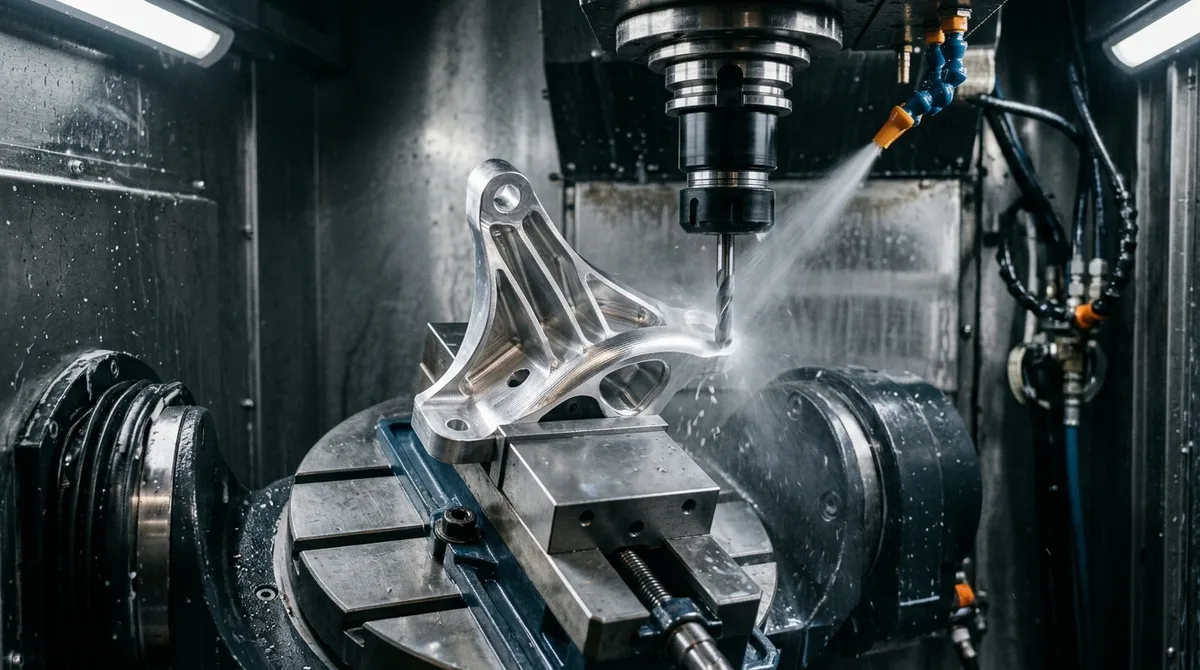
Application 2: Predictive Tool Wear & Remaining Useful Life (RUL) Modeling
Traditional CNC operations rely on arbitrary part-count tool life limits, either discarding expensive carbide cutters prematurely or running them until micro-chipping destroys part finish and dimensional tolerances. Edge AI algorithms model progressive cutter degradation in real time:
- Spindle Current & Torque Fourier Analysis: As a cutting edge wears from flank abrasion to crater wear, spindle motor current draw exhibits distinct harmonic frequency shifts. AI neural networks monitor these micro-variations to calculate tool degradation continuously.
- Acoustic Emission (AE) Sensors: High-frequency stress waves (100 kHz to 1 MHz) released during micro-fractures in carbide or ceramic inserts are detected by edge sensors, triggering an emergency spindle retract milliseconds before gross catastrophic tool failure.
- Remaining Useful Life (RUL) Optimization: Machinists receive exact percentage wear indicators, extracting 100% of safe cutter life without risking dimensional out-of-spec scrap on critical production runs.
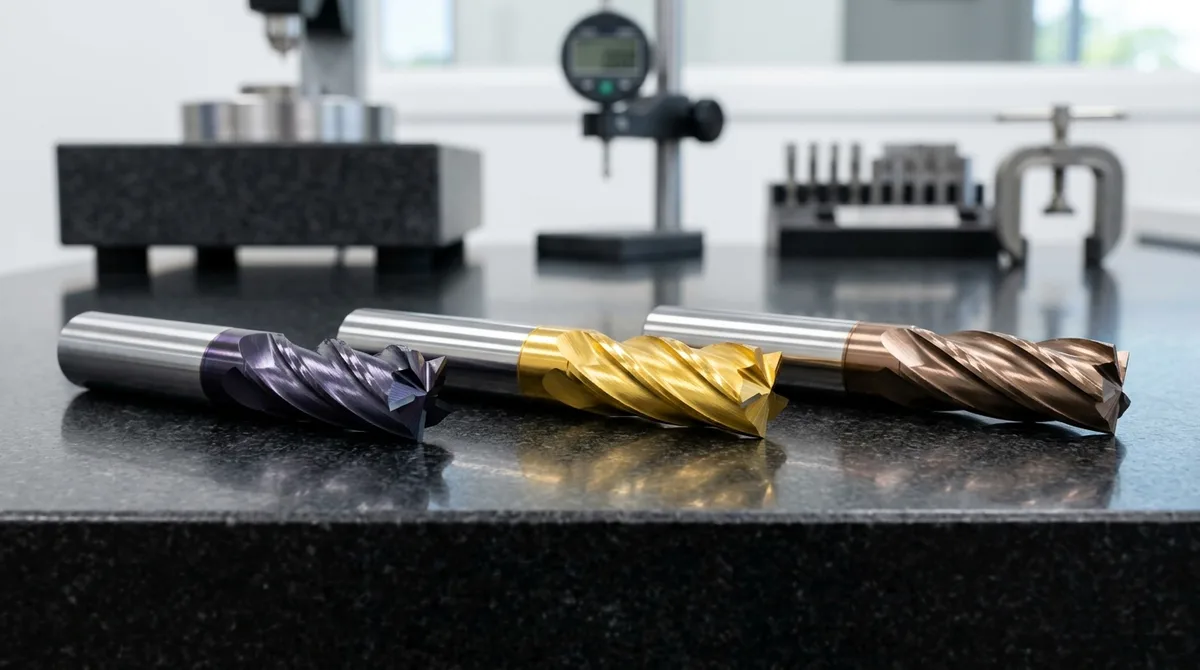
Application 3: Autonomous CAM Programming and Generative Toolpaths
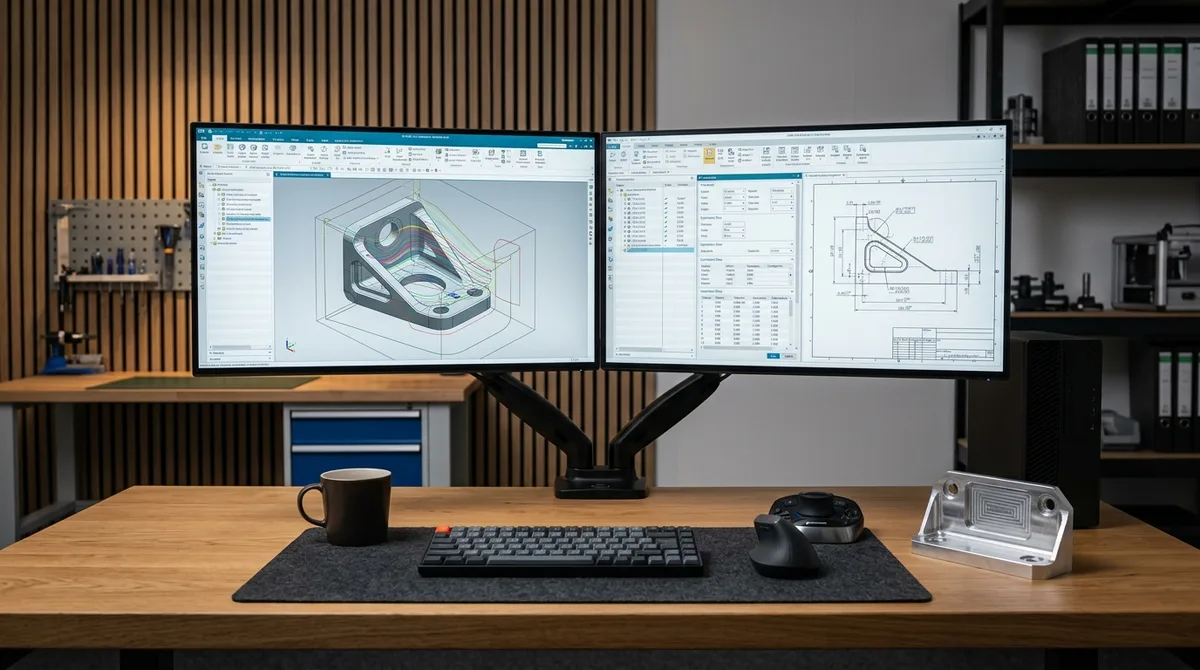
Generating optimized 5-axis toolpaths for complex geometries traditionally requires hours of meticulous CAM programming, feedrate tuning, and collision checking. AI CAM engines revolutionize this workflow:
- Physics-Informed Neural Networks (PINNs): AI CAM engines simulate cutting forces, chip thickness distribution, and volumetric material removal rates across the entire toolpath before generating G-code.
- Automated Feature Recognition (AFR): AI scans native 3D STEP solid models, identifying holes, pockets, bosses, and undercuts, and automatically assigning verified tool catalogs, roughing strategies, and feeds during comprehensive DFM engineering reviews.
- Volumetric Chip Load Balancing: AI prevents tool burial in sharp internal corners by dynamically curving continuous multi-axis toolpaths, maintaining constant cutter engagement angles and zero shock loading on delicate cutting flutes.
Application 4: In-Process Probing & Closed-Loop Thermal Compensation
Machine tools expand non-linearly as spindle bearings, ballscrews, and guideways heat up during extended production cycles. Without adaptive compensation, thermal growth can introduce up to 0.03 mm of dimensional error across an 8-hour shift:
- Thermocouple Sensor Arrays: Machine tools equipped with multi-point temperature sensors track casting, spindle nose, and ambient temperature deltas at 10 Hz frequency.
- Predictive Thermal Neural Networks: Edge AI models predict instantaneous axis growth vectors and feed dynamic micro-offsets directly to the CNC servo drives, compensating for thermal expansion before dimensional error occurs.
- In-Situ Optical Touch Probing: Spindle-mounted wireless touch probes verify critical datums and bore diameters directly on the machine fixture according to strict metrology and quality control standards, maintaining ±0.010 mm precision across extended unattended runs.
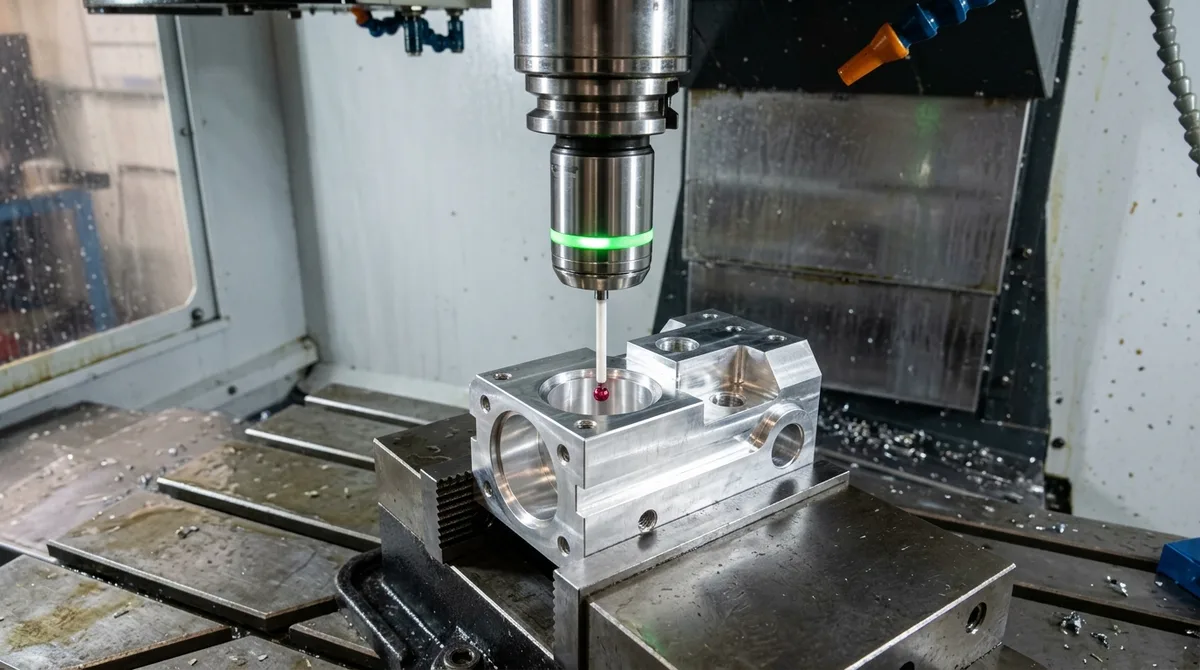
Comparative Benchmark: Conventional CNC vs. AI-Augmented Machining
The operational comparison below details the technological leap achieved by integrating artificial intelligence into machine tool architectures:
| Machining Parameter | Conventional CNC Control | AI-Augmented Machine Tool | Direct Engineering Benefit |
|---|---|---|---|
| Feed Rate Optimization | Static, conservative handbook rates | Dynamic real-time force adaptation | 20% – 35% cycle time reduction |
| Tool Breakage Detection | Post-cut mechanical tool setter flag | Millisecond acoustic emission trigger | Zero ruined billets or spindle damage |
| Thermal Drift Compensation | Periodic manual probing pauses | Predictive thermal neural net offset | Continuous ±0.010 mm precision across extended cycles |
| Harmonic Chatter Response | Operator manually turns feed override knob | Autonomous spindle speed harmonic shift | Ra < 0.4 μm mirror surface finish |
| CAM Toolpath Generation | Manual boundary & stepover definition | Automated feature recognition & toolpathing | 70% faster time-to-first-chip |
Telemetry Sensor Suites & Edge AI Inference Standards
Deploying AI algorithms requires real-time deterministic sensor infrastructure on the factory floor:
| Telemetry Source | Sampling Bandwidth | Machine Learning Architecture | Primary Optimization Goal |
|---|---|---|---|
| Piezo Tri-Axial Accelerometer | 10 kHz – 50 kHz | Convolutional Neural Network (CNN) | Real-time chatter isolation & suppression |
| Spindle Inverter Current / Bus Volts | 1 kHz (EtherCAT bus) | Recurrent Neural Net (LSTM) | Flank wear tracking & torque overload stop |
| Spindle PT100 Thermocouples | 10 Hz | Polynomial Regression / Random Forest | Thermal axis growth compensation (Z-offset) |
| Acoustic Emission Sensor | 100 kHz – 1 MHz | Support Vector Machine (SVM) | Instantaneous micro-fracture / crack detection |
Frequently Asked Questions
No. AI automates repetitive calculations, monitors tool wear, and suppresses chatter, functioning as a real-time copilot for skilled machinists. High-level decisions—such as complex multi-axis workholding fixture design, material selection, and critical DFM reviews—still require experienced mechanical engineers.
By combining high-frequency acoustic emission sensors with spindle drive torque monitoring, AI algorithms detect micro-fracturing on the tool cutting edge milliseconds before the entire insert snaps. The controller instantly commands an emergency retract, preserving both the workpiece and spindle.
Yes. Machine tools expand non-linearly as spindle bearings and ball screws heat up during long cycles. Edge AI models trained on internal thermocouple arrays calculate exact thermal expansion vectors and continuously apply micro-offsets to the machine’s Z and X axes, holding ±0.010 mm tolerances continuously.
Generative AI algorithms evaluate hundreds of possible toolpath orientations, cutting entry angles, and stepover distributions in seconds. By maintaining constant volumetric chip load and avoiding tool burial in internal corners, AI-generated toolpaths reduce machine cycle times by 20% to 35% while prolonging cutter longevity.
Leverage Intelligent CNC Machining for Your Parts
Benefit from predictive tool monitoring, dynamic chatter suppression, and automated 5-axis precision machining. Send your 3D CAD files (STEP / IGES) today for an instant DFM manufacturability evaluation and competitive pricing.