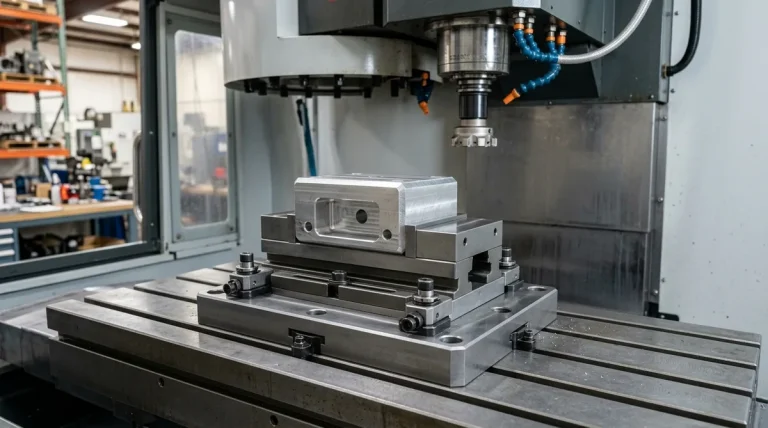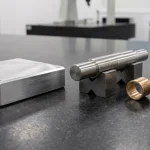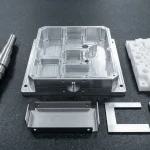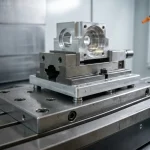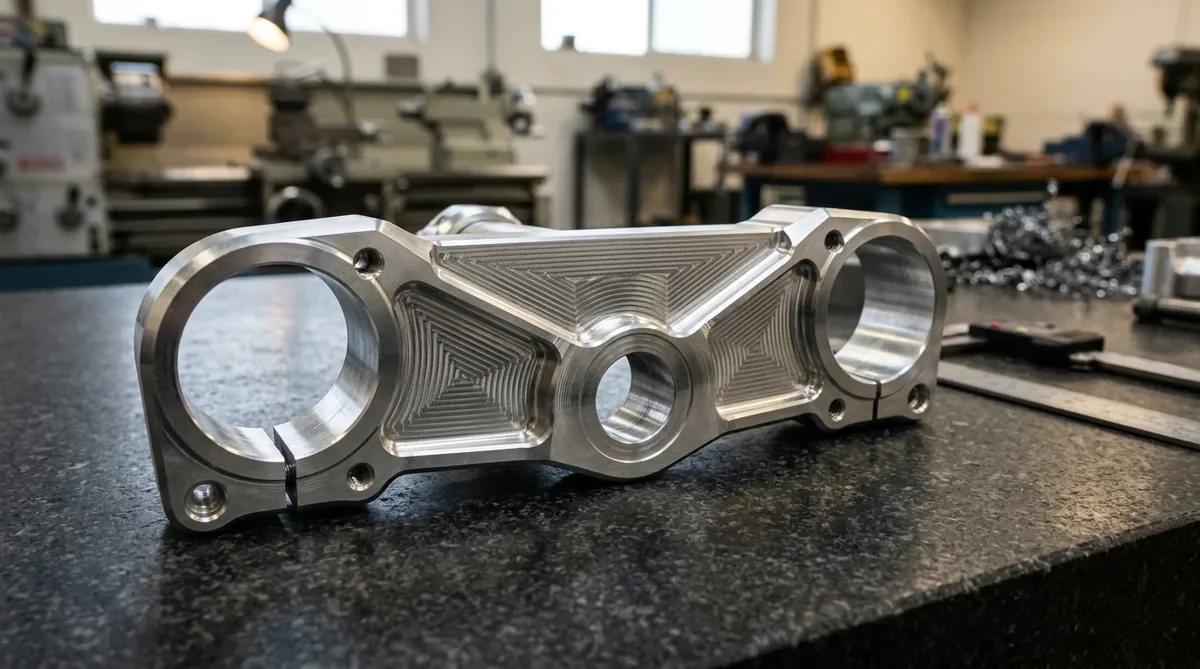
Manufacturing high-performance CNC motorcycle parts represents the ultimate fusion of structural rigidity, weight minimization, and striking industrial aesthetics. In professional racing paddocks and bespoke custom motorcycle builds, standard factory components cast from ADC12 aluminum often fall short under extreme dynamic stress. Heavy trail-braking, aggressive chassis flex, and high-frequency engine harmonic vibrations demand hardware machined from solid, void-free aircraft-grade alloys. At our in-house machine shop, our engineering teams deploy 3-axis, 4-axis, and simultaneous 5-axis machining centers to deliver precision CNC machining and specialized custom surface finishing tailored for racing teams and aftermarket innovators worldwide.
Billet Engineering vs. Die Castings in High-Performance Motorcycles
Mass-produced motorcycle triple clamps, foot controls, and clip-on handlebar mounts are predominantly manufactured via high-pressure die casting. While economical for high-volume consumer street bikes, die cast components suffer from inherent metallurgical weaknesses: trapped gas porosity, coarse dendritic grain structures, and modest yield strengths (typically around 160 to 240 MPa). Under severe impact or track-level G-forces, cast parts exhibit brittle catastrophic failure rather than controlled deformation.
By contrast, billet CNC machining carves structural hardware from wrought, fully homogenized billets of 6061-T6 or 7075-T651 aluminum. Wrought alloys feature aligned, continuous metallurgical grain flow, zero internal porosity, and tensile strengths reaching up to 572 MPa. This 140% jump in material strength allows engineers to optimize structural ribbing through finite element analysis (FEA)—shaving critical grams of unsprung mass while increasing torsional and bending stiffness where the rider needs it most.
5-Axis CNC Milling of Billet Triple Tree Clamps & Suspension Rockers
The front fork triple clamp assembly (triple tree) serves as the primary steering interface and structural backbone of a motorcycle’s front suspension. Under 1.5G trail-braking loads entering a corner, lateral and fore-and-aft bending forces transmitted through 43mm to 50mm fork stanchions can cause fork binding and stiction if the triple clamps deflect unevenly or have imperfect bore geometries.
To eliminate stiction, fork bores must maintain a cylindrical tolerance strictly within ±0.010 mm with precise surface finishes (Ra ≤ 0.8 μm). Multi-axis CNC milling centers bore both upper and lower fork holes in a single datum setup to preserve absolute coaxial alignment. Furthermore, custom billet triple trees allow custom steering stem offset modifications: decreasing offset increases chassis trail for rock-solid straight-line and high-speed braking stability, whereas increasing offset reduces trail for razor-sharp flickability in tight chicanes.
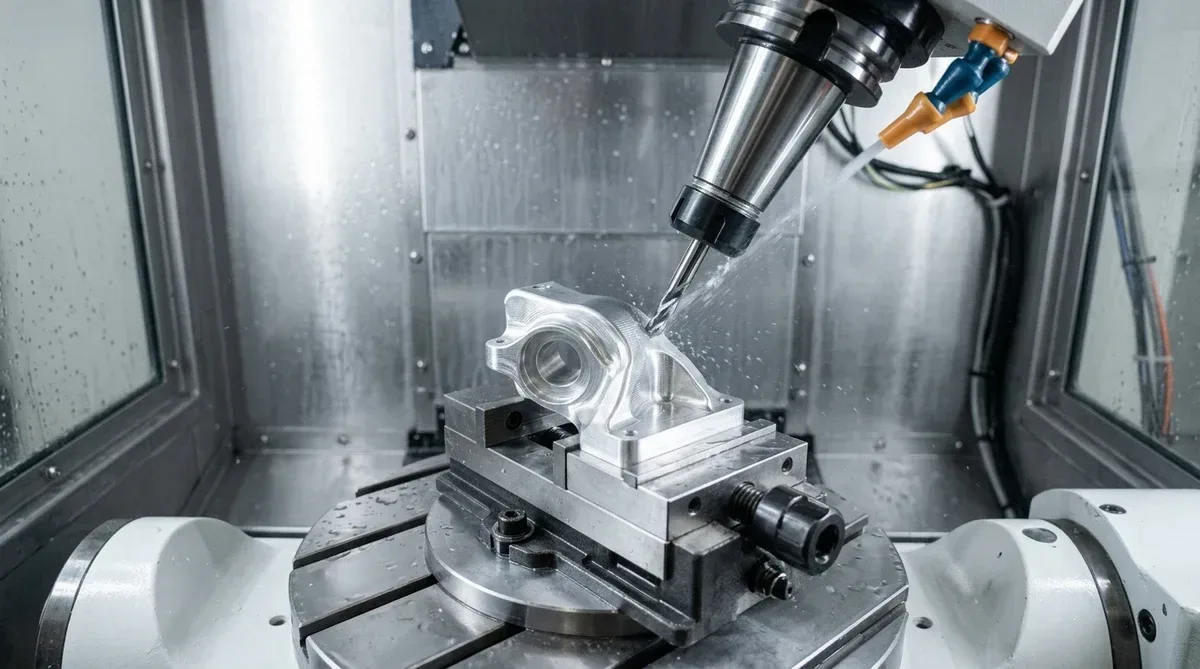
For rear suspension linkages, bellcranks, and swingarm pivot brackets, simultaneous 5-axis machining enables continuous 3D contour finishing along organic transition radii that mimic aerospace bulkheads. By utilizing slender solid carbide ball-nose end mills under continuous high-pressure emulsion coolant, sculptured surfaces achieve a Ra < 0.4 µm finish, eliminating stress risers while leaving rigid structural webs that endure severe shock loads without buckling.
Rearset Ergonomics, Linkages & Material Ductility (6061-T6 vs. 7075-T6)
Motorcycle rearset foot controls govern rider ergonomics, ground clearance at high lean angles, and precise gear shift and rear brake actuation. Designing racing rearsets requires balancing high operational rigidity against crash impact ductility.
While 7075-T6 offers superior ultimate tensile strength, 6061-T6 is the preferred engineering choice for foot levers and brake pedals. 6061-T6 possesses significantly higher fracture elongation (12% to 17% elongation at break compared to only 8% for 7075-T6). In the event of a low-side track crash, 6061-T6 foot levers bend plastically rather than snapping clean off, frequently allowing the racer to pick up the machine and ride safely back to the pit lane.
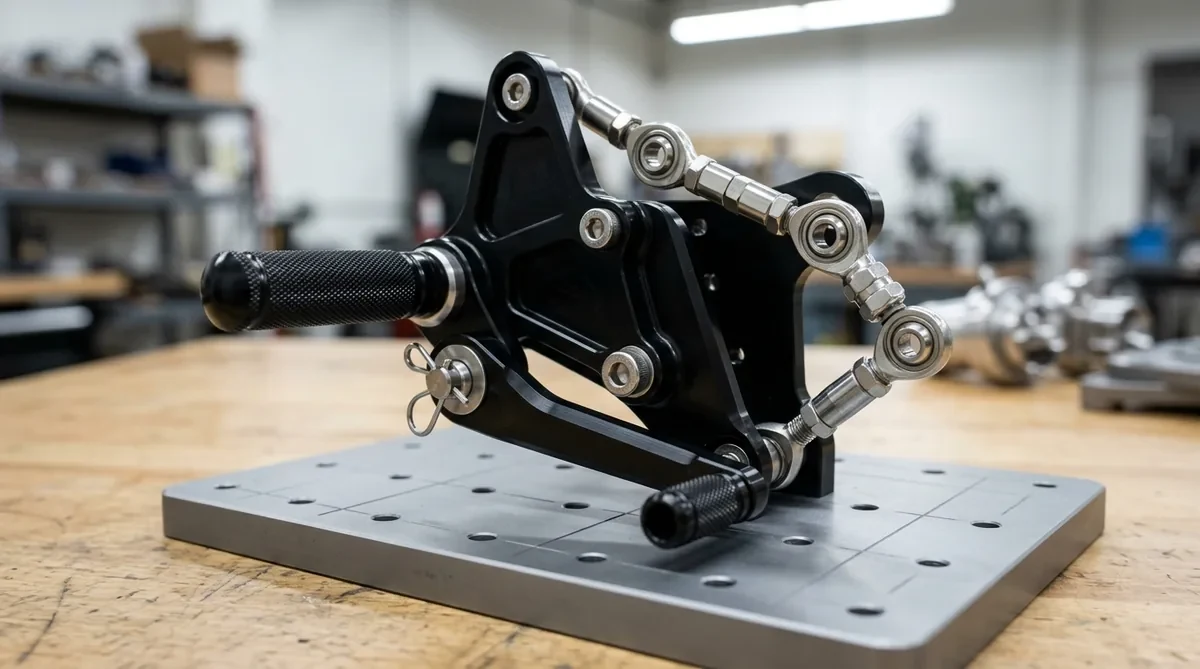
Key precision features in custom billet rearset assemblies include:
- Dual Sealed Bearing Pivot Pockets: Lever pivot bores are machined to a press-fit tolerance of ±0.015 mm to house dual ABEC-5 stainless steel cartridge bearings, eliminating side-to-side slop and delivering crisp, instantaneous shift feedback.
- Spherical Heim Joint Linkage Rods: CNC turned aluminum linkage rods with rolled left-hand and right-hand M6 metric threads allow riders to adjust pedal angle and linkage geometry continuously without removing the hardware from the bike.
- Aggressive Diamond Knurling: Footpegs receive a 30-degree diamond knurling toolpath with sharp pyramid crests, providing unyielding boot grip even in wet and oily track conditions.
Precision Turned Titanium Hardware, Captive Wheel Spacers & Sprockets
Reducing unsprung and rotational mass yields exponential gains in motorcycle acceleration, braking distances, and suspension compliance. Every gram saved at the wheel hubs directly reduces gyroscopic inertia and unsprung momentum.
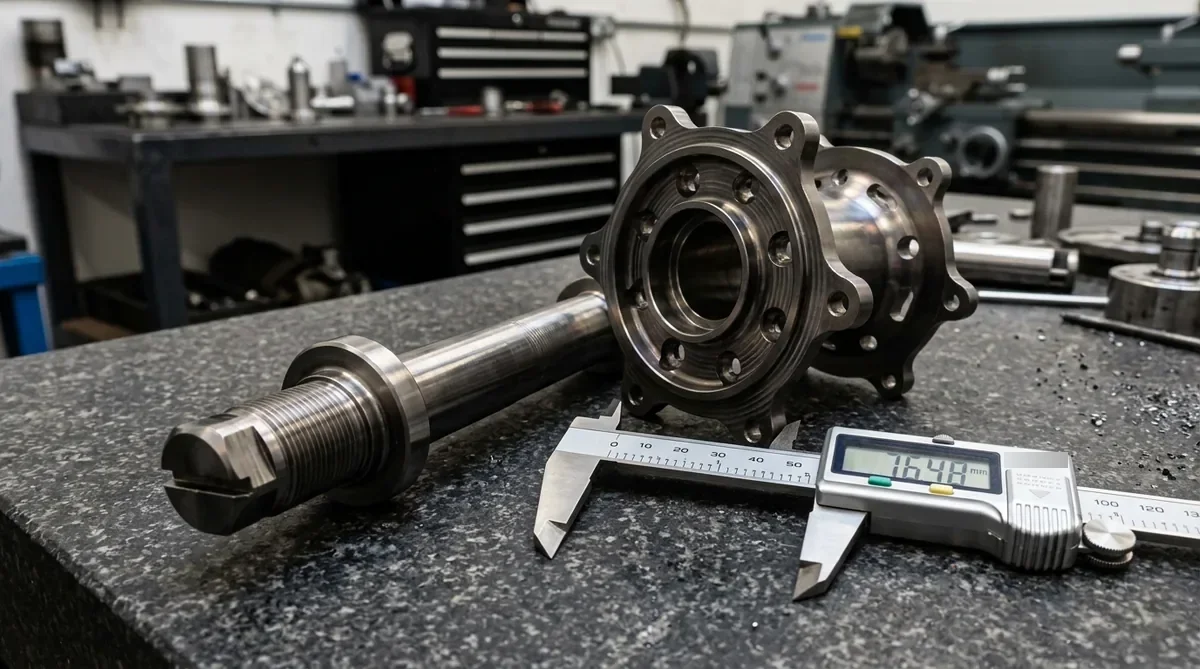
Essential lightweight running gear components include:
- Ti-6Al-4V Grade 5 Titanium Axles & Fasteners: CNC turned titanium wheel axles and hollow pinch bolts offer a 45% weight reduction compared to 4140 chromoly steel with comparable shear strength. Crucially, external threads are produced via cold thread rolling rather than single-point cutting. Cold rolling compresses the titanium microstructure, eliminating micro-notches at thread roots and increasing fatigue endurance by over 30%. Fasteners must be lubricated with copper or molybdenum disulfide anti-seize paste to prevent galvanic corrosion and thread galling in aluminum chassis receivers.
- Captive Wheel Axle Spacers: Machined from 7075-T6 or Grade 5 titanium, captive spacers feature an internal retention lip that snaps securely behind wheel dust seals, preventing spacers from falling out during rapid wheel changes in endurance racing.
- Billet Rear Drive Sprockets: Carved from 7075-T6 billet plate and finished with MIL-A-8625 Type III hardcoat anodizing, custom sprockets feature radial pocket cutouts that reduce rotational inertia by over 60% compared to standard steel sprockets, accelerating engine spool-up and rear-wheel response.
Surface Finishing: Hardcoat Type III Anodizing & Contrast Cut Aesthetics
Motorcycle hardware is exposed to a grueling operating environment: road grit, UV sunlight, rain, engine oil, chain fling, and corrosive glycol-ether hydraulic brake fluid (DOT 4 / DOT 5.1). Raw aluminum components oxidize rapidly and scuff under rider boots without proper surface conversion coatings.
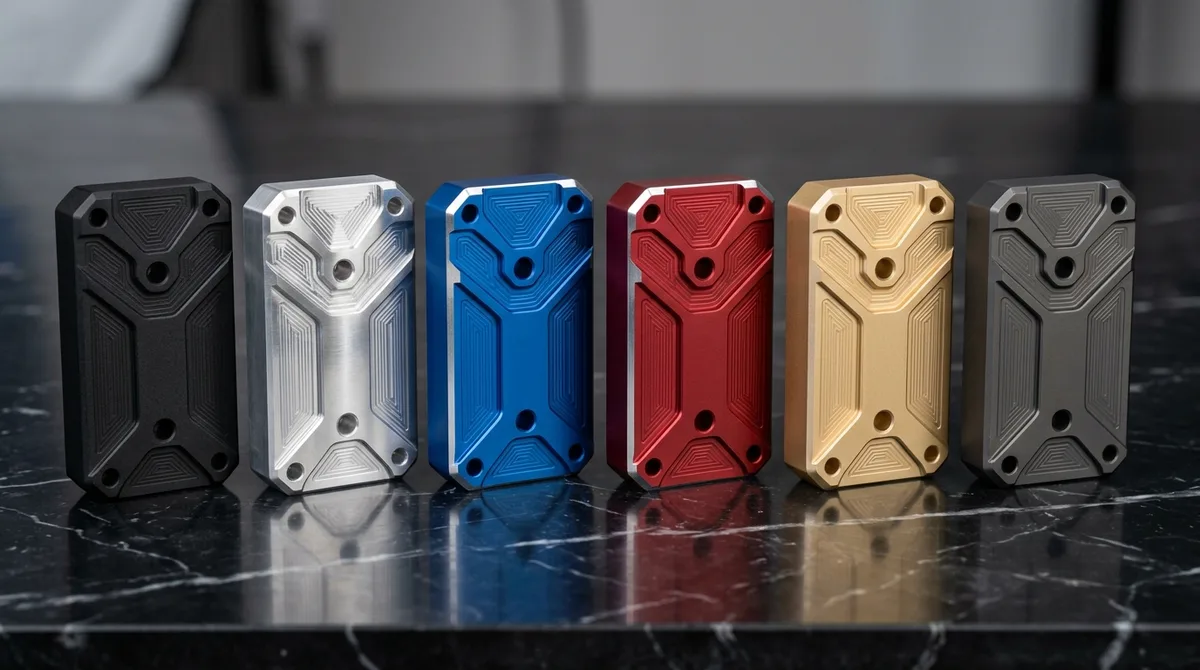
We provide two core surface finishing avenues for motorcycle applications:
- MIL-A-8625 Type III Hardcoat Anodizing: An electrochemical conversion coating that forms a 50-micron thick aluminum oxide barrier with a surface microhardness exceeding 450 to 550 HV0.05. This hard ceramic skin is completely impervious to heel-scuff abrasion, stone chips, and corrosive chemicals. Available in natural dark charcoal, matte black, and deep titanium grey.
- Type II Architectural Anodizing & Contrast Cut Machining: For aesthetic components such as engine stator covers, fluid reservoir caps, and triple clamps, components undergo fine glass bead blasting (#120 mesh) followed by Type II anodizing in vivid race colors (deep blue, crimson red, race gold, or jet black). Subsequently, the part is re-indexed in a high-speed CNC mill for a secondary 3D engraving pass. The high-speed diamond chamfering tool strips away the 15-micron color layer along accent bevels and logo grooves, exposing gleaming raw silver aluminum against the rich anodized backdrop.
CNC Motorcycle Component Materials & Tolerances Matrix
The following engineering guide summarizes standard alloy selections, machining strategies, tolerances, and operational benefits across custom motorcycle billet components:
| Component | Optimal Alloy | Machining Strategy | Critical Tolerance | Surface Finish Spec | Engineering Benefit |
|---|---|---|---|---|---|
| Triple Tree Clamp Set | 7075-T651 / 6061-T6 Billet | 5-Axis Milling + Precision Boring | ±0.010 mm (Fork Bores) | Type II Anodize + Contrast Cut | Zero fork binding; extreme braking stability |
| Rearset Foot Controls | 6061-T6 Aircraft Billet | 3-Axis Milling + Diamond Knurl | ±0.015 mm (Bearing Pockets) | MIL-A-8625 Type III Hardcoat | Crash ductility (bends rather than snaps); slop-free shifts |
| Clip-On Handlebars | 7075-T6 Bar / Seamless Tube | CNC Turning + 4-Axis Slitting | ±0.012 mm (Fork Clamp ID) | Type II Black Anodized + Laser Scale | High crash survival; quick bar replacement without unclamping fork |
| Wheel Axle & Spacers | Ti-6Al-4V Grade 5 Titanium | CNC Lathe Turning + Rolled Threads | Runout ≤ 0.010 mm | Fine Turned (Ra 0.4 μm) | Captive retention lip; 45% unsprung mass reduction |
| Billet Rear Sprocket | 7075-T651 Billet Plate | High-Speed Milling + Chamfering | ±0.020 mm (Tooth Pitch) | 50 μm Type III Hardcoat Anodize | 60%+ rotational inertia reduction vs. carbon steel |
| Suspension Rocker Arm | 7075-T6 / Ti-6Al-4V | Simultaneous 5-Axis Milling | ±0.015 mm (Pivot Sphericals) | Bead Blast + Hard Anodize / Passivation | Optimized leverage ratio; zero flex under peak shock loads |
Frequently Asked Questions
While 7075-T6 provides a higher tensile yield, 6061-T6 offers superior elongation before failure (12% to 17% vs 8%). In a low-side track slide, 6061-T6 levers bend plastically rather than fracturing cleanly off, allowing the rider to recover the motorcycle and ride back to the pit lane safely.
Decreasing triple clamp offset increases front-end steering trail, stabilizing the motorcycle at high straightaway speeds and minimizing front-end shake under maximum braking. Increasing offset reduces trail, delivering faster, lighter steering turn-in and rapid direction changes through tight chicanes.
Cut threads create microscopic stress concentration notches at the root radius that promote fatigue failure under continuous engine and road vibrations. Cold-rolled threads displace and compact the titanium grain structure, eliminating root micro-notches and increasing thread tensile fatigue endurance by over 30%.
MIL-A-8625 Type III Hardcoat Anodizing creates a dense 50-micron aluminum oxide ceramic surface with a microhardness exceeding 450 to 550 HV0.05. This wear-resistant surface prevents steel chain roller gouging and abrasive grit galling, yielding service lifespans comparable to steel sprockets at less than half the rotational mass.
Manufacture Custom Billet Motorcycle Hardware
Elevate your racing team or custom bike platform with high-precision 5-axis CNC machined triple trees, rearsets, captive wheel spacers, and lightweight racing sprockets. Upload your 3D CAD models (STEP / IGES) today for an immediate DFM manufacturability evaluation and competitive factory quotation.