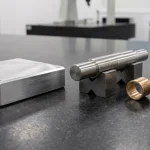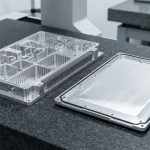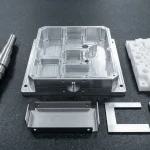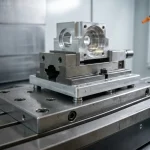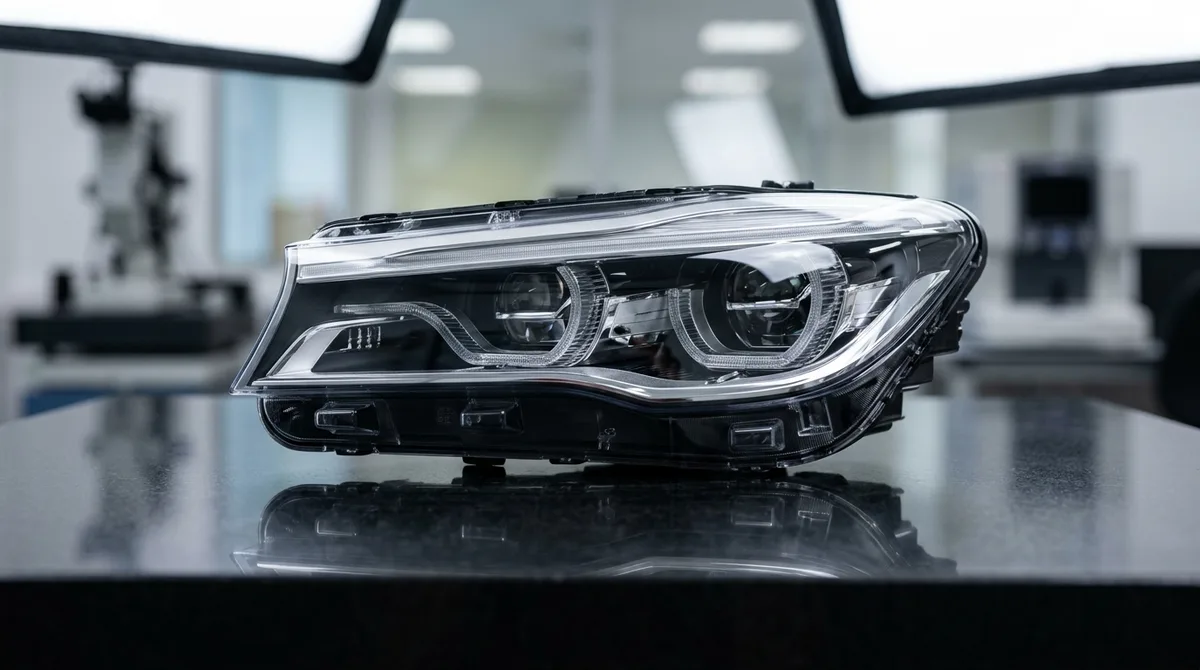
Executing successful headlamp industrial prototyping is among the most demanding disciplines in automotive engineering, requiring the seamless convergence of precision micro-optics, multi-material tooling, and thermal dissipation management. A modern automotive headlamp is far more than a protective plastic housing; it is an intricate optoelectronic assembly incorporating adaptive matrix LED arrays, total internal reflection (TIR) light guides, and vacuum-metallized parabolic reflectors. At our advanced prototype facility, our engineering teams build complex automotive lighting prototypes using high-speed precision 5-axis CNC machining, diamond flycutting, and optical hand-polishing.
The Multi-Disciplinary Architecture of Automotive Lighting Prototypes
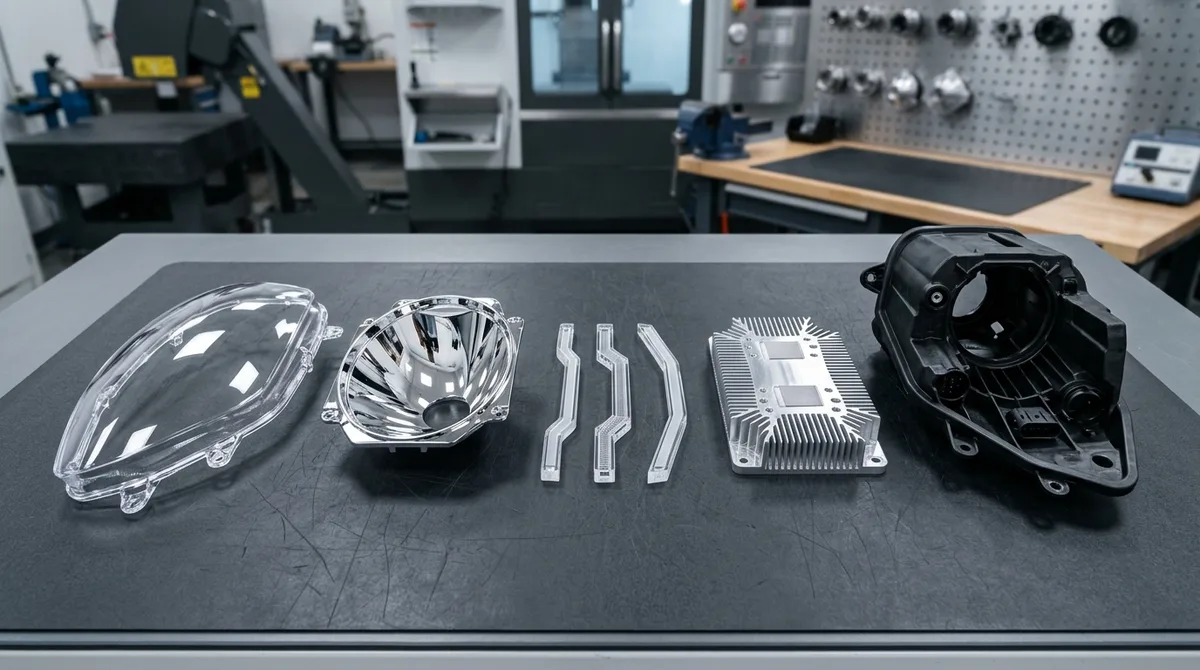
Modern vehicle illumination systems must achieve strict photometric beam patterns (ECE / SAE regulations) while withstanding extreme automotive operating environments. Developing a pre-production headlamp assembly requires synchronizing four distinct manufacturing domains:
- Outer Cover Lens & Thick-Walled Light Guides: Crystal-clear optical PMMA or Polycarbonate (PC) components requiring zero internal bubbles, minimal birefringence, and surface roughness Ra < 0.01 µm.
- Reflector Bezels & Projector Shrouds: High-temperature ABS, PC-HT, or BMC substrates coated with reflective vacuum-deposited aluminum (PVD metallization).
- Thermal Management Subsystems: Extruded or 5-axis milled 6061-T6 aluminum heat sinks engineered to dissipate 30 to 80 watts of concentrated heat generated by matrix LED driver modules.
- Structural Rear Housing: Mineral-filled PP-TD20 or PBT/ASA structural shells designed to support mechanical leveling actuators and provide airtight sealing.
Phase 1: Ultra-Precision Diamond Machining & Optical Surface Finishing
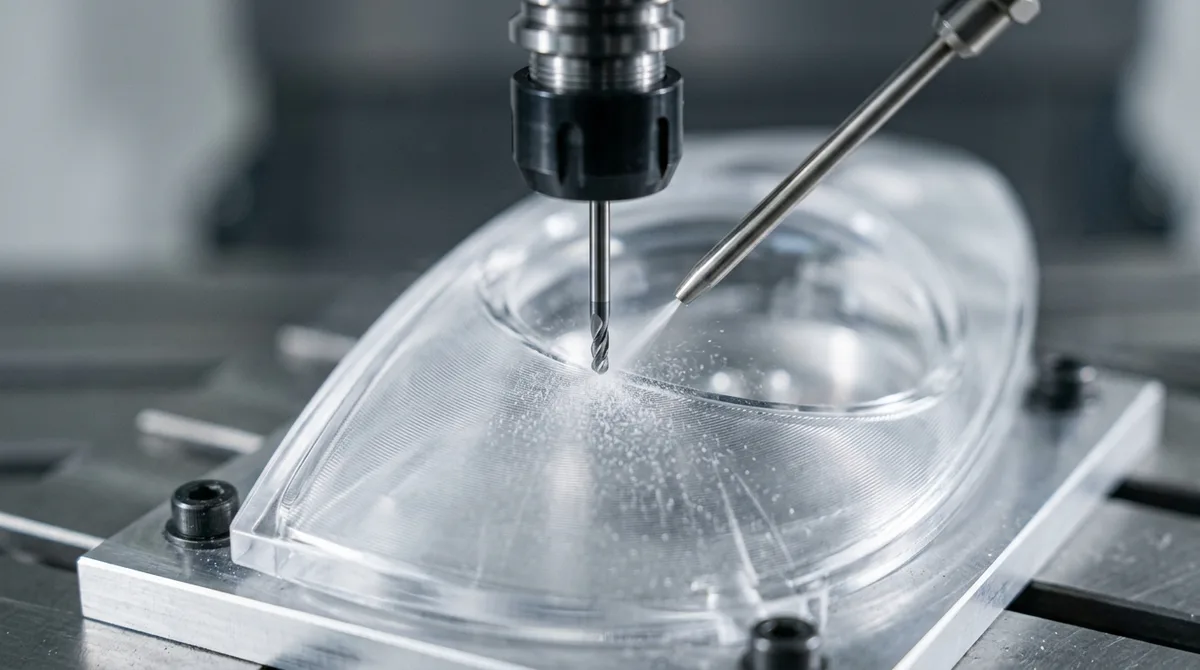
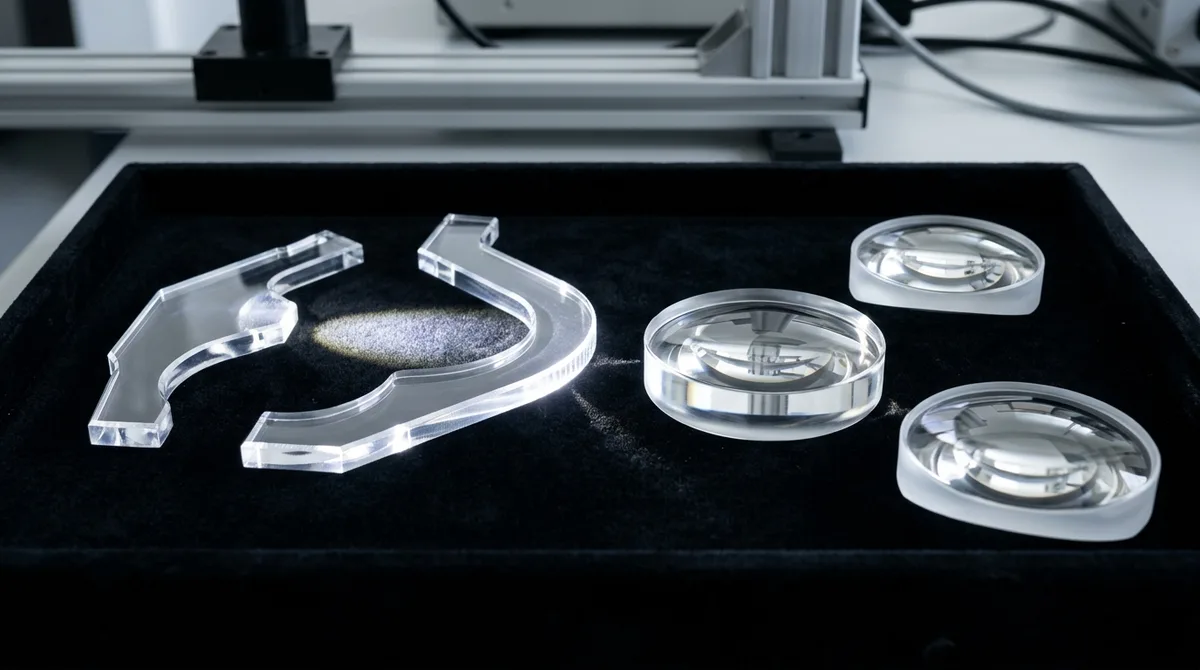
To fabricate functional lenses and TIR light pipes without investing in high-capital production injection molds, we utilize single-point diamond turning (SPDT) and 5-axis diamond milling on cast optical PMMA blocks:
- High-Speed Diamond Tooling: Natural mono-crystal diamond endmills running at 30,000+ RPM cut complex freeform aspheric surfaces with sub-micron form accuracy (PV < 0.3 µm).
- Progressive Wet Sanding: Machined surfaces undergo micro-abrasive sanding progressing through 1000, 2000, 3000, and 5000 grit silicon carbide papers to eradicate all residual machining cusps.
- Optical Diamond Buffing for PMMA: Cast acrylic components undergo multi-stage rotary buffing with sub-micron diamond polishing compounds to achieve an SPI A-1 mirror finish (Ra < 0.005 µm) and 92%+ transmission. Crucial note: PMMA must never undergo chemical vapor polishing, as exposure to solvent vapors causes severe chemical crazing, swelling, and stress-whitening.
- Vapor Smoothing for Polycarbonate (PC): Polycarbonate lenses undergo chemical vapor polishing using specialized solvent vapors that momentarily reflow the outermost molecular surface layer, restoring optical clarity without altering focal geometry. Following vapor smoothing, parts undergo mandatory 60°C to 80°C post-vapor annealing for 2 to 4 hours to completely relieve chemical-induced surface stresses and prevent micro-crazing during thermal cycling.
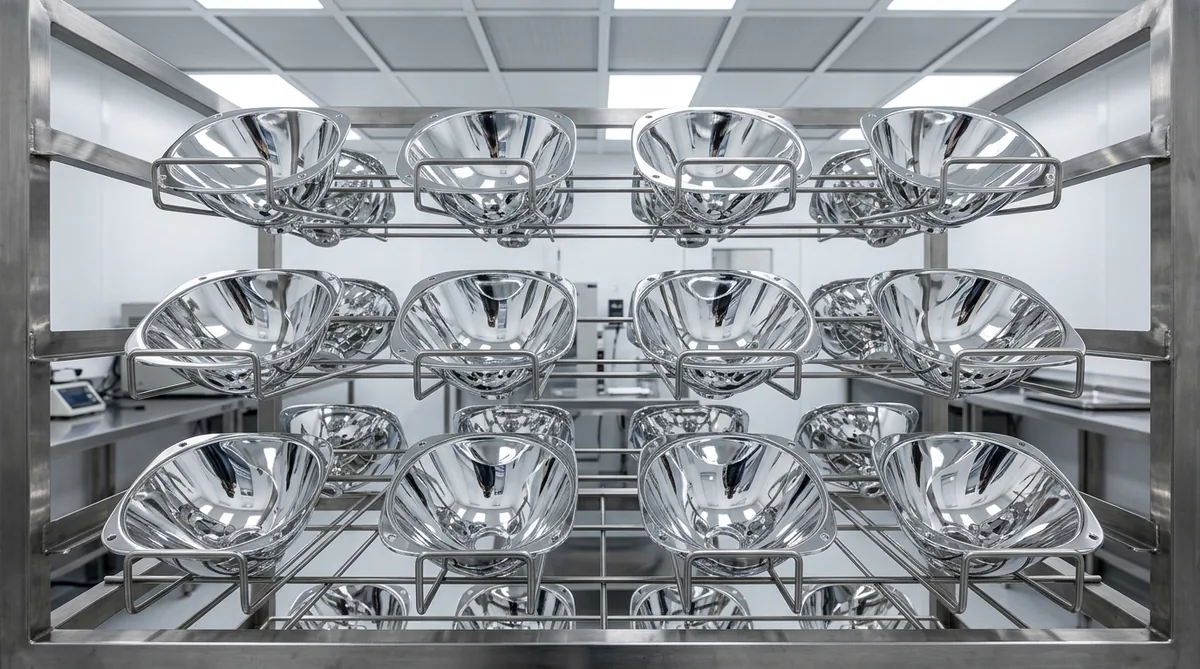
Phase 2: High-Vacuum PVD Chrome Metallization for Reflectors
Automotive reflectors demand specular reflectivity exceeding 90% across visible wavelengths. Prototyping these components involves a three-step physical vapor deposition (PVD) sequence:
- UV Basecoat Application: CNC-machined or SLA master parts receive a leveling UV-cured primer coat to seal micro-porosity and produce a mirror-flat substrate.
- Thermal Evaporation Metallization: Parts enter a high-vacuum chamber (< 10^-4 mbar) where pure aluminum wire (99.99%) is vaporized via tungsten filaments, depositing an ultra-thin (80–120 nm) uniform reflective layer.
- Protective Topcoat / Plasma Polymerization: A protective siloxane or hexamethyldisiloxane (HMDSO) clear coat is applied via plasma polymerization to protect the aluminum layer against oxidation and atmospheric moisture.
Phase 3: Thermal Management & Structural Housing Integration
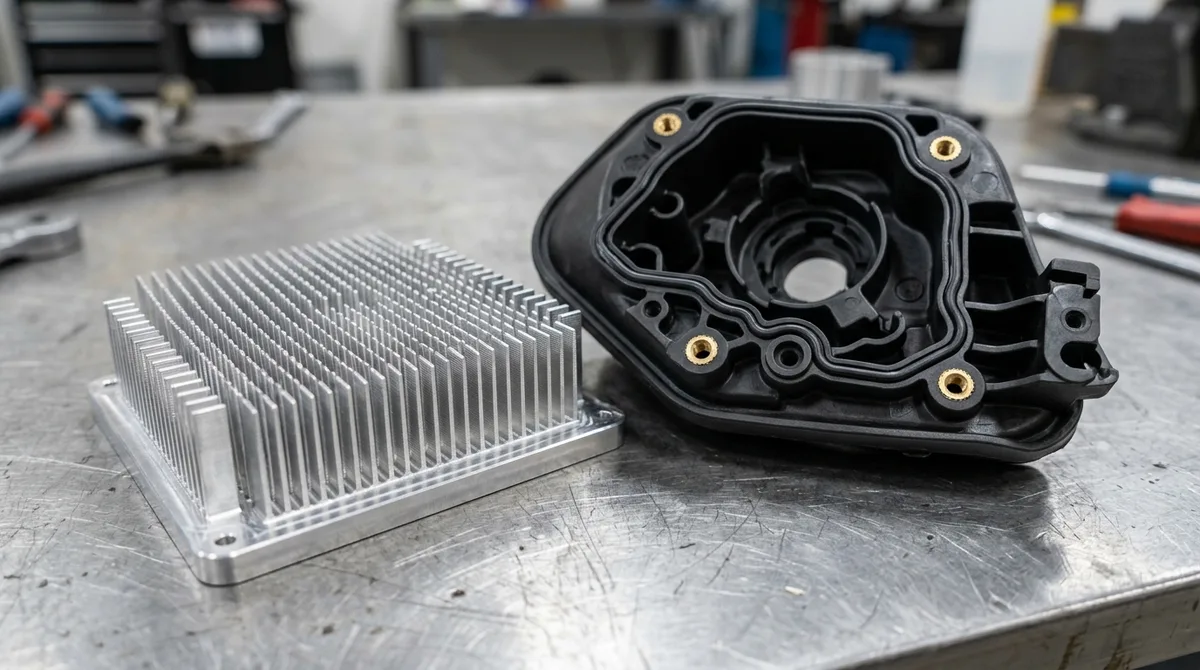
High-power LED chips degrade rapidly if junction temperatures exceed 125°C. In our machine shop, prototype heat sinks are CNC-machined from high-conductivity aluminum alloys with dense skived fin profiles to optimize natural and forced convective airflow. The structural housing is CNC-milled from dense ABS or rapid-cast in polyurethane resin to validate structural mounting points, aiming adjustment screws, and harness routing.
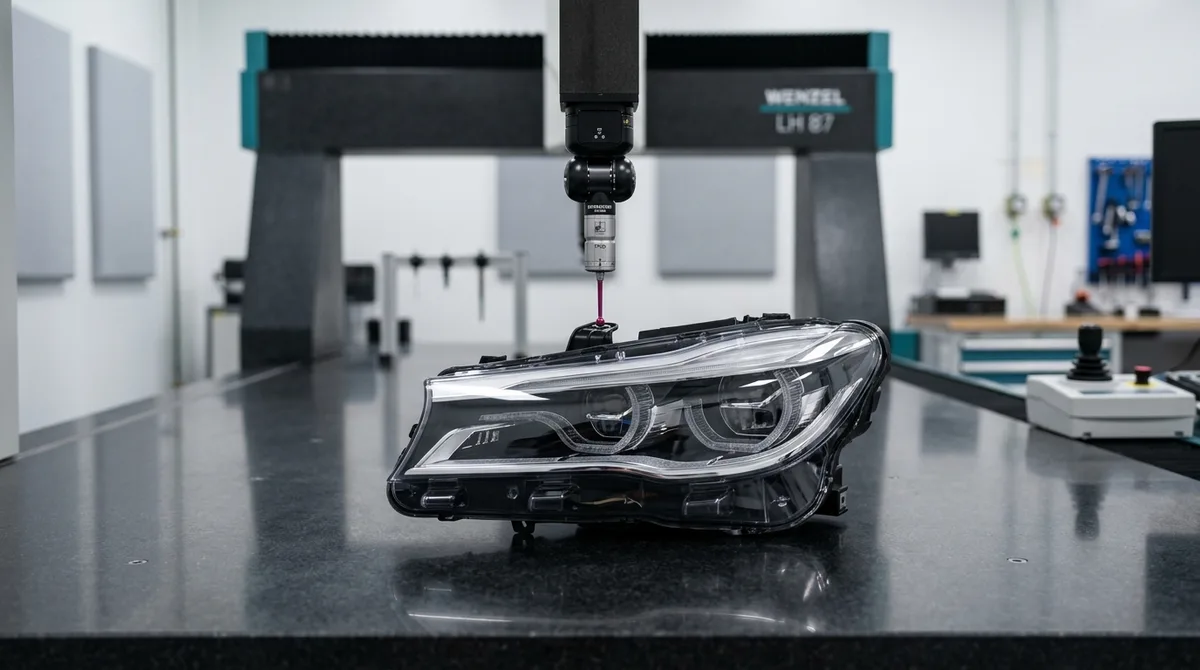
Headlamp Subsystem Engineering Specifications Matrix & Metrology
The following engineering matrix outlines material selections, tolerances, and finishing standards across critical headlamp sub-assemblies:
| Sub-Assembly | Substrate Material | Prototyping Method | Machining Tolerance | Surface Quality Target |
|---|---|---|---|---|
| Outer Cover Lens | Optical Grade PC (Makrolon) | 5-Axis CNC + Vapor Polishing | ±0.05 mm | Ra < 0.01 μm (92% transmission) |
| TIR Light Guide | Cast Optical PMMA (Plexiglas) | Diamond Flycutting + Hand Buffing | ±0.02 mm | Ra < 0.005 μm (SPI A-1 finish) |
| Main Reflector Bezel | High-Heat Polycarbonate / BMC | CNC Machining + Vacuum PVD | ±0.03 mm | > 90% Specular Reflectivity |
| LED Heat Sink | 6061-T6 Aluminum / ADC12 | High-Speed 4-Axis CNC Milling | ±0.015 mm (Thermal Face) | Flatness 0.01 mm; Ra 0.8 μm |
| Rear Housing Shell | PP-TD20 / PBT+ASA Blend | Vacuum Casting / CNC Machining | ±0.10 mm | VDI 3400 Ref 27 (Matte Spark) |
Environmental & Regulatory Photometric Validation Protocols
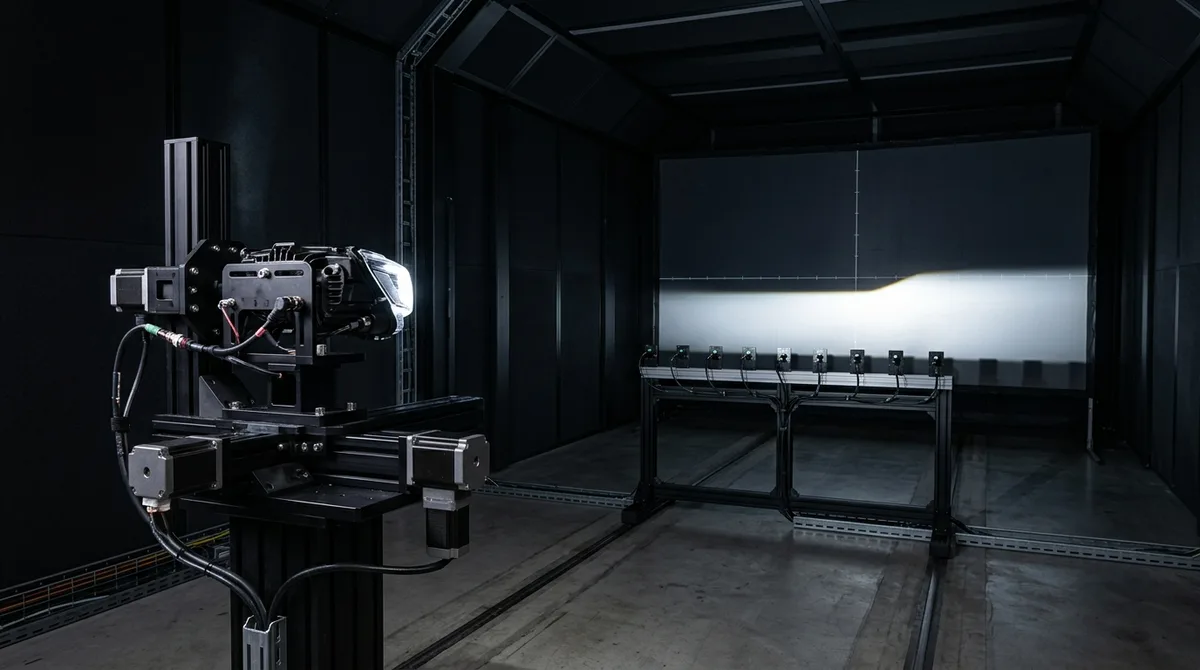
Automotive headlamp prototypes undergo extensive benchtop and darkroom qualification prior to road testing:
| Validation Test | Operating Parameters | Evaluation Standard | Success Metric |
|---|---|---|---|
| Photometric Beam Pattern | Goniophotometer 25m darkroom scan | ECE R112 / SAE J1383 | Sharp cutoff line; no glare in oncoming zone |
| Thermal Shock Endurance | -40°C to +85°C (100 cycles, 30 min dwell) | ISO 16750-4 | No cracking, seal separation, or PVD flaking |
| Ingress Protection (Water/Dust) | Water jet & vacuum chamber immersion | ISO 20653 (IP67 / IP6K9K) | Zero moisture ingress or internal fogging |
| Vibration & Mechanical Shock | Random 3-axis vibration (10–2000 Hz, 3.2g) | SAE J575 | Aiming angle drift < 0.1°; fasteners tight |
Frequently Asked Questions
Yes. When cast optical acrylic (PMMA) is cut using single-point diamond tools (SPDT) followed by controlled abrasive progression and diamond compound hand-buffing, light transmission routinely exceeds 92%, virtually identical to optical injection molded production components.
Unlike polycarbonate, PMMA must never be exposed to solvent vapor polishing (such as dichloromethane or acetone). Solvents trigger rapid chemical crazing, localized polymer swelling, and severe stress cracking in acrylic. For PMMA, optical surface quality is strictly achieved via diamond flycutting and progressive mechanical polishing down to SPI A-1 (Ra < 0.005 µm).
Headlamp prototypes integrate breathable ePTFE membrane vents (such as Gore automotive vents) that equalize internal air pressure as LED arrays heat up, while completely blocking liquid water droplets and dust ingress to maintain IP67 and IP6K9K ratings.
A fully functional pre-production headlamp assembly—including diamond-machined clear lenses, vacuum metallized reflector bezels, CNC heatsinks, and polyurethane-cast structural housings—typically takes 12 to 18 business days for ex-factory manufacturing and optical inspection, plus 3 to 5 business days for international express air transit.
Engineer Your Automotive Lighting Prototypes with Us
Bring complex automotive headlamps and lighting assemblies to life with our precision optical machining, PVD metallization, and rapid tooling capabilities. Upload your 3D CAD models (STEP / IGES) today for a confidential DFM review and quotation within 24 hours.