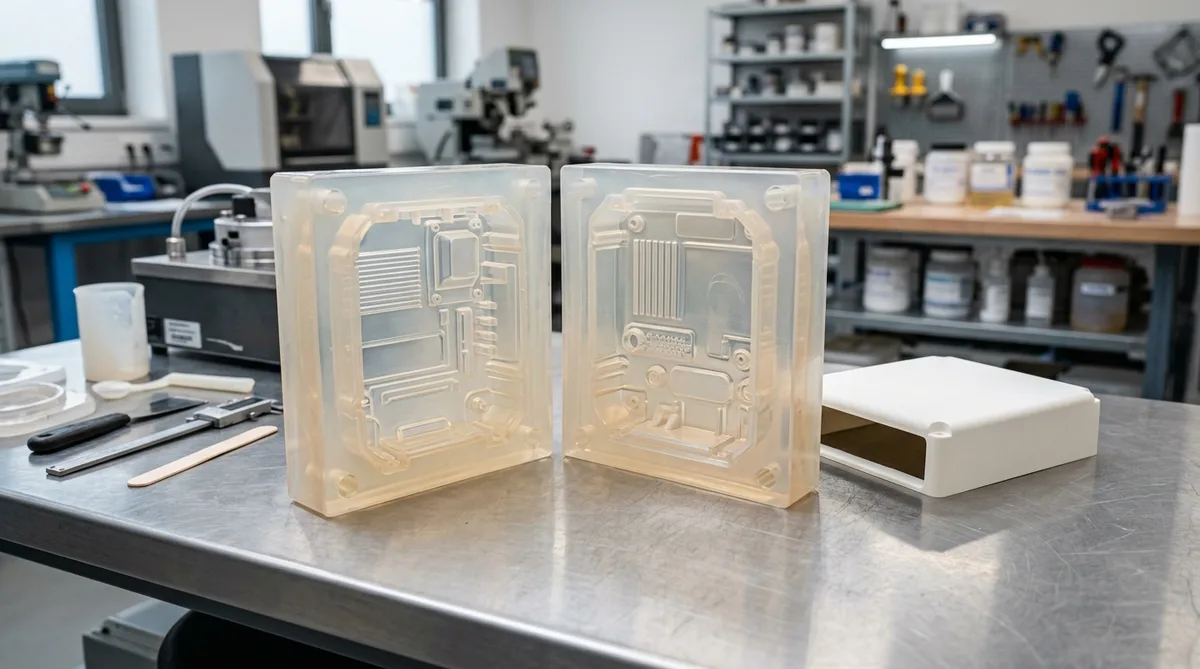
Polyurethane vacuum casting—often termed silicone tooling or urethane molding—is one of the most agile and cost-effective prototyping technologies available for bridge manufacturing. Positioned between high-cost industrial 3D printing for multi-unit runs and high-capital hardened steel tooling for injection molding, vacuum casting enables product teams to produce 10 to 100 end-use engineering prototypes with injection-molded surface quality and true thermoplastic mechanical properties.
However, while silicone tooling avoids the steep capital expenditure of CNC-machined metal molds, overall program costs can escalate rapidly without disciplined Design for Manufacturability (DFM). Everything from master pattern Polish levels and wall thickness transitions to mold split configurations directly influences silicone mold longevity, demolding cycle times, and manual finishing labor. At AS Prototypes, our in-house vacuum casting services combine precision master pattern machining with advanced polyurethanes to minimize per-part expenditure. Below is a comprehensive engineering guide to optimizing vacuum casting costs across tooling, material selection, and part design.
1. Understanding the Vacuum Casting Cost Structure
To control production costs, design engineers must first understand where capital is spent during a vacuum casting campaign. Unlike subtractive machining where machine runtime dominates, vacuum casting costs break down into three distinct elements:
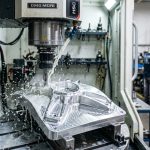
- Master Pattern Fabrication (25–35% of upfront tooling): A physical master model—typically produced via high-resolution SLA 3D printing or 5-axis CNC machining—is meticulously prepped, primed, and hand-finished. Any imperfection or surface texture on the master pattern transfers directly to every silicone mold cavity.
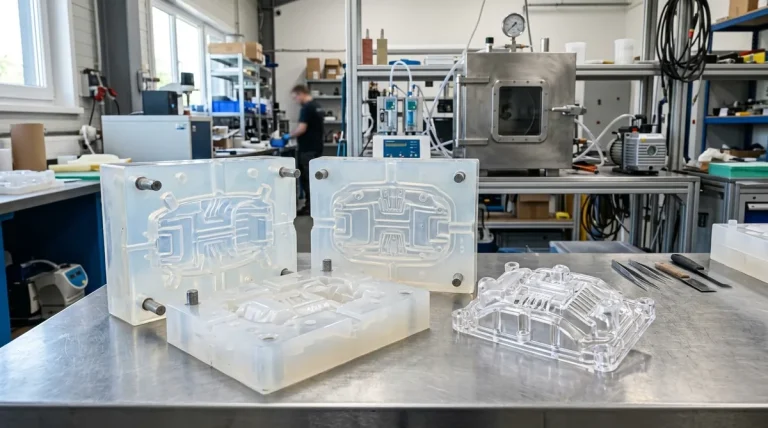
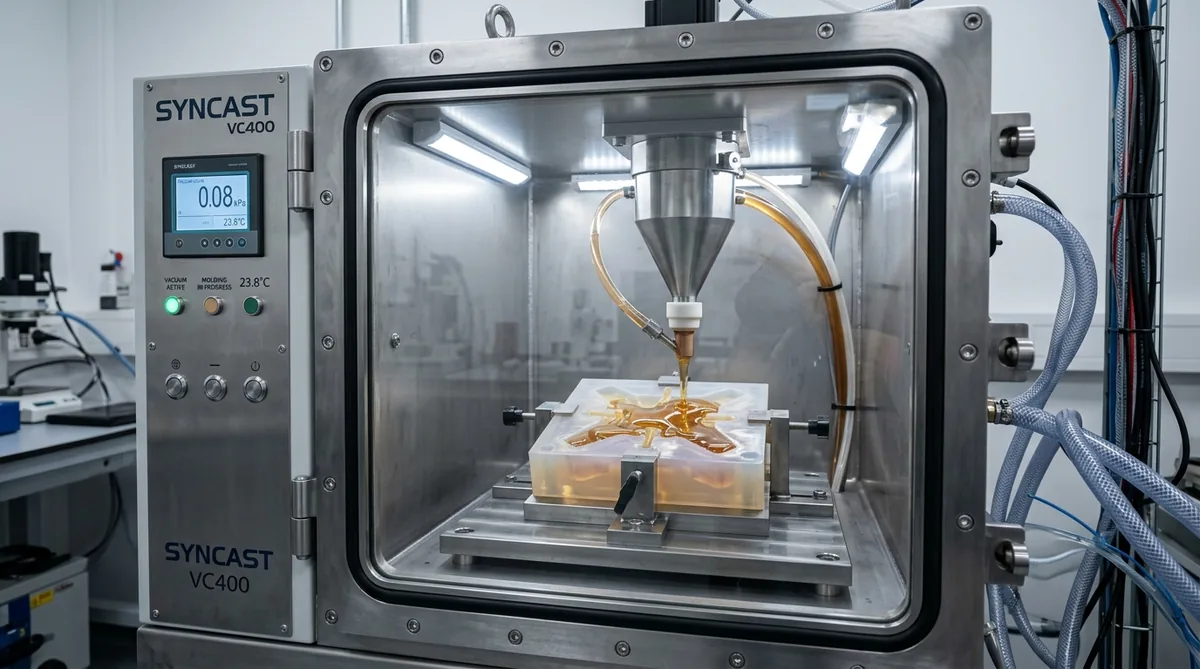
- RTV Silicone Tooling (45–55% of upfront tooling): Liquid room-temperature vulcanizing (RTV) silicone is poured around the suspended master pattern in a casting flask, degassed under vacuum, and thermally cured. Silicone rubber has a finite operational lifespan (typically 15–25 shots) before exothermic resin heat and chemical attack degrade the cavity walls.
- Piece-Part Labor & Polyurethane Resins (Consumables & Labor): Two-part polyurethanes are metered, vacuum degassed, gravity-fed into the silicone mold, and cured in a convection oven at 60°C–70°C. Manual post-demold operations include cutting off sprues, trimming parting line flash, and tapping threaded inserts.
2. Seven Engineering Rules to Slash Vacuum Casting Costs
Rule 1: Maximize Silicone Mold Lifespan via Draft and Fillets
A single silicone mold typically produces 15 to 25 parts before tearing or surface degradation occurs. When deep vertical walls lack draft angles, the friction during demolding stretches and tears the elastic silicone. Incorporating a 1.5° to 2.0° draft angle on all vertical faces and generous radii (minimum R 1.0 mm) on interior sharp corners reduces demolding stress, extending tool life from 15 cycles up to 30 cycles per mold.
Rule 2: Select the Right Master Pattern Technology
Choosing between SLA 3D printing and CNC milling for the master pattern significantly impacts tooling cost. For organic, contoured enclosures, high-resolution SLA (50 μm layer height) with primer leveling is 40% more cost-effective than subtractive machining. Conversely, for large flat panels or prismatic geometries with strict flatness requirements (<0.1 mm), a CNC-machined master pattern in POM or aluminum prevents curling during the exothermic silicone curing cycle.
Rule 3: Maintain Uniform Wall Thickness (1.5 mm – 3.5 mm)
Non-uniform wall thickness causes differential thermal contraction during resin polymerization in the heated oven. Heavy localized wall sections accumulate heat, accelerating silicone rubber degradation at that spot while generating sink marks or internal voids in the cast part. Standardizing wall thickness between 1.5 mm and 3.5 mm ensures rapid, uniform thermal curing and prevents premature mold burnout.
Rule 4: Eliminate Undercuts to Avoid Multi-Piece Silicone Tooling
While flexible silicone can flex over minor undercuts (up to 5% without tearing), deep negative drafts require manual knife cuts into the silicone block, loose silicone inserts, or rigid aluminum sliding cores. Each loose core requires manual placement, alignment, and extraction for every single shot, nearly doubling cycle labor. Redesigning snap-fits and bosses with line-of-draw clearance keeps the silicone mold as a simple two-part tool.
Rule 5: Rationalize Surface Finish Specifications
Optical-grade high-gloss SPI-A2 finishes require dozens of hours of hand wet-sanding and micro-diamond buffing on the master pattern, dramatically elevating initial tooling costs. Specifying a fine EDM spark texture or a light SPI-B2 / SPI-C1 satin bead-blast texture on the master pattern masks minor flow marks, reduces master prep time by up to 60%, and enhances scratch resistance on the final urethane parts.
Rule 6: Match Polyurethane Resins to Exact Functional Needs
Avoid specifying specialty high-temperature or flame-retardant (UL94-V0) resins unless operating conditions strictly demand them. Standard ABS-like polyurethanes (such as Axson PX223 or Hei-Cast 8150) offer the fastest demold cycles, lowest material cost, and excellent impact strength. Specialty optical clear polyurethanes (PMMA/PC-like) require prolonged degassing, slow oven ramping, and post-curing, which increases per-part labor costs.
Rule 7: Plan Order Quantities Around Mold Multiples (20–25 Units)
Because silicone molds degrade after roughly 20 to 25 shots, ordering 26 parts requires building a second complete silicone tool—doubling tooling expenditure for just one additional unit. Product managers should plan low-volume orders in clean increments of 20 to 25 units to extract 100% ROI from each silicone mold cavity. If production requirements exceed 100 to 200 units, transitioning directly to rapid tooling injection molding often yields a lower total program cost.
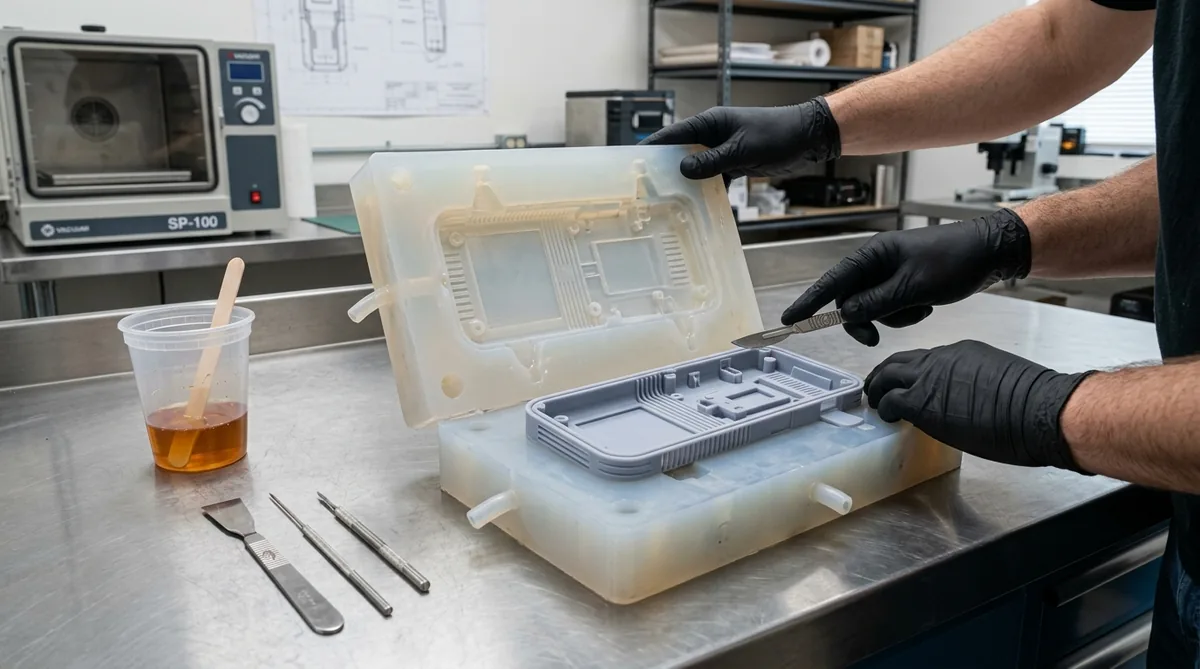
A standard RTV silicone mold typically yields between 15 and 25 parts. For complex parts with deep undercuts, aggressive polyurethane resins, or high-temperature formulations, mold lifespan may be limited to 12-15 parts due to cavity wear. Highly drafted parts using mild ABS-like resins can achieve up to 30 shots.
Yes. Threaded brass inserts, steel mounting pins, or custom bushings can be positioned directly in the silicone mold prior to resin pouring (insert overmolding). Alternatively, inserts can be installed post-demolding via ultrasonic or thermal staking, ensuring high pull-out torque resistance.
Vacuum casting typically achieves tolerances of ±0.15 mm up to 100 mm, with ±0.2% on larger dimensions. Dimensional repeatability depends on the master pattern accuracy, polyurethane resin shrinkage (0.15% to 0.4%), and thermal cooling dynamics.
Reduce Prototyping Costs with Precision Vacuum Casting
Need high-fidelity functional prototypes or low-volume pre-series parts? AS Prototypes delivers fast-turnaround polyurethane vacuum casting with custom finishes, color matching, and insert overmolding. Upload your 3D CAD files today for an instant DFM evaluation.