Metal 3D Printing Services: Precision DMLS & SLM Components
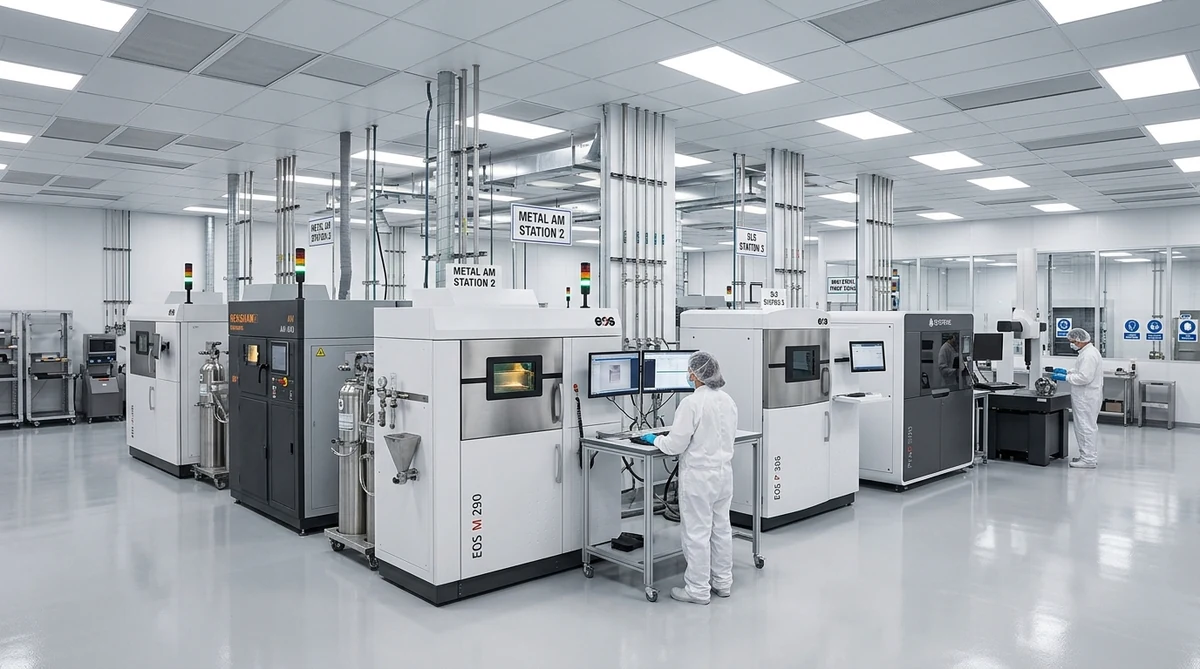
At AS Prototypes, we operate advanced Direct Metal Laser Sintering (DMLS) and Selective Laser Melting (SLM) multi-laser systems to produce dense, flight-ready metal components. By fusing fine atomized metal powders layer-by-layer under an inert argon atmosphere, we manufacture complex internal cooling channels, lightweight topological lattices, and monolithic assemblies impossible with conventional tooling. Seamlessly integrated with our in-house 5-axis CNC finish-machining, wire EDM, and vacuum stress-relief annealing, we deliver production-grade metal components meeting the most rigorous aerospace, medical, and motorsport standards.
DMLS & SLM Metal 3D Printing Working Principle
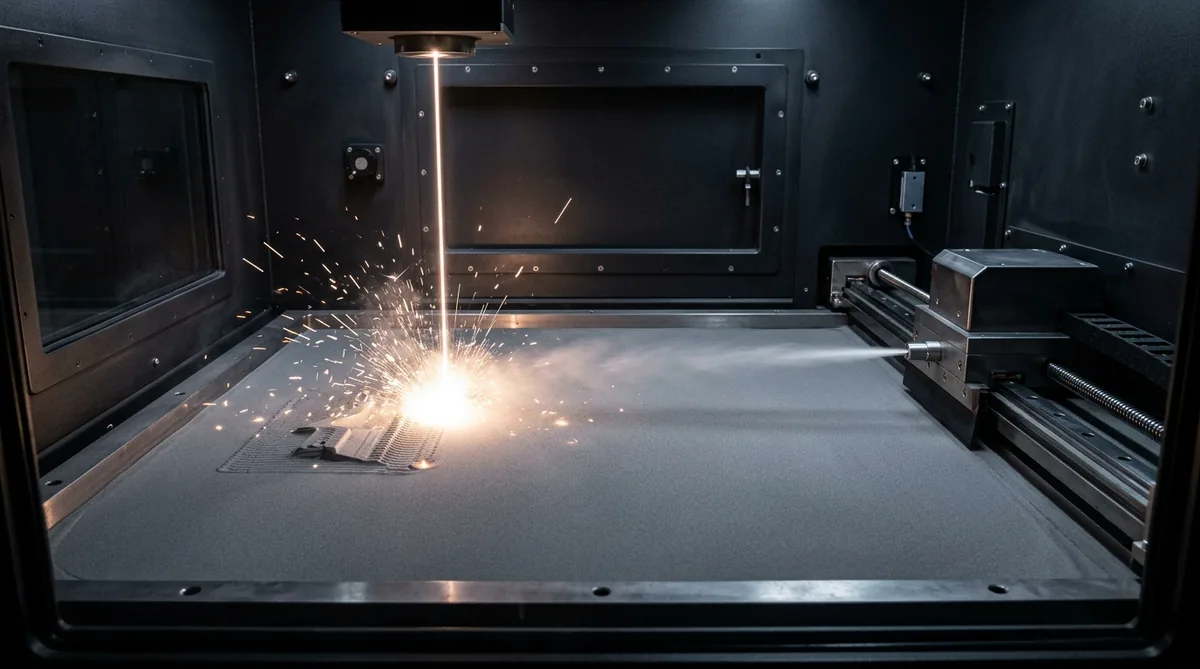
Direct Metal Laser Sintering (DMLS) and Selective Laser Melting (SLM) belong to the Powder Bed Fusion (PBF-LB/M) family. High-power precision ytterbium fiber lasers scan micro-metric cross-sections into an evenly distributed bed of pre-alloyed metal powder, fully melting the particles into a solid crystal lattice.
- Inert Argon Atmospheric Control: Oxygen levels in the build chamber are maintained below 100 ppm using continuous argon purge, preventing reactive oxidation and maintaining ultra-pure metallurgical purity for reactive titanium and nickel superalloys.
- Full Metallurgical Melting (>99.7% Density): Unlike green-state binder printing, laser powder bed fusion achieves complete liquid-phase melting, delivering mechanical tensile, fatigue, and yield properties on par with forged and wrought alloys. Note on Directional Anisotropy: Due to layer-by-layer epitaxial solidification, as-built DMLS parts exhibit directional mechanical anisotropy, where Z-axis tensile elongation is typically 10–15% lower than the XY build plane. AS Prototypes optimizes CAD build orientation during DfAM slicing to align critical tensile stresses along the XY plane, and provides optional Hot Isostatic Pressing (HIP) and vacuum solution heat treatment to achieve isotropic wrought-equivalent fatigue performance.
- Topology Optimization & Generative Design: Build organic weight-reduced structures, internal fluid passages, and honeycombed conformal cooling cores without tool reach or fixture constraints.
- Component Consolidation: Merge 10–30 individual sub-components, braze joints, and fasteners into a single monolithic printed body, permanently eliminating fluid leak paths and mechanical vibration loosening.
DMLS / SLM Metal 3D Printing Alloys & Mechanical Specifications
| Metal Alloy | Standard & Spec | Tensile & Yield Strength | Hardness & Density | Thermal & Chemical | Key Engineering Applications |
|---|---|---|---|---|---|
| Titanium Ti-6Al-4V (Gr 5 / Gr 23) | ASTM B348 / F1472 | Tensile: 1,150 MPa Yield: 1,000 MPa | 36 HRC >99.7% Density | Biocompatible, corrosion-resistant up to 400°C | Aerospace structural brackets, orthopedic bone plates, motorsport suspension links |
| Aluminum AlSi10Mg | EN AC-43000 | Tensile: 400 MPa Yield: 260 MPa | 110 HBW >99.6% Density | High thermal conductivity (130–150 W/m·K), 2.67 g/cm³ | Conformal heat sinks, cold plates, lightweight drone arms, automotive intake manifolds |
| Stainless Steel 316L | ASTM A276 (Low-C) | Tensile: 650 MPa Yield: 500 MPa | 220 HV >99.8% Density | High acid & chloride resistance, cryogenic stability | Marine fluid manifolds, food & pharmaceutical nozzles, subsea chemical valve bodies |
| Precipitation Hardening 17-4PH | ASTM A564 (Martensitic) | Tensile: 1,250 MPa Yield: 1,100 MPa | 38–44 HRC >99.7% Density | High fatigue endurance, magnetic, precipitation hardenable | Aerospace structural fittings, surgical cutters, high-pressure pump shafts, splined shafts |
| Nickel Superalloy Inconel 718 | AMS 5662 / N07718 | Tensile: 1,380 MPa Yield: 1,100 MPa | 42–47 HRC >99.6% Density | Oxidation & creep resistant up to 700°C (1,290°F) | Rocket engine combustion chambers, turbine exhaust rings, gas turbine blades, downhole tools |
| Maraging Tool Steel MS1 (1.2709) | DIN 1.2709 (18Ni-300) | Tensile: 1,950 MPa Yield: 1,850 MPa | 50–54 HRC >99.8% Density | Optical polishable (SPI A-1), superior thermal fatigue resistance | Plastic injection mold cores with curved conformal cooling channels, low-temp / zinc die casting inserts |
| Integrated 5-Axis Post-CNC Finishing | As-printed layer thickness ranges from 20–50 μm with raw tolerance ±0.10 mm. In-house 5-axis CNC machining and wire EDM finish critical O-ring sealing faces, bore diameters, and tapped threads to ±0.010 mm (standard ISO 6H threads, ±0.005 mm on wire EDM features) with Ra 0.4 μm finish. | ||||
Technology Comparison: DMLS/SLM vs. Metal Binder Jetting
Direct Metal Laser Sintering (DMLS / SLM)
High Performance
Complete laser-induced thermal melting in an inert argon chamber. Delivers superior structural integrity, full mechanical density (>99.7%), and immediate functional usability.
- Mechanical Density: >99.7% (matches or exceeds wrought metal).
- Ideal Materials: Ti-6Al-4V, Inconel 718, AlSi10Mg, 316L, 17-4PH, MS1 Tool Steel.
- Best For: High-stress aerospace brackets, conformal cooling injection molds, patient-specific orthopedic implants, and turbomachinery.
- Shrinkage Control: Zero furnace shrinkage; dimensions locked precisely during laser fusion.
Metal Binder Jetting & Sintering
Batch Economics
A liquid bonding agent is printed into loose metal powder to create green-state parts, which are subsequently debound and sintered or bronze-infiltrated in a high-temperature furnace.
- Mechanical Density: 95%–97% sintered density (or bronze-infiltrated composite matrix).
- Ideal Materials: 420 stainless steel infiltrated with bronze, 316L, tungsten heavy alloys.
- Best For: Medium-to-high volume production of small complex parts, decorative architectural hardware, and wear components.
- Shrinkage Factor: Exhibits 15%–20% volumetric shrinkage during furnace debinding, requiring predictive CAD compensation.
In-House Post-Processing & Secondary CNC Precision Machining
Additive manufacturing is only half the equation. At AS Prototypes, all metal 3D printed components undergo comprehensive in-house post-processing to guarantee dimensional compliance, internal grain refinement, and flawless surface finish:
- Vacuum Stress-Relief Heat Treatment: Before parts are removed from the build plate, they undergo controlled vacuum furnace annealing to relieve internal residual thermal stresses and eliminate micro-warpage.
- Wire EDM Cut-Off: Precision wire electrical discharge machining cleanly severs printed parts from the sacrificial stainless or titanium build platform without inducing mechanical distortion.
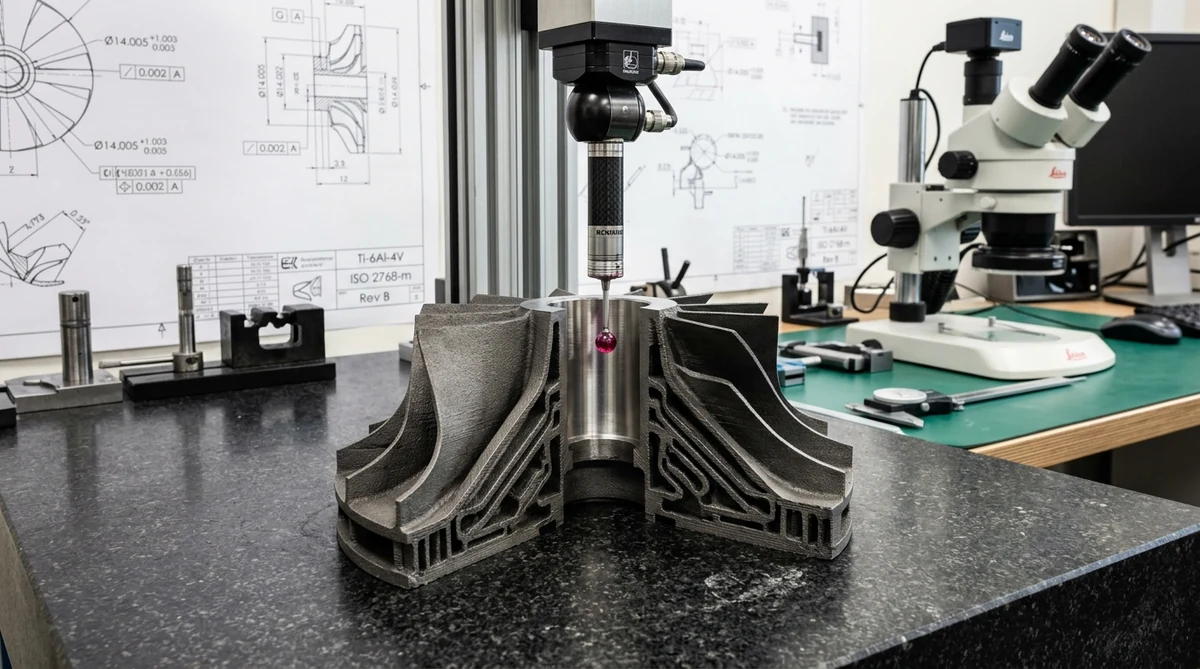
- Precision 5-Axis CNC Machining: Mating faces, bearing bores, press-fit dowel holes, and tapped threads are finish-machined to ±0.010 mm (ISO 6H thread fit) tolerances using high-speed 5-axis machining centers (with wire EDM achieving ±0.005 mm on critical bores).
- Surface Refinement & Media Blasting: Ceramic micro-bead blasting, automated vibro-tumbling, and electro-polishing reduce surface roughness from as-printed Ra 6–9 μm down to Ra 0.8–0.4 μm. Explore our full range of surface finishing solutions.
- Zeiss CMM Inspection (Available Upon Request): Tactile coordinate measuring machine (CMM) verification with full dimensional inspection reporting for critical GD&T datum features.
Target Industry Solutions & Mission-Critical Applications
Rocket engine combustion chambers, turbopump impellers, satellite optical brackets, and conformal fuel manifolds in Inconel 718 and Ti-6Al-4V. Explore our aerospace manufacturing solutions.
Patient-matched titanium cranial plates, trabecular spinal cages with controlled osseointegration porous lattices, and ergonomic surgical cutters. See our medical device capabilities.
Custom titanium exhaust collectors, topology-optimized upright knuckles, high-efficiency brake calipers, and lightweight EV motor cooling sleeves. Review our automotive parts service.
Maraging tool steel mold core inserts featuring curved conformal cooling passages that track complex mold contours, cutting injection molding cycle times by 20%–40%. Learn about our injection mold tooling.
Design for Additive Manufacturing (DfAM) for Metal 3D Printing
Design downward-facing surfaces with self-supporting angles of at least 45° relative to the build plate to minimize sacrificial support structures and post-machining scars.
Enclosed cavities and hollow channels must include at least two evacuation ports (≥ 3.0 mm diameter) to permit thorough loose powder removal during post-build depowdering.
Maintain minimum structural wall thickness of 0.4–0.6 mm. For tall, high-aspect-ratio ribs (>10:1), increase thickness to ≥ 0.8 mm to prevent thermal distortion and blade collisions.
Add 0.5–1.0 mm machining stock allowance to critical mating surfaces, bearing bores, and threaded locations intended for secondary precision 5-axis CNC finishing.
Frequently Asked Questions (FAQ)
Q1: How does DMLS metal 3D printing compare to 5-axis CNC machining?
Q2: Are metal 3D printed parts as strong as billet or cast metal parts?
Q3: Why is post-print stress-relief heat treatment necessary for DMLS parts?
Q4: What surface roughness can be achieved on metal 3D printed parts?
Ready to Build Production-Grade Metal 3D Printed Parts?
At AS Prototypes, our industrial DMLS/SLM multi-laser systems produce complex topology-optimized structures, conformal cooling mold inserts, and flight-ready aerospace components with relative densities exceeding 99.7%. Combined with our in-house 5-axis CNC machining, wire EDM, and stress-relief heat treatment, we deliver flight-grade metal components in 5 to 8 business days (Ex-Factory).