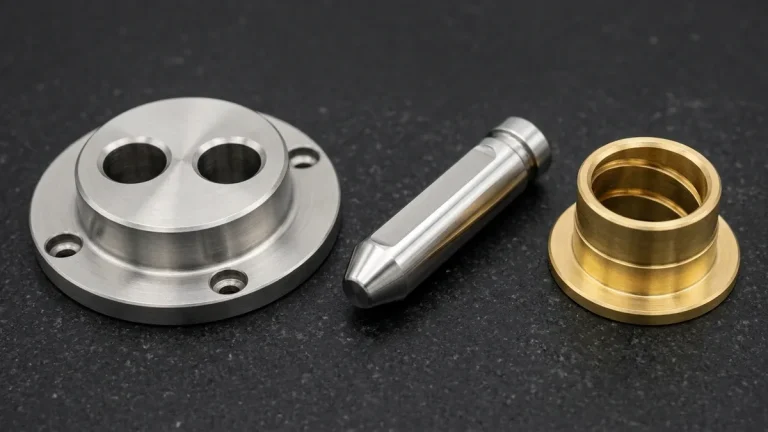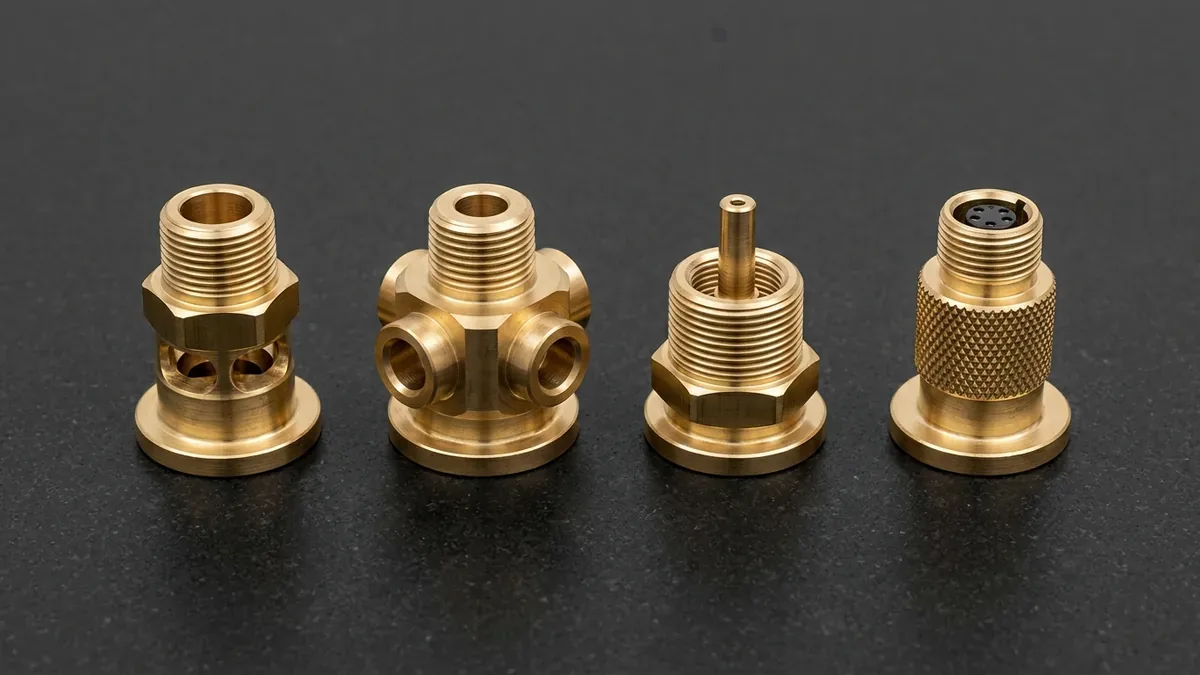
In modern mechanical engineering, fluid dynamics, and electrical design, few engineering materials rival the versatility, aesthetic appeal, and manufacturing efficiency of brass. Renowned as the historic 100% benchmark on the industrial machinability index, brass CNC machining enables ultra-fast cutting speeds, extended cutting tool longevity, mirror-like surface finishes, and tight ±0.010 mm (±0.0004″) dimensional repeatability.
Composed primarily of copper and zinc—often alloyed with trace elements such as lead, tin, iron, or silicon—brass delivers a unique combination of high thermal and electrical conductivity, low coefficient of friction, non-sparking safety, and exceptional atmospheric and saltwater corrosion resistance. However, achieving superior quality across millions of precision turned components or complex 5-axis milled manifolds requires deep metallurgical knowledge. From navigating lead-free environmental compliance (RoHS/REACH) to preventing exit burrs on cross-drilled fluid passages, precision brass machining demands rigorous process engineering.
At AS Prototypes, with over ten years of expertise in rapid prototyping and high-precision CNC manufacturing, we produce custom brass components for aerospace avionics, medical fluidics, precision instrumentation, and luxury consumer hardware. This engineering guide examines brass alloy selection, tooling kinematics, speeds and feeds optimization, surface finishing, and cost-effective Design for Manufacturability (DFM) strategies.
- 1. Why Is Brass Ideal for Precision CNC Machining? Core Material Properties
- 2. Comprehensive Brass Alloy Selection Guide for CNC Machining
- 3. Lead-Free and RoHS/REACH Compliant Brass Machining
- 4. Kinematics of Brass Machining: CNC Turning vs. CNC Milling
- 5. Tooling Geometry, Speeds, and Feeds: Machining Without “Tool Grabbing”
- 6. Micro-Burr Prevention & Deburring Protocols for Brass
- 7. Surface Finishing Options for CNC Machined Brass
- 8. Design for Manufacturability (DFM): Controlling Brass Machining Costs
- 9. Technical Engineering FAQ
1. Why Is Brass Ideal for Precision CNC Machining? Core Material Properties
The widespread adoption of brass in precision manufacturing stems from several intrinsic metallurgical characteristics:
- Exceptional Machinability (100% Benchmark): Free-cutting brass (UNS C36000) serves as the international baseline against which all other engineering metals are evaluated. Its low shear strength and microscopic chip-breaking inclusions permit cutting speeds 3 to 5 times faster than mild steels, reducing cycle times and driving down part costs.
- Low Coefficient of Friction & Wear Resistance: Brass exhibits excellent natural lubricity against steel, making it the premier choice for sleeve bushings, threaded lead-screw nuts, watch escapements, and non-galling worm gears.
- Corrosion Resistance & Antimicrobial Efficacy: Brass develops a protective oxide patina that resists degradation from water, petroleum fuels, and atmospheric exposure. Furthermore, the oligodynamic effect of copper ions imparts intrinsic antimicrobial properties, making brass valves and touch-surfaces highly valued in sterile laboratory and healthcare environments.
- Superior Thermal & Electrical Conductivity: While pure copper offers higher raw conductivity, brass provides roughly 26% to 44% IACS (International Annealed Copper Standard) conductivity while delivering superior tensile strength and vastly superior machinability. This makes brass ideal for electrical pins, terminal blocks, coaxial RF connectors, and heatsink contacts.
- Non-Magnetic and Non-Sparking Properties: Essential for navigational instruments, aerospace electronics, explosive chemical processing plants, and marine explosive ordinance disposal equipment.
2. Comprehensive Brass Alloy Selection Guide for CNC Machining
Selecting the optimal brass grade requires balancing machinability against mechanical tensile strength, ductility for secondary crimping, dezincification resistance, and environmental regulatory compliance. The table below details the most common engineering brass grades machined at AS Prototypes:
| Brass Grade / UNS | Nominal Composition | Machinability Index | Tensile / Yield Strength (MPa) | Key Engineering Strengths | Primary Industrial Applications |
|---|---|---|---|---|---|
| C36000 (Free-Cutting) | 61.5% Cu, 35.5% Zn, 3.0% Pb | 100% (Standard) | 400 / 170 | Supreme chip breaking, maximum cutting speeds, minimal tool wear, high dimensional accuracy | High-volume screw machine parts, pneumatic fittings, sensor housings, threaded fasteners |
| C26000 (Cartridge Brass) | 70% Cu, 30% Zn | 30% | 340 / 110 | Exceptional cold ductility, deep drawability, excellent corrosion resistance, lead-free | Components requiring post-machining crimping, flaring, stamped/drawn enclosures, musical instruments |
| C46400 (Naval Brass) | 60% Cu, 39.2% Zn, 0.8% Sn | 30% | 470 / 180 | Tin addition provides superior resistance to saltwater dezincification, high mechanical strength | Marine propeller shafts, seawater valve bodies, offshore hardware, aircraft turnbuckles |
| C23000 (Red Brass / 85-15) | 85% Cu, 15% Zn | 30% | 270 / 70 | Immune to stress-corrosion cracking and dezincification, rich reddish-gold appearance | Underground plumbing service lines, fire extinguisher nozzles, luxury architectural hardware |
| C69300 (Eco-Brass® / Lead-Free) | 75% Cu, 21% Zn, 3.5% Si, 0.05% P | 80% | 540 / 280 | RoHS/REACH & NSF 61 compliant, zero lead, silicon particles provide excellent chip breaking | Potable water valves, medical device fluid pathways, consumer electronics entering EU markets |
3. Lead-Free and RoHS/REACH Compliant Brass Machining
While traditional free-cutting brass (C36000) achieves unmatched machinability due to 2.5%–3.7% microscopic lead particles that act as internal chip breakers and lubricants, global environmental regulations are progressively restricting lead content:
- EU RoHS & REACH: Exemption 6(c) historically permitted up to 4.0% lead by weight in copper alloys, but regulatory authorities are tightening thresholds toward lead-free alternatives.
- US Safe Drinking Water Act & NSF/ANSI/CAN 61: Restricts wetted surface lead content in potable drinking water hardware to a maximum weighted average of ≤ 0.25%.
- Medical Device Regulations (MDR): Medical implants and fluid handling devices strictly mandate non-toxic, biocompatible alloys.
To support global compliance, AS Prototypes machines lead-free silicon brasses (such as Eco-Brass® C69300 and C27450). Silicon or bismuth additions create fine intermetallic phases that break chips cleanly, offering up to 80%–85% of C360’s cutting performance while ensuring complete international environmental compliance accompanied by full material test reports (MTRs).
4. Kinematics of Brass Machining: CNC Turning vs. CNC Milling
Because brass components often feature rotational symmetry (threads, bores, hex flanges, fluid nipples), selecting the proper machine configuration maximizes precision while minimizing cycle time.
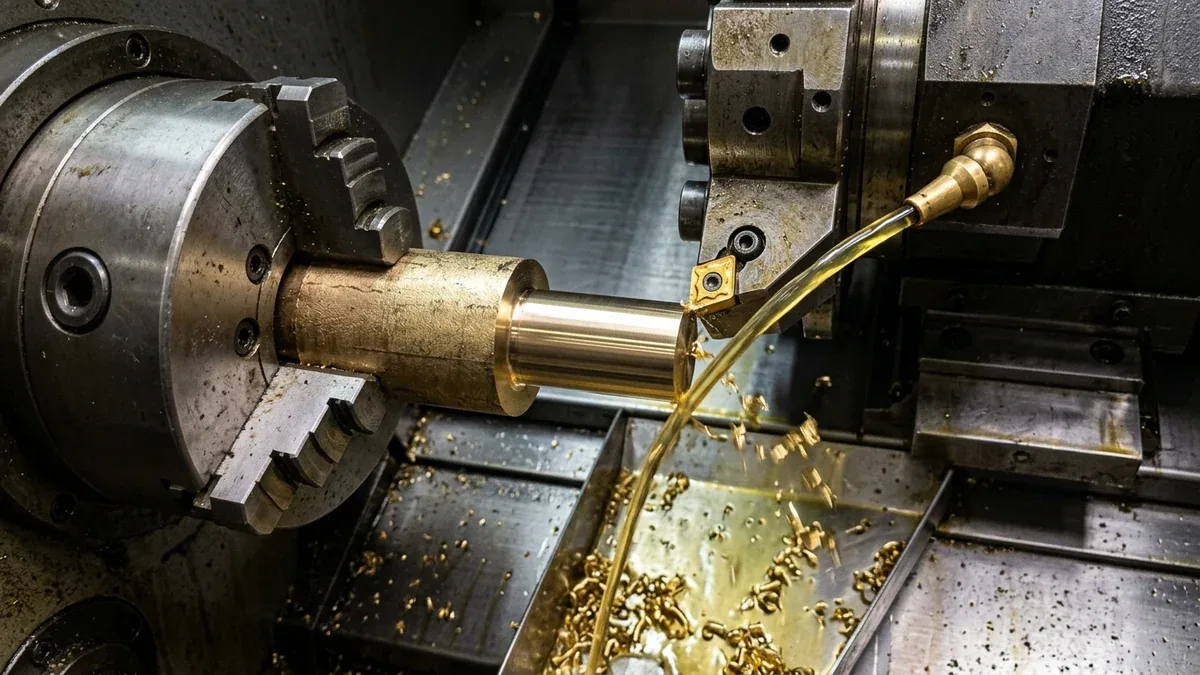
1. Swiss-Type CNC Turning & Screw Machining
For high-volume, small-diameter brass shafts, pins, micro-fittings, and watch gears, Swiss CNC turning is the gold standard. The brass bar stock feeds through a carbide guide bushing immediately adjacent to the cutting tool:
- Elimination of Bar Deflection: Supporting the material directly at the cutting point allows machining length-to-diameter ratios (L/D) exceeding 15:1 without tapering.
- High Spindle Speeds: Spindles operating up to 10,000 RPM achieve ultra-smooth cycle times measured in seconds.
- Turn-Mill Live Tooling: Synchronized sub-spindles and driven rotary milling heads machine cross-holes, hex flats, and keyways in a single setup, achieving runout and concentricity within ± 0.005 mm.
2. Multi-Axis CNC Milling (3-Axis, 4-Axis, and 5-Axis)
For complex pneumatic manifolds, microwave wave guides, and sculptural decorative housings, multi-axis CNC milling is utilized. Unlike steels, brass cuts freely with minimal spindle load, but requires careful toolpath planning to prevent cutter grabbing on interrupted cuts.
5. Tooling Geometry, Speeds, and Feeds: Machining Without “Tool Grabbing”
One of the most common pitfalls when machinists transition from aluminum to brass is cutter rake angle. Aluminum requires positive, high-rake, razor-sharp flutes (12° to 20°) to peel away ductile chips. However, if a high positive-rake tool is applied to free-machining brass, the tool “digs in” or grabs the workpiece, pulling the cutter into the material, inducing severe chatter, gouging the surface, or snapping small endmills.
| Machining Parameter | Free-Cutting Brass (C36000) | Lead-Free / Ductile Brass (C260 / C693) | Engineering Notes & Best Practices |
|---|---|---|---|
| Tool Rake Angle | 0° to +5° (Neutral / Low Rake) | +5° to +10° (Slight Positive Rake) | Prevents tool digging, maintains stable shearing force |
| Cutting Speed (Vc) | 200 – 450 m/min (650 – 1500 SFM) | 120 – 250 m/min (400 – 800 SFM) | Brass dissipates heat rapidly; high surface speeds yield mirror finishes |
| Feed per Tooth (fz) | 0.04 – 0.15 mm/tooth | 0.03 – 0.10 mm/tooth | Maintain positive chip load to prevent tool rubbing and work hardening |
| Coolant Strategy | Dry / Compressed Air Mist / Flood | Water-Soluble Flood Coolant / MQL | Use non-staining, sulfur-free coolants to prevent chemical surface staining |
| Cutting Tool Substrate | Uncoated Micrograin Carbide / PCD | TiAlN / AlCrN Coated Carbide | PCD diamond tools provide virtually infinite tool life on C360 brass runs |
6. Micro-Burr Prevention & Deburring Protocols for Brass
While C360 brass forms small, discontinuous, needle-like chips that evacuate effortlessly, ductile brasses (such as C260 and lead-free alloys) tend to produce ductile shear burrs at tool exit boundaries. On miniature hydraulic valve bodies, an overlooked microscopic burr can detach in service and clog a spool valve.
At AS Prototypes, our quality protocol incorporates five burr-prevention and deburring defenses:
- Programmed In-Machine Edge Breaks: 3D CAD/CAM models incorporate 0.1 mm to 0.2 mm chamfers across all intersecting edges, machined by dedicated 45° and 60° chamfer mills in the primary setup.
- Climb Milling Toolpaths: Always employ climb (down) milling rather than conventional (up) milling. Climb milling enters at maximum chip thickness and exits at zero thickness, leaving clean edge geometry.
- Centrifugal & Vibratory Tumbling: Bulk-machined brass parts undergo precision vibratory tumbling with fine ceramic or walnut shell media and anti-tarnish compounds, breaking sharp edges and polishing surfaces uniformly.
- Cross-Hole Brush Deburring & Ultrasonic Cleaning: For intricate internal intersecting fluid channels, automated rotary nylon-abrasive cross-hole brushes paired with multi-stage ultrasonic cleaning remove internal flash without modifying critical bore dimensions.
- Microscopic Inspection: 100% of precision medical and aerospace brass parts are inspected under 20 × stereo-optical microscopes prior to packaging.
7. Surface Finishing Options for CNC Machined Brass
Unlike carbon steel or aluminum, brass does not require an immediate protective coating to prevent catastrophic rusting. However, exposed to atmospheric oxygen, humidity, and sulfur compounds, brass naturally oxidizes, darkening into a mottled brown or greenish patina. AS Prototypes offers a complete suite of specialized surface treatments:
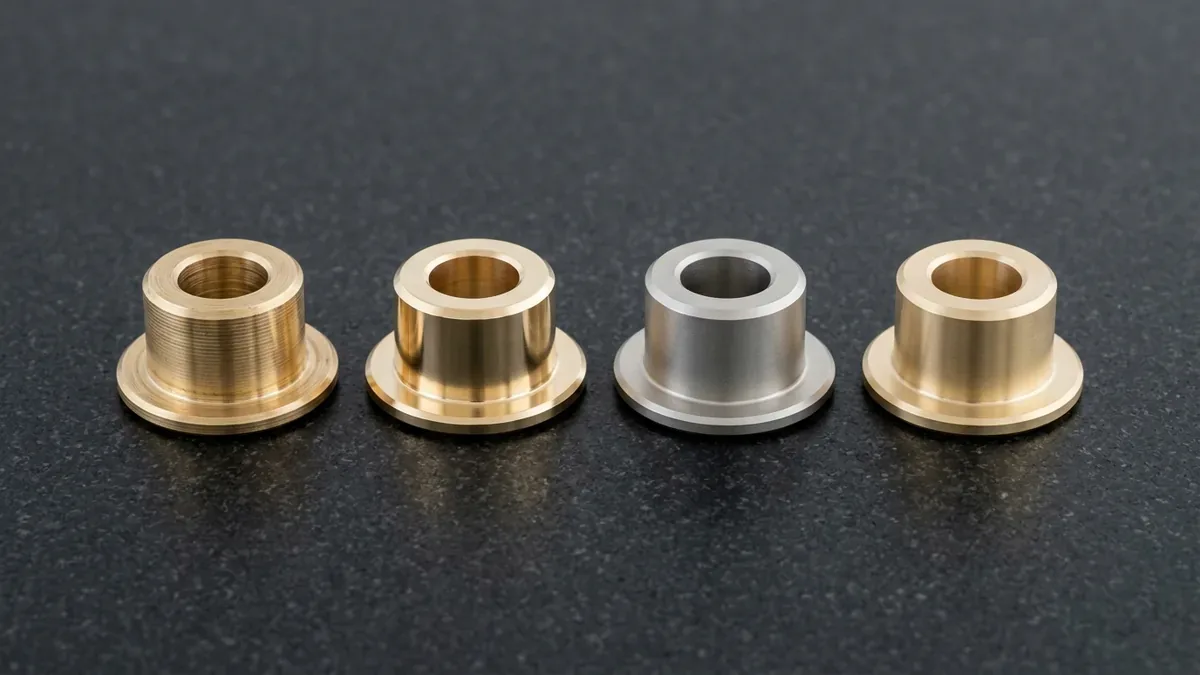
- As-Machined Golden Finish (Ra ≤ 0.8 μm): High-speed carbide and PCD tooling leave crisp machine marks with a brilliant golden luster. Cost-effective for internal mechanical assemblies, bushings, and industrial fittings.
- Mirror Mechanical Buffing & Polishing (Ra ≤ 0.1 μm): Progressive abrasive sanding followed by high-speed cotton buffing wheels with jewelers’ rouge produces a flawless mirror-reflective show finish for architectural luxury hardware and consumer audio knobs.
- Electroless Nickel Plating (ENP): Autocatalytically deposits a uniform 5 to 25 μm layer of nickel-phosphorus alloy over external and internal surfaces. Delivers superior hardness (50 – 65 HRC), exceptional chemical wear resistance, and a modern silver-metallic appearance.
- Clear Passivation & Tarnish Inhibition: Chemical immersion in proprietary benzotriazole (BTA) or chromate-free passivating solutions that bond at the molecular level, preserving the natural golden color against fingerprint acid and humidity for years.
- Precious Metal Electroplating (Gold, Silver, Chrome): Brass is the ultimate substrate for electroplating. Silver plating enhances high-frequency RF conductivity, while hard gold plating prevents contact resistance degradation in aerospace avionics pin terminals.
8. Design for Manufacturability (DFM): Controlling Brass Machining Costs
Raw brass bar stock is more expensive per kilogram than standard aluminum or carbon steel. However, because brass machines at extraordinary speeds, the overall part cost is heavily influenced by machining cycle time and material utilization. Adhering to these DFM best practices optimizes manufacturing economics:
- Match Feature Geometry to Standard Bar Stock: Design hex fittings, flanges, and round pin shoulders to utilize standard imperial or metric extruded hex, square, or round bar stock (e.g., 12 mm, 19 mm Hex). This eliminates the need to mill exterior flats from oversized round billets, slashing scrap material by up to 50%.
- Rationalize Tolerances: While our Swiss-type lathes and precision grinders can hold ±0.005 to ±0.010 mm (±0.0002″ to ±0.0004″) on critical bearing journals and pins, applying tight tolerances to non-critical external lengths forces slower feeds and extensive CMM verification. Specify ISO 2768-mK (±0.10 to ±0.20 mm) for general dimensions.
- Avoid Deep, Narrow Internal Bores: Limit internal blind hole depth-to-diameter ratios to L/D ≤ 5. Deeper holes risk chip pack and drill wander, requiring specialized gun-drilling operations.
- Account for Coating Build-Up: If electroless nickel plating or gold plating is specified, call out on the 2D drawing whether critical pitch diameters and bore tolerances apply before plating or after plating.
9. Technical Engineering FAQ
In terms of cutting tool life, chip formation, and thread cutting, free-machining brass (C36000) is generally easier and more forgiving to machine than aluminum. C360 brass forms short, brittle chips that do not adhere to tool cutting edges (preventing built-up edge [BUE]), whereas soft aluminums (like 6061-O or 5052) tend to produce long, gummy chips that can wrap around spindles.
Only if manufactured from verified lead-free brass alloys complying with NSF/ANSI 61 and the US Safe Drinking Water Act (lead content ≤ 0.25%). Standard C360 brass contains approximately 3% lead and cannot be used in potable water systems. For drinking water applications, AS Prototypes utilizes C69300 (Eco-Brass®) or C27450 lead-free alloys.
On precision Swiss CNC lathes and 3-axis, 4-axis, and 5-axis machining centers, we routinely maintain tolerances of ±0.010 mm (±0.0004 in) on critical diameters and bore sizes. For high-precision aerospace and instrumentation components, cylindrical grinding and slow-wire EDM achieve tolerances down to ±0.005 mm (±0.0002 in).
Brass tarnishes when copper atoms on the surface react with atmospheric oxygen, moisture, and airborne sulfides to form cuprous oxide and copper carbonate. Tarnishing can be prevented through chemical passivation (BTA treatments), clear acrylic/polyurethane lacquer coatings, or electroless nickel plating.
Free-machining brass C36000 (with ~3% lead) delivers a 100% machinability rating, producing short brittle chips and superior Ra 0.4 µm finishes at surface speeds exceeding 300 m/min.
Partner with Our Precision CNC Machining & Engineering Team
Eliminate tool deflection, residual stress distortion, and tolerance stack-up risks before production begins. Upload your 3D CAD files (STEP/IGES) and 2D GD&T drawings for a comprehensive shop-floor DFM review and custom quotation.
Upload 3D CAD for Engineering DFM & RFQ