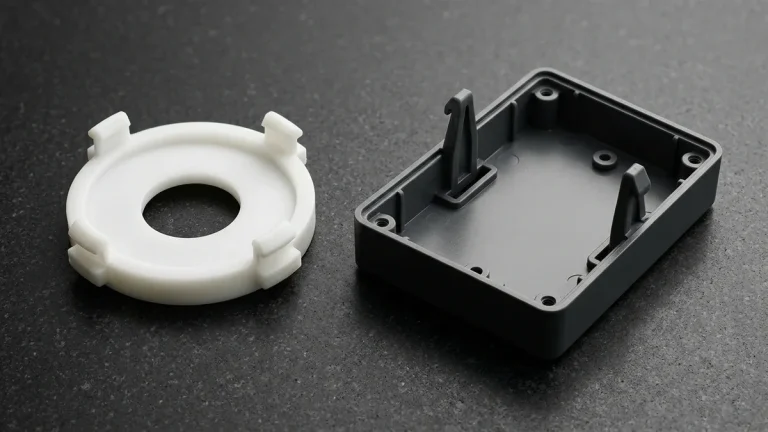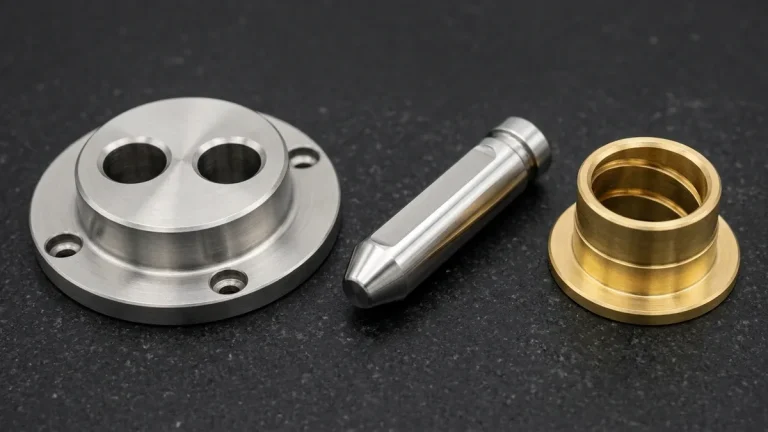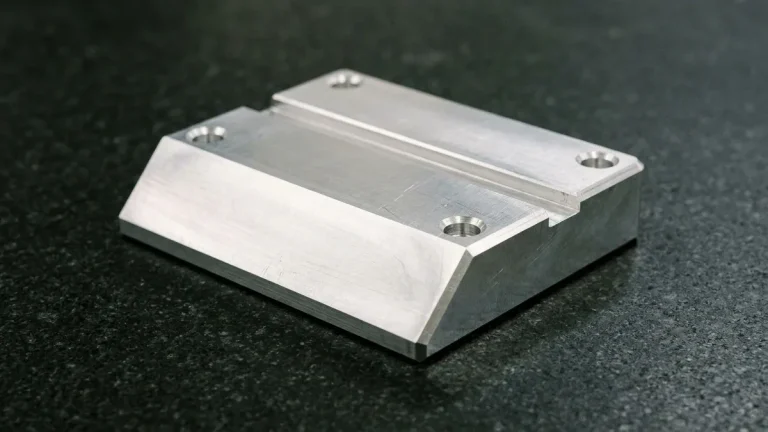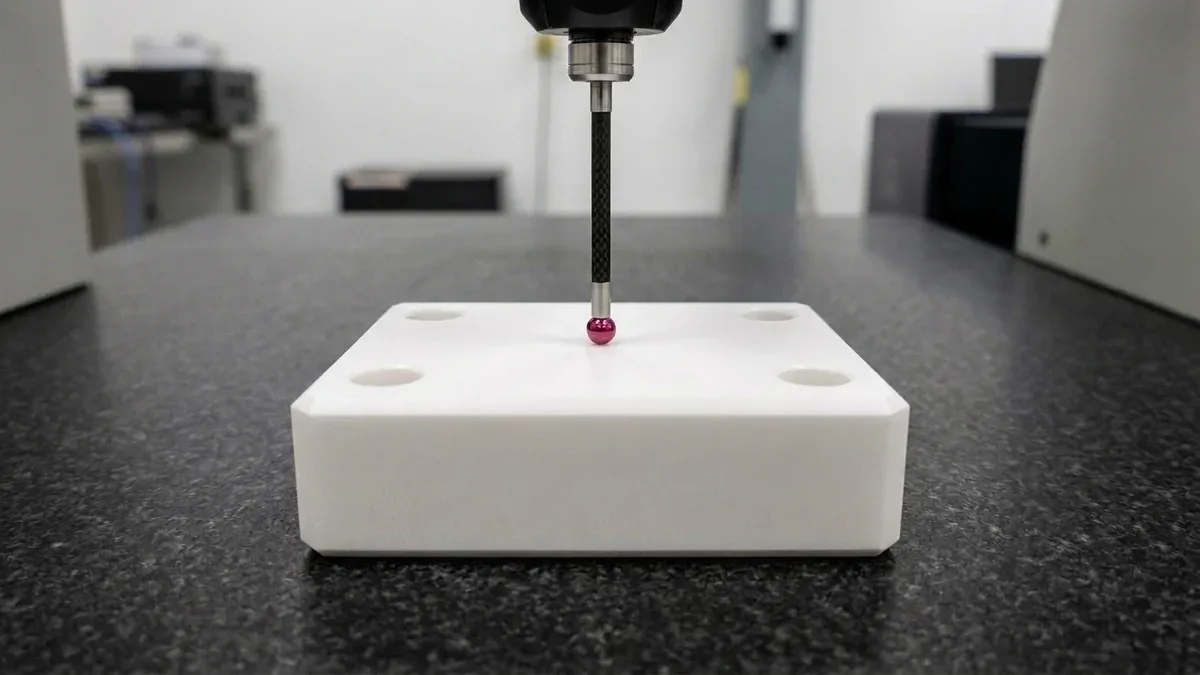
Technical ceramics offer exceptional mechanical strength, dielectric insulation, and thermal stability. Consequently, advanced industries increasingly utilize ceramic components in hostile operating environments. In precision manufacturing, mastering Ceramic CNC Machining ensures repeatable dimensional stability and predictable production scaling.
However, extreme hardness and inherent brittleness make shaping technical ceramics exceptionally demanding. Standard cutting tools experience rapid abrasive wear. Therefore, engineers rely on specialized diamond grinding and precision CNC machining techniques.
1. Green State vs. Fully Sintered Ceramic Machining
Manufacturing ceramic components generally follows two distinct processing routes: green machining and post-sintering hard grinding.
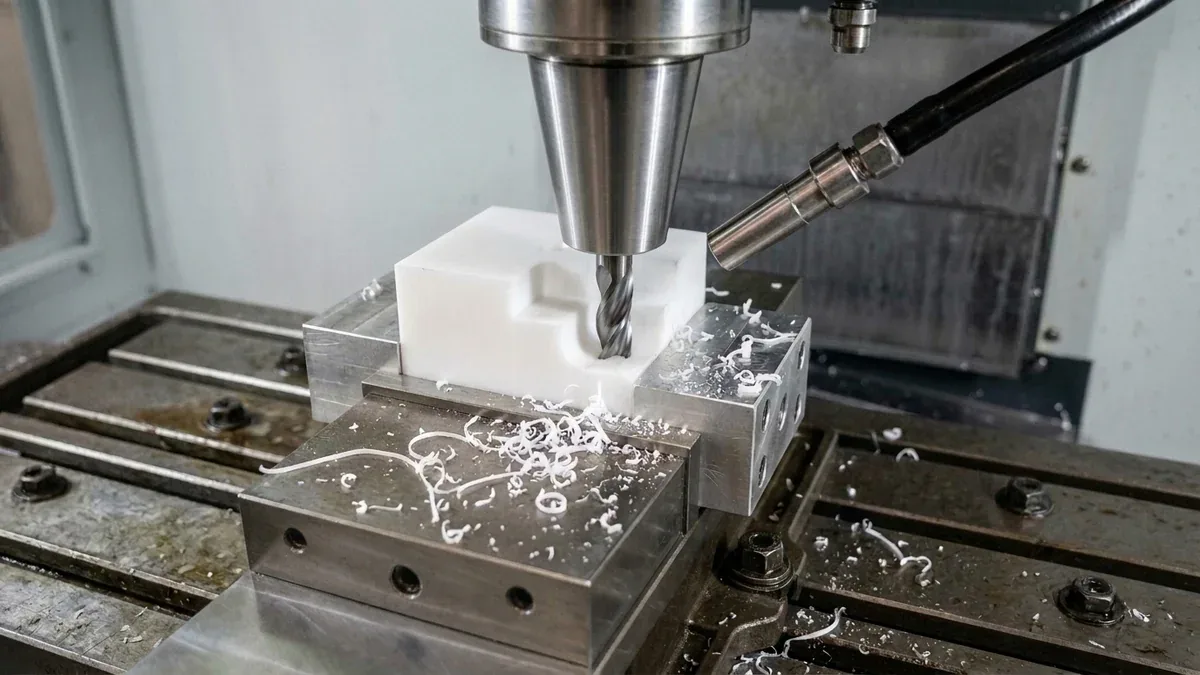
First, green machining occurs before final sintering. During this phase, compacted ceramic powder blanks resemble chalk. Machinists use standard carbide or PCD end mills to shape features rapidly.
Furthermore, green machining yields high material removal rates. However, technical ceramics shrink by fifteen to twenty-five percent during high-temperature sintering. As a result, maintaining tight tolerances requires precise shrinkage compensation models.
Second, fully sintered ceramic machining tackles fully densified material. This state exhibits extreme Vickers hardness exceeding 1500 HV. Consequently, material removal relies strictly on specialized diamond grinding wheels and ultrasonic-assisted toolpaths.
In addition, post-sintered grinding eliminates thermal shrinkage distortions. Thus, diamond grinding achieves tight micron-level tolerances (±0.005 mm) and mirror finishes without micro-fracturing the ceramic matrix.
2. Advanced Technical Ceramic Materials Comparison
Selecting the proper technical ceramic depends on mechanical, thermal, and electrical requirements. To illustrate, the table below highlights key properties and machining considerations across primary industrial ceramics:
| Ceramic Material | Vickers Hardness (HV) | Max Working Temp (°C) | Key Engineering Advantages | Machining Strategy |
|---|---|---|---|---|
| Alumina (Al2O3 99.5%) | 1500 – 1800 | 1600 °C | Superb electrical insulation, wear resistance, chemical inertness. | Resin-bonded diamond wheels with heavy flood coolant. |
| Zirconia (Y-TZP) | 1200 – 1400 | 1000 °C | Outstanding fracture toughness, impact endurance, biocompatibility. | Diamond contour grinding with light depth of cut. |
| Silicon Carbide (SiC) | 2200 – 2800 | 1400 °C | Extreme hardness, high thermal conductivity, corrosion resistance. | Ultrasonic-assisted diamond grinding (or Wire EDM for conductive reaction-bonded SiC grades). |
| Macor (Glass-Ceramic) | 250 – 300 | 800 °C | Zero porosity, zero outgassing, directly machinable with carbide. | Standard CNC milling tools with water-soluble coolant. |
| Silicon Nitride (Si3N4) | 1400 – 1700 | 1200 °C | Superior thermal shock resistance and high mechanical fatigue life. | Electroplated diamond grinding pins with high coolant pressure. |
3. Specialized Machining Processes for Technical Ceramics
Standard metal cutting operations cause surface chipping and tool destruction. Therefore, manufacturers adopt specialized material removal methods for advanced ceramics.
1. Diamond CNC Grinding
Diamond grinding remains the primary technique for fully sintered ceramics. Electroplated or vitrified diamond wheels gently abrade ceramic surfaces. Specifically, shallow depths of cut prevent micro-crack propagation.
Moreover, precision grinding operations produce tight dimensional tolerances down to ±0.005 mm. Consistent coolant flow prevents thermal shock and thermal fracturing.
2. Ultrasonic-Assisted Machining (USM)
Ultrasonic-assisted machining superimposes micro-vibrations onto rotating diamond tools. Frequencies typically range from twenty to forty kilohertz. Consequently, cutting forces drop by over forty percent.
As a result, tool life increases dramatically. In addition, ultrasonic vibrations promote superior chip clearance, preventing wheel loading and subsurface micro-cracks.
3. CNC Core Drilling and Waterjet Slicing
Hole making in ceramics requires diamond core drills rather than twist drills. Hollow core bits minimize cutting friction and optimize coolant penetration. Therefore, breakout chipping at hole exits is avoided.
Meanwhile, abrasive waterjet cutting excels at roughing flat ceramic plates. High-pressure waterjet slicing introduces zero thermal heat-affected zones.
| Machining Process | Achievable Tolerance | Surface Roughness (Ra) | Primary Application Area |
|---|---|---|---|
| CNC Surface Grinding | ±0.005 mm | Ra 0.2 – 0.4 μm | Planar sealing faces, electrical insulator substrates. |
| CNC Cylindrical Grinding | ±0.005 mm | Ra 0.1 – 0.3 μm | Ceramic pump shafts, plunger pistons, sleeve bearings. |
| Ultrasonic Diamond Milling | ±0.010 mm | Ra 0.4 – 0.8 μm | Complex pockets, optical cavities, semiconductor fixtures. |
| Diamond Core Drilling | ±0.020 mm | Ra 0.8 – 1.6 μm | Feedthrough holes, sensor mounting ports. |
| Abrasive Waterjet Cutting | ±0.100 mm | Ra 3.2 – 6.3 μm | Blank roughing, 2D plate profiling. |
4. Essential DFM Guidelines for Ceramic Components
Designing parts for technical ceramic machining requires strict adherence to Design for Manufacturability (DFM) rules:
First, add generous internal radii. Sharp internal 90-degree corners create intense stress concentrations. As a result, thermal or mechanical shock readily induces catastrophic cracks.
Second, avoid thin walls and slender features. Maintain minimum wall thicknesses of at least one millimeter. Specifically, thin walls vibrate under diamond grinding forces and fracture easily.
Third, incorporate edge chamfers. Sharp external edges chip during grinding wheel entry and exit. Applying a small 0.5 mm chamfer eliminates edge breakout.
Finally, design out internal screw threads. Threading sintered ceramics creates extreme stress risers. Instead, specify through-holes with metallic inserts or switch to machinable Macor glass-ceramics.
5. Technical Engineering FAQ
Fully sintered technical ceramics (such as 99.5% Alumina, Y-TZP Zirconia, and Silicon Carbide) exceed 1,200 to 2,500 HV hardness and must be shaped using diamond grinding wheels or ultrasonic-assisted diamond tooling. However, machinable glass-ceramics like Macor (250–300 HV) and pre-sintered green ceramic blanks can be CNC milled directly with solid carbide or PCD cutting tools under flood coolant.
General un-toleranced ceramic features conform to ISO 2768-mK, while CNC diamond milling and core drilling hold ±0.010 to ±0.020 mm (±0.0004″ to ±0.0008″). For critical planar sealing faces and cylindrical bearing shafts, precision CNC surface and cylindrical diamond grinding achieve tolerances down to ±0.005 mm (±0.0002″) with surface finishes of Ra 0.1 to 0.4 μm.
Ultrasonic-assisted machining (USM) superimposes high-frequency axial micro-vibrations (20 to 40 kHz) onto a rotating metal-bonded diamond tool. This intermittent micro-impact action reduces normal cutting forces by over 40%, flushes abrasive ceramic slurry out of deep pockets, prevents subsurface micro-crack propagation, and extends diamond tool life.
Partner with Our Precision CNC Machining & Engineering Team
Eliminate tool deflection, residual stress distortion, and tolerance stack-up risks before production begins. Upload your 3D CAD files (STEP/IGES) and 2D GD&T drawings for a comprehensive shop-floor DFM review and custom quotation.
Upload 3D CAD for Engineering DFM & RFQ