Evaluating CNC machining in automotive engineering reveals the cornerstone of modern vehicle manufacturing. Consequently, automotive original equipment manufacturers rely on multi-axis machining for rapid prototyping and series production.
Today, vehicles require tighter dimensional tolerances, reduced curb weight, and enhanced safety structures. Therefore, precision automotive machining transforms high-strength alloys into mission-critical vehicle subsystems.
From internal combustion engines to next-generation electric drivetrains, CNC machines guarantee repeatable quality. Furthermore, deploying advanced 5-axis machining ensures complex geometry fabrication without multiple refixturing steps.
1. Critical Applications of Automotive CNC Machining
Automotive designers utilize computer numerical control across diverse structural and mechanical vehicle assemblies. Specifically, four major vehicle subsystems rely heavily on precision CNC machining operations.
1. Powertrain & Engine Subsystems
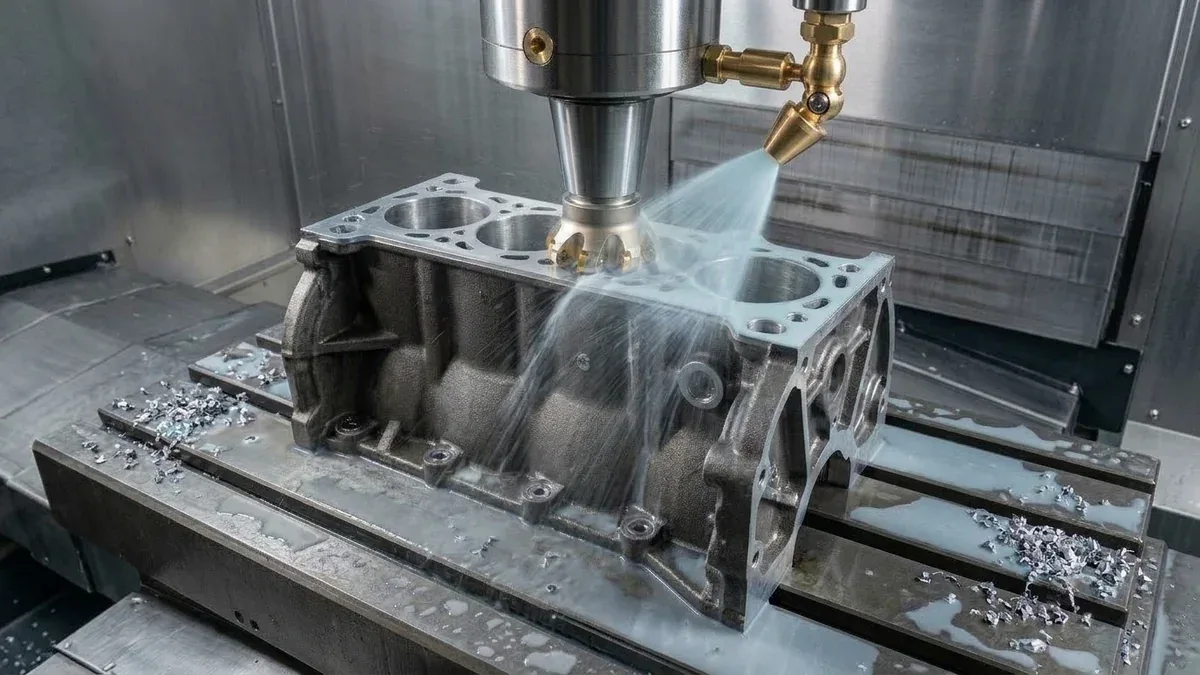
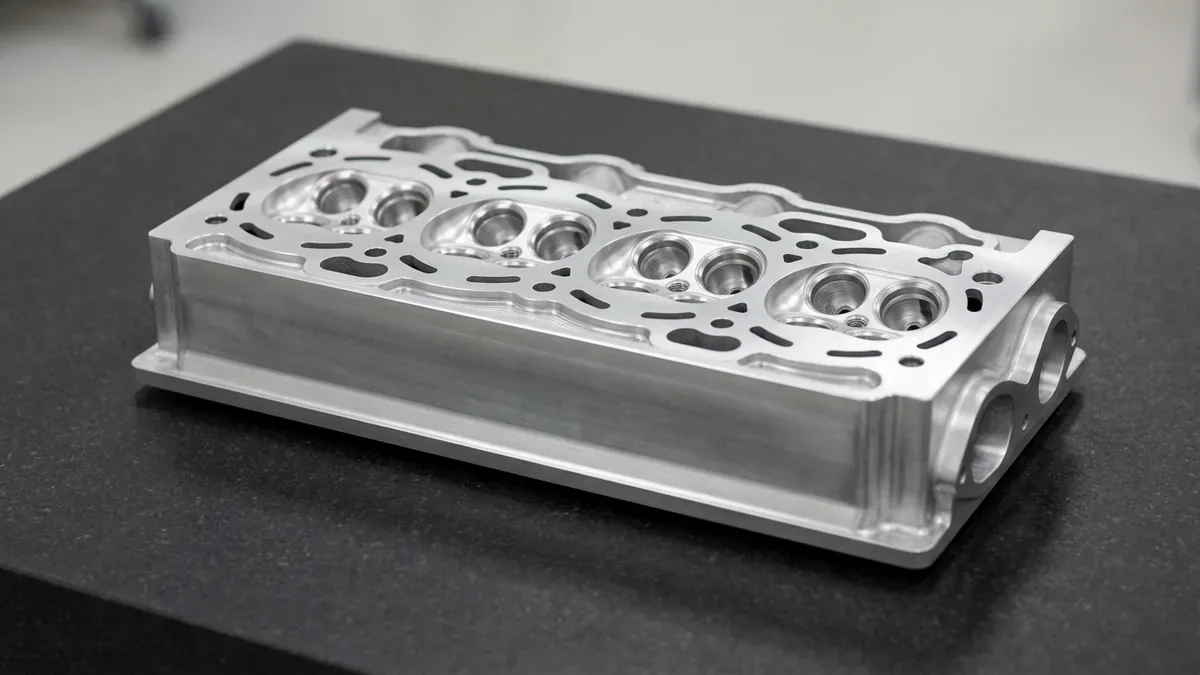
Engine cylinder blocks and cylinder heads demand absolute geometric precision. For example, valve seats, camshaft journals, and combustion chambers require tight ±0.008 to ±0.010 mm tolerances.
Horizontal machining centers mill mating deck surfaces flat to prevent gasket blowouts. Consequently, perfectly flat cylinder head decks guarantee leak-free high-pressure combustion seals.
2. Electric Vehicle (EV) Battery Trays & Motor Housings
The rapid shift toward electrification introduces novel precision machining demands. In particular, EV battery liquid cold plates require serpentine cooling channels carved into large aluminum plates.
Moreover, electric drive motor stator frames require tight ±0.010 mm bore concentricity. Therefore, precise stator-to-rotor air gaps prevent electromagnetic cogging and maximize motor efficiency.
3. Transmission & Gearbox Housings
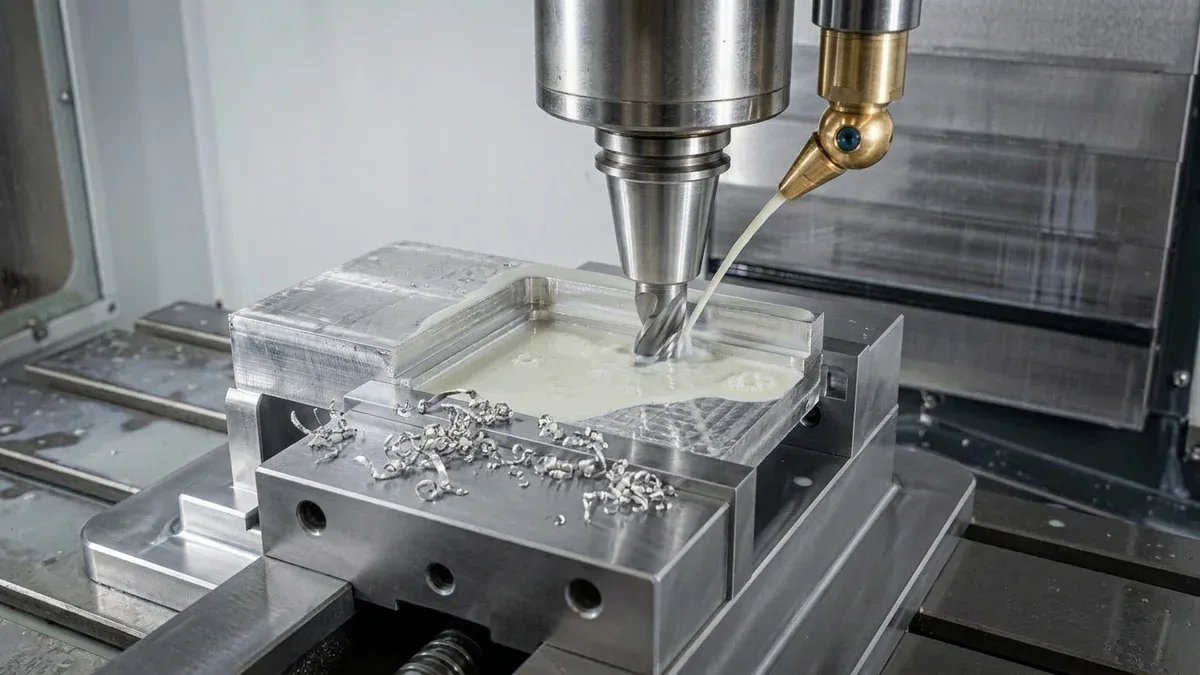
Modern automatic and dual-clutch transmissions feature intricate internal hydraulic valve bodies. Furthermore, these valve bodies route fluid through maze-like channels under 50 bar pressure.
Multi-axis CNC mills contour micro-ports without burrs or flashing. Hence, clean hydraulic passages ensure smooth transmission gear shifts under dynamic driving loads.
4. Suspension & Steering Components
Chassis control arms, steering knuckles, and wheel hubs endure aggressive road impacts continuously. Specifically, machinists carve lightweight wishbone arms from high-strength forged 6061-T6 aluminum billets.
Subtractive machining eliminates internal voids typical of budget castings. As a result, billet control arms provide superior fatigue life on performance vehicles.
2. Automotive CNC Machined Assemblies & Alloys Matrix
Vehicle engineers select specific lightweight metals based on thermal conductivity, strength, and fatigue resistance. To illustrate, review the primary automotive materials and components below:
| Automotive Component | Engineered Alloy | Critical Tolerance | Key Manufacturing Demands |
|---|---|---|---|
| Engine Cylinder Heads | A356-T6 Cast Aluminum | ±0.008 mm bore concentricity | Mirror surface deck finish for high-pressure combustion sealing |
| EV Liquid Cooling Plates | 6061-T6 Rolled Plate | ±0.020 mm channel flatness | Chipless channel bottoms to ensure zero battery coolant leaks |
| Transmission Valve Bodies | A380 / 6061-T6 Aluminum | ±0.008 to ±0.010 mm spool bore (H7) | 100% burr-free fluid passages under high operating pressure |
| Suspension Control Arms | 7075-T6 Billet Aluminum | ±0.012 mm bushing bore fit | High strength-to-weight ratio to absorb severe road vibration |
| Turbocharger Impeller Wheels | Titanium Ti-6Al-4V | ±0.010 to ±0.015 mm blade contour | Simultaneous 5-axis milling for high-speed dynamic balance |
3. Automotive Manufacturing Technologies Compared
Automotive supply chains select production technologies by weighing tooling costs against part volume. In particular, review the manufacturing comparison below:
| Production Method | Upfront Tooling Cost | Initial Lead Time | Design Change Agility | Economic Production Volume |
|---|---|---|---|---|
| Multi-Axis CNC Machining | Zero hard tooling cost | 4 to 8 business days | Instant CAM code modifications | 1 to 5,000 units (Prototyping & Bridge) |
| High-Pressure Die Casting (HPDC) | High (Hardened Multi-Cavity Tooling) | 8 to 14 weeks | Very costly steel mold modifications | > 20,000 units (Mass production) |
| Progressive Metal Stamping | Moderate-High (Progressive Stamping Dies) | 6 to 10 weeks | Rigid stamping die requirements | > 50,000 units (Sheet brackets) |
4. Technical Engineering FAQ
CNC machining cuts prototypes directly from solid metal billets without expensive tooling dies. Consequently, engineering teams validate engine horsepower, fluid flow, and thermal cycles before committing capital to production molds.
EV powertrains rely on high-speed 3-axis and 4-axis CNC machining for thin-walled motor stator housings and battery liquid cooling plates. In addition, precision multi-axis milling ensures reliable fluid seals and tight dimensional tolerances (±0.010 to ±0.020 mm on critical bores and sealing faces).
Automotive CNC machining relies on rigorous first-article inspection (FAI), Statistical Process Control (SPC), and full material traceability reports (MTRs). Furthermore, critical dimensions are verified in our 20°C ± 1°C metrology lab using Zeiss Bridge CMM probing (available upon request) and calibrated Go/No-Go gauges to guarantee compliance with ISO 2768-mK and ASME Y14.5 GD&T standards.
Partner with Our Precision CNC Machining & Engineering Team
Eliminate tool deflection, residual stress distortion, and tolerance stack-up risks before production begins. Upload your 3D CAD files (STEP/IGES) and 2D GD&T drawings for a comprehensive shop-floor DFM review and custom quotation.
Upload 3D CAD for Engineering DFM & RFQ