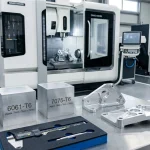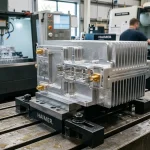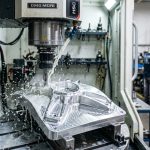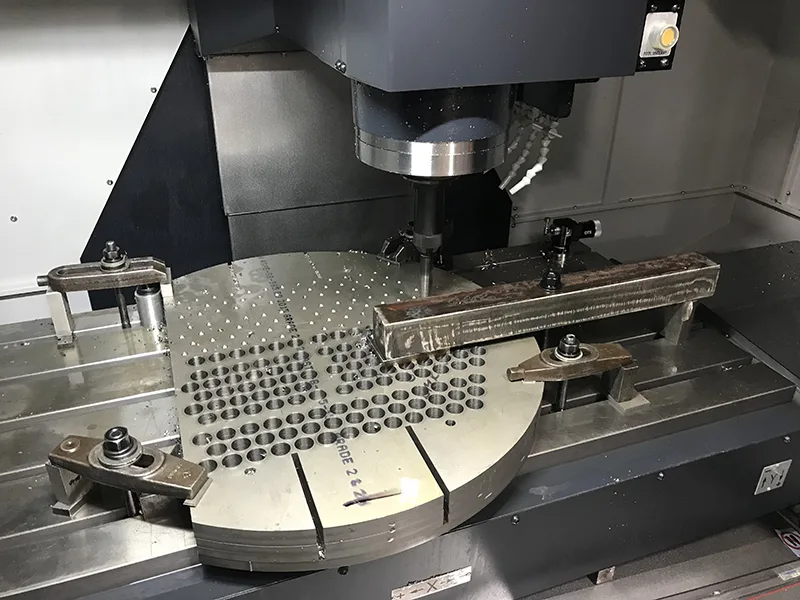
Titanium and its advanced alloys represent the gold standard for high-performance structural applications across aerospace airframes, surgical medical implants, marine propulsion, and motorsport engineering. Renowned for possessing the highest strength-to-weight ratio of any structural metal, complete biocompatibility, and virtually impervious resistance to chloride and seawater corrosion, titanium delivers unparalleled in-service reliability. However, in the realm of CNC machining, titanium is classified as a notoriously difficult-to-cut material. Its low thermal conductivity, high chemical affinity for cutting tool substrates, and low elastic modulus create severe tool wear, work-hardening, and springback challenges. This technical guide examines the metallurgical physics of titanium cutting, grade distinctions (Ti-6Al-4V Grade 5 vs. CP Titanium), high-pressure coolant strategies, and optimized milling feeds and speeds.
1. Metallurgical Challenges: Why Titanium Destroys Standard Cutting Tools
Machining titanium requires fundamentally different strategies than cutting structural steels or aluminum alloys. Three physical mechanisms dominate the cutting zone:
- Extreme Thermal Concentration at the Cutting Edge: The thermal conductivity of Ti-6Al-4V is extremely low—approximately 7.2 W/m·K, compared to ~167 W/m·K for 6061-T6 aluminum and ~50 W/m·K for carbon steel. While aluminum evacuates more than 75% of cutting heat within the ejected chip, titanium chips absorb virtually zero heat. Consequently, over 80% of thermal energy concentrates directly on the cutting edge and micro-nose radius, driving tool tip temperatures beyond 900°C. This intense heat causes rapid binder breakdown (cobalt leaching) and plastic deformation of carbide cutters.
- High Chemical Reactivity and Galling: At temperatures above 500°C, titanium becomes chemically reactive, actively bonding with tool coatings and tool materials. Titanium chips weld themselves to the rake face in micro-milliseconds, forming a Built-Up Edge (BUE). As the rotating tool exits the cut, this welded material tears away fragments of the carbide substrate, leading to rapid catastrophic flaking.
- Low Modulus of Elasticity and Part Deflection: Titanium’s elastic modulus is approximately 110 to 114 GPa—roughly half that of structural steel (~210 GPa). Under cutting tool pressure, thin walls and slender bosses deflect elastically away from the cutter, springing back after the tool passes. This causes severe flank face rubbing, friction chatter, and dimensional tapering.
2. Titanium Alloy Grades: Metallurgical Matrix and Machinability
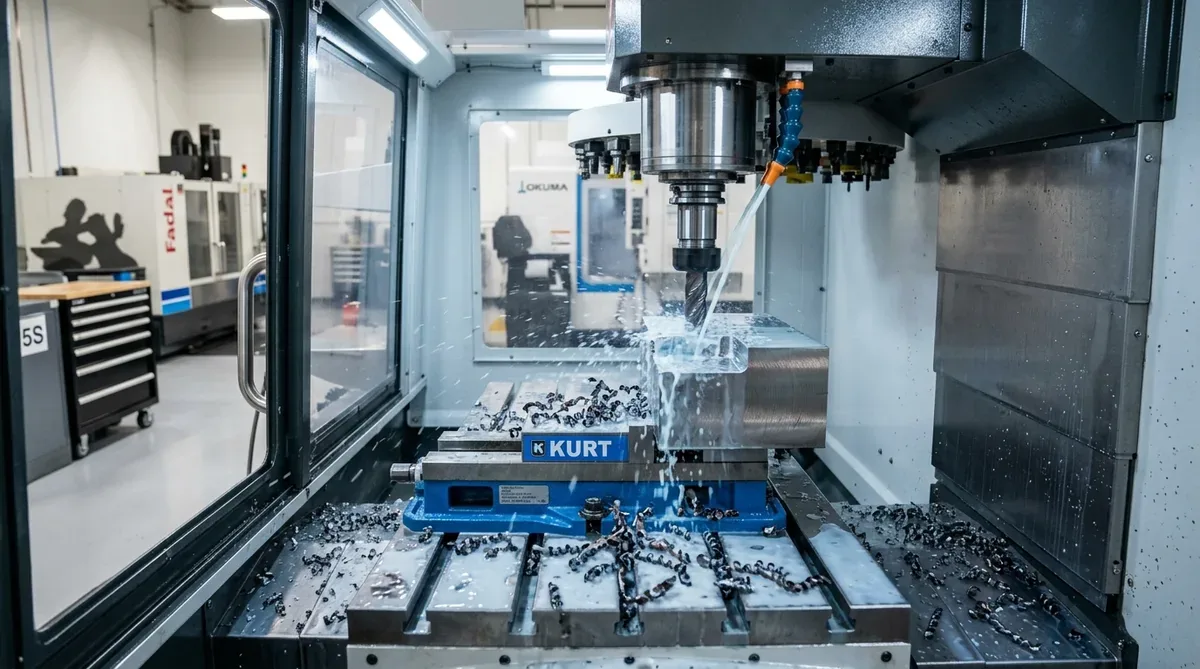
Titanium alloys are categorized into Alpha, Alpha-Beta, and Beta crystalline structures, each exhibiting distinct mechanical properties and cutting behaviors:
| Titanium Grade & Standard | Alloy Microstructure | Tensile Strength (MPa) | Yield Strength (MPa) | Machinability Rating (% vs B1112) | Primary Industry Applications |
|---|---|---|---|---|---|
| Grade 2 (ASTM B348 / CP Ti) | Commercially Pure Alpha (α) | 345 – 450 | 275 | ~45% (Gummy, High Ductility) | Chemical reactor vessels, heat exchangers, marine piping |
| Grade 5 (Ti-6Al-4V / ASTM B348) | Alpha-Beta (α+β) Duplex | 895 – 1050 | 828 | ~22% (Workhorse Aerospace) | Airframe bulkheads, turbine discs, structural fittings |
| Grade 23 (Ti-6Al-4V ELI / ASTM F136) | Extra-Low Interstitial (α+β) | 860 – 960 | 790 | ~20% (High Fracture Toughness) | Orthopedic implants, spinal cages, bone screws |
| Grade 7 (Ti-0.15Pd) | Palladium-Enhanced Alpha (α) | 345 – 450 | 275 | ~40% (Extreme Corrosion Res.) | Severe chemical processing, offshore subsea oil & gas |
| Ti-5553 (Ti-5Al-5V-5Mo-3Cr) | Near-Beta (β) High Strength | 1150 – 1300 | 1100 | ~14% (Ultra-Hard / Tough) | Heavy commercial landing gear, helicopter rotor hubs |
3. Recommended Feeds, Speeds, and Tooling Specifications
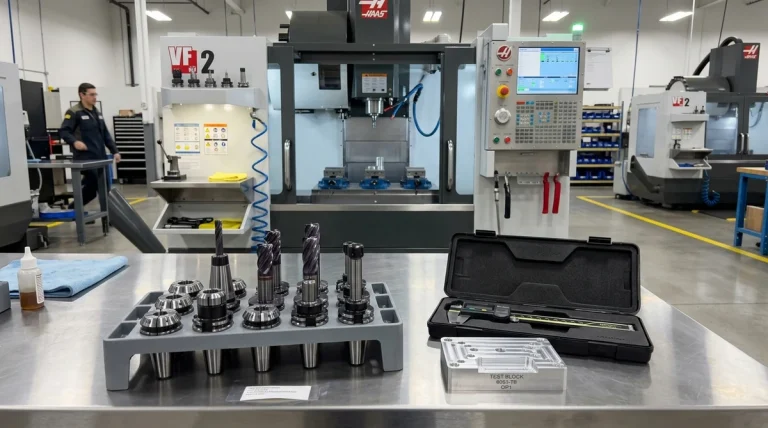
To maximize tool life and eliminate chatter during 5-axis CNC machining of Ti-6Al-4V, AS Prototypes utilizes High-Efficiency Milling (HEM) and dynamic trochoidal toolpaths. By maintaining a small radial width of cut (ae = 5% to 10% of tool diameter) and maximizing axial depth (ap = 1.5x to 2.5x D), the arc of tool engagement remains under 30 degrees. This provides ample cooling time for each flute during every revolution.
| Machining Operation | Tool Type & Coating | Cutting Speed Vc (m/min) | Feed per Tooth fz (mm/tooth) | Radial Engagement ae | Coolant Delivery Strategy |
|---|---|---|---|---|---|
| Trochoidal Rough Milling | 5-Flute Solid Carbide (AlTiN / TiAlN) | 80 – 120 | 0.08 – 0.14 | 8% – 12% Tool Dia | High-Pressure Through-Tool Coolant (70+ bar) |
| Face Milling (Flat Surfaces) | Indexable 45° Lead / Button Cutters | 45 – 70 | 0.12 – 0.20 | 65% – 75% Tool Dia | High-volume dual-port flood coolant |
| Precision Finish Contouring | 6-Flute Variable-Helix Carbide | 90 – 140 | 0.03 – 0.06 | 0.2 – 0.4 mm | Through-spindle internal coolant mist |
| Deep-Hole Drilling | Parabolic Solid Carbide (135° Point) | 30 – 50 | 0.04 – 0.08 | Full Diameter | High-Pressure Internal Through-Spindle (80 bar) |
| Rigid Thread Tapping | Spiral Point Plug Tap (PVD Coated) | 8 – 15 | Thread Pitch Matched | Full Depth | Synthetic heavy-duty tapping emulsion |
4. High-Pressure Coolant (HPC) and Tool Coating Science
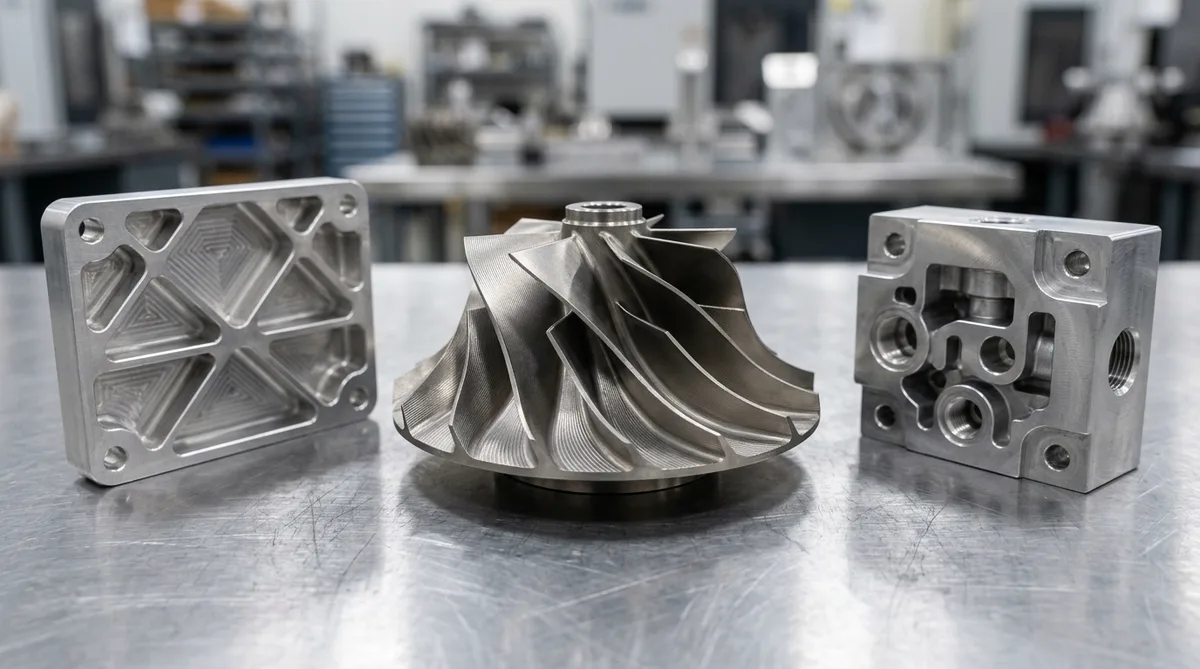
Conventional low-pressure flood coolant (2 to 5 bar) is ineffective when machining titanium alloys. The extreme vapor barrier created in the cutting shear zone boils away coolant before it reaches the tool-chip interface. AS Prototypes deploys High-Pressure Coolant (HPC) systems operating at 70 to 100 bar (1,000 to 1,500 psi):
- Vapor Barrier Penetration: A micro-stream of high-pressure fluid directly penetrates the high-temperature interface between the rake face and the chip, lubricating the shear zone and reducing cutting friction.
- Hydraulic Chip Snapping: High-pressure coolant acts as a mechanical wedge, curling and snapping ductile titanium ribbons into manageable C-shaped chips, preventing dangerous chip bird-nesting around toolholders.
- Advanced PVD Nanocomposite Coatings: Avoid diamond-coated tools when machining titanium, as diamond reacts with titanium at cutting heat to form brittle titanium carbide. Instead, select high-aluminum PVD coatings (such as AlTiN or AlCrN). Under intense cutting friction, the aluminum oxidizes to form an ultra-hard, chemically inert Aluminum Oxide (Al&sub2;O&sub3;) ceramic monolayer that blocks heat migration into the carbide core.
5. Fixturing Rigidity, Stress Relief, and Dimensional Metrology
Holding +/-0.005mm tolerances on structural titanium components requires mitigating residual stresses and preventing fixture flexure:
- Rigid Dovetail Workholding: Because titanium requires substantial cutting forces, conventional smooth vise jaws can allow the workpiece to slip or vibrate. Milling a dedicated 45° dovetail prep (2.0mm to 3.0mm height) on the stock bottom and locking it into hardened dovetail jaws provides maximum clamping rigidity while exposing 5 full faces for machining.
- Post-Roughing Stress-Relief Heat Treatment: Heavy metal removal releases non-uniform internal residual stresses, causing part distortion. For critical aerospace components, parts are rough-machined with 0.8mm stock allowance, transferred to a vacuum furnace for stress-relief annealing (typically 550°C to 650°C for 2 hours followed by slow air cooling), and then returned to the CNC machine for final finishing passes.
- Zeiss CMM Inspection: Critical features undergo full coordinate measuring machine (CMM) verification upon request in our climate-controlled metrology laboratory (20°C +/-1°C), guaranteeing compliance with ISO 2768-mK and precision ISO 2768-fH standards.
Frequently Asked Questions (FAQ)
Titanium has exceptionally low thermal conductivity (7.2 W/m·K vs 167 W/m·K for aluminum), meaning over 80% of cutting heat concentrates at the tool edge rather than dissipating into the chip. Combined with high chemical reactivity at elevated temperatures that welds chips to cutting tools, standard tooling suffers rapid flank wear and chipping without dedicated parameters.
The most effective strategy is High-Efficiency Milling (HEM) using dynamic trochoidal toolpaths. By utilizing a small radial engagement (ae = 8% to 12% tool diameter) and high axial depth (ap = 1.5x to 2x D), tool engagement angle stays below 30 degrees, allowing flutes to cool during rotation while maintaining high metal removal rates.
High-pressure coolant (70 to 100 bar) penetrates the extreme vapor barrier created in the cutting zone, providing direct lubrication at the tool-chip interface. It dramatically lowers tool tip temperatures, prevents chip welding, and hydraulically curls and snaps ductile titanium chips to eliminate tool recutting.
Partner with AS Prototypes for High-Precision Titanium Machining
Request an Instant RFQ for Titanium CNC Machined Components
From complex 5-axis aerospace airframe brackets and marine propulsion hardware to micro-machined Grade 23 medical implants, AS Prototypes delivers precision titanium manufacturing down to +/-0.005mm tolerances. Upload your 2D engineering drawings and 3D CAD models (STEP, IGES) for real-time DFM feedback, material verification, and fast production lead times.
Get an Instant RFQ & DFM Review →