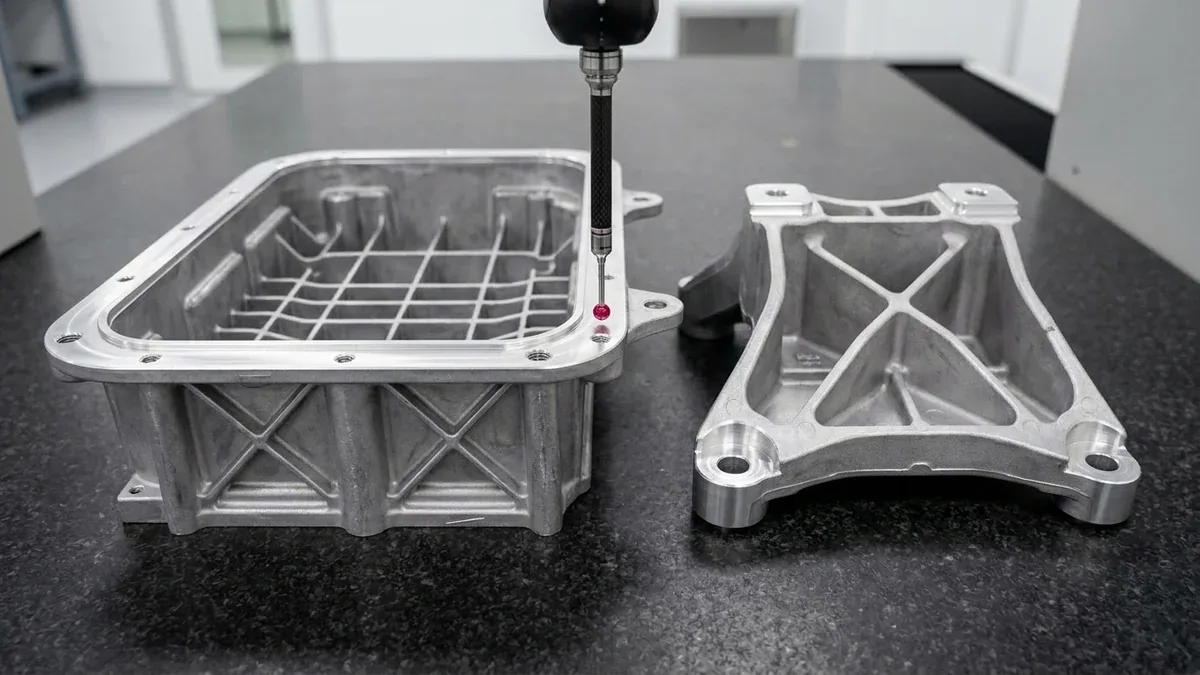
Modern vehicle electrification and fuel economy standards require aggressive chassis and powertrain lightweighting. Therefore, automotive die casting represents a critical manufacturing pillar for high-volume automotive production. Advanced die casting produces thin-walled, high-strength structural metal components economically. Consequently, automotive engineers consolidate complex multi-part sheet assemblies into single unitary castings.
High-pressure die casting delivers superior dimensional stability, smooth surface finishes, and rapid cycle times. In addition, automated casting cells integrate robotic pouring, die thermal control, and vacuum venting. In this technical guide, we examine fundamental casting methodologies. Furthermore, we evaluate structural alloy selections and post-machining integration for automotive programs.
1. High-Pressure Die Casting: Cold Chamber vs Hot Chamber Systems
The mechanical configuration of casting machinery depends primarily on alloy melting temperatures. Cold chamber casting machines operate by pouring molten alloy into an unheated shot sleeve. Subsequently, a high-speed hydraulic ram injects liquid metal into hardened H13 tool steel dies. This method prevents aggressive liquid aluminum from attacking internal steel plungers.
Conversely, hot chamber systems immerse the injection gooseneck and plunger mechanism directly inside molten metal. Consequently, hot chamber machines achieve rapid cycling speeds up to 900 shots per hour. However, this process remains limited to low-melting metals like zinc and specific magnesium alloys. Therefore, high-pressure cold chamber presses dominate structural aluminum powertrain production.
2. Kinematics and Vacuum-Assisted Porosity Elimination
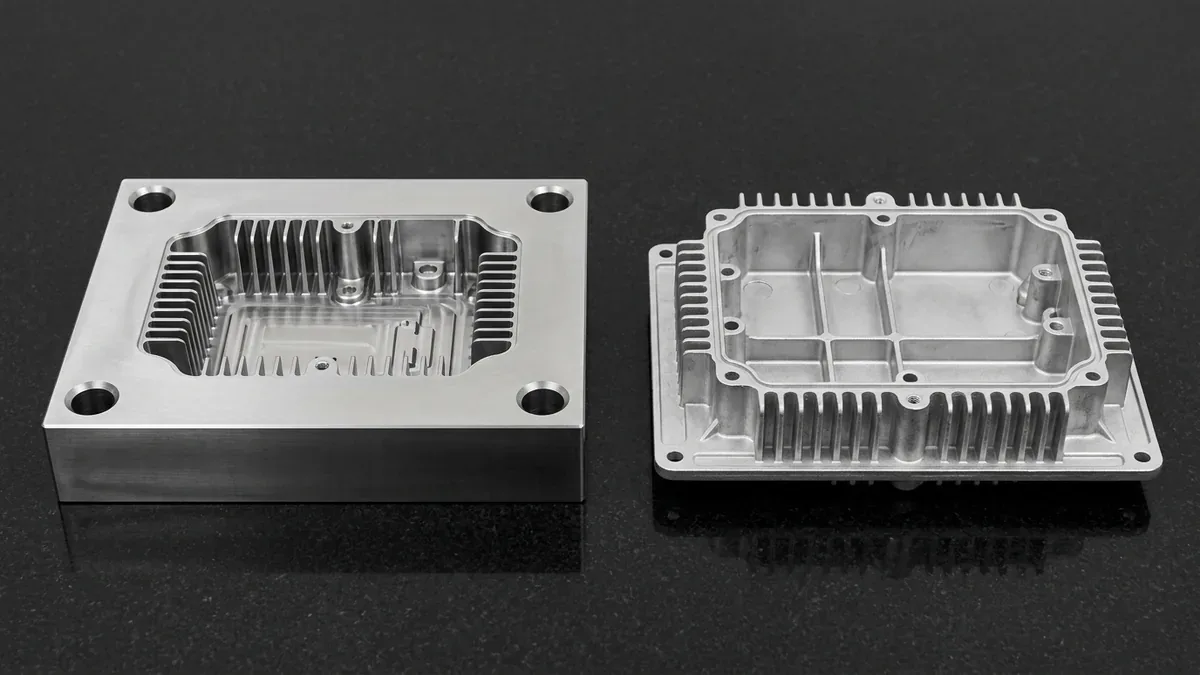
Gas porosity and shrink cavities historically limited the structural use of high-pressure castings. However, vacuum-assisted die casting evacuates air from mold cavities prior to metal injection. Consequently, turbulent air entrapment drops dramatically throughout thin structural ribs. In shop-floor practice, vacuum-cast components can undergo high-temperature solution heat treatment without blistering.
Multi-stage injection cylinders provide precise deceleration and high intensifier pressure spikes at stroke ends. These intense pressures compact solidification boundaries and eliminate micro-porosity effectively. Moreover, our specialized automotive manufacturing components incorporate conformal cooling lines. Conformal channels optimize heat dissipation, reducing thermal cycle fatigue on expensive tooling inserts.
The operational specifications of automotive die casting processes are compared in the table below.
| Process Parameter | Cold Chamber High-Pressure | Hot Chamber High-Pressure | Vacuum-Assisted Structural Die Casting |
|---|---|---|---|
| Primary Automotive Alloys | A380, ADC12, AlSi10MnMg | Zamak 3, Zamak 5, ZA-8 | Special Low-Iron Structural Aluminum |
| Injection Pressures | 35 MPa to 120 MPa | 15 MPa to 30 MPa | 70 MPa to 140 MPa with vacuum pull |
| Typical Cycle Times | 30 s to 90 s per shot | 5 s to 20 s per shot | 45 s to 110 s per shot |
| Internal Gas Porosity | Moderate (non-heat treatable) | Low to Moderate | Extremely Low (T6 heat-treatable) |
| Die Cavity Life Expectancy | 100,000 to 150,000 shots | 500,000 to 1,000,000 shots | 80,000 to 120,000 shots |
3. Automotive Alloy Selection: Aluminum, Magnesium, and Zinc
Selecting the optimal alloy requires balancing weight reduction, mechanical tensile limits, and thermal conductivity. Aluminum A380 remains the premier choice for automotive transmission cases and water pump housings. It offers exceptional fluidity, pressure tightness, and resistance to hot cracking. Meanwhile, Japanese ADC12 alloy provides superior castability for complex electronic inverter heatsinks.
For ultra-lightweight EV subframes, magnesium alloy AZ91D offers thirty percent weight savings over aluminum. In addition, magnesium provides outstanding acoustic dampening and high electromagnetic shielding performance. Furthermore, zinc Zamak alloys serve high-precision functional hardware like seatbelt retractor gears and door lock modules. From a manufacturing perspective, engineers match material physical properties to localized mechanical loads.
4. Precision Secondary Machining, Tooling, and Metrology
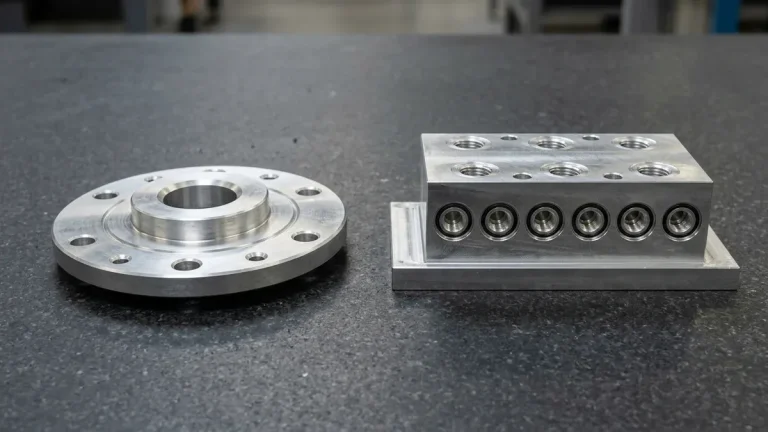
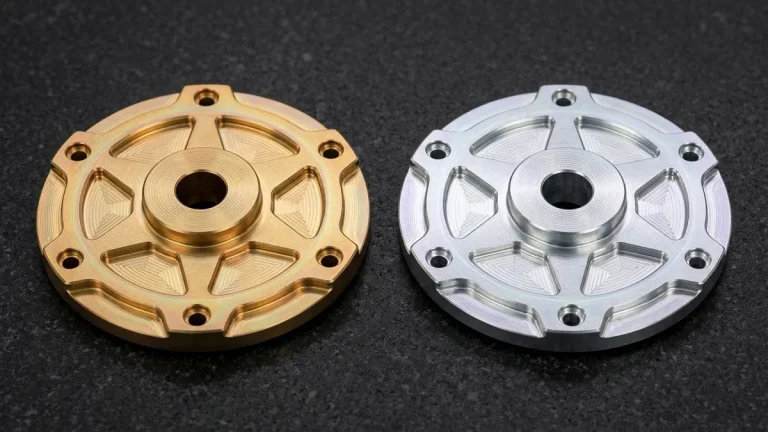
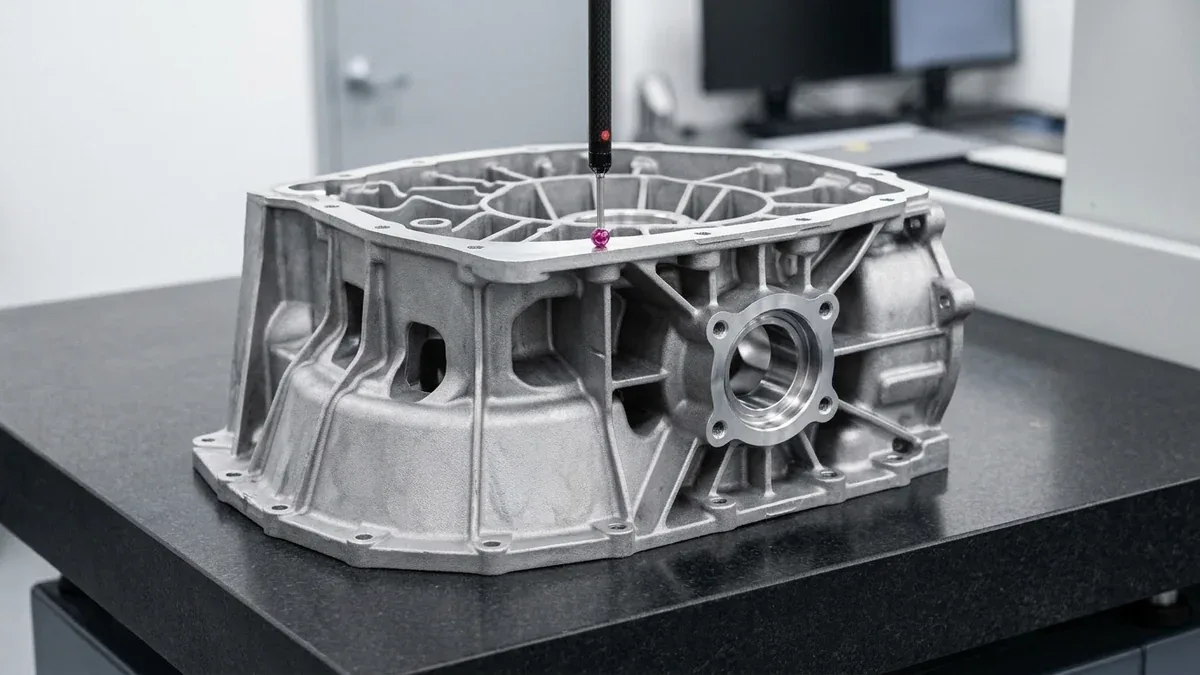
While die casting achieves near-net shapes, critical bearing bores and sealing faces require CNC finishing. High-speed 3-axis and 4-axis CNC machining centers mill gasket surfaces to precise Ra 0.8 µm surface roughness. Furthermore, rigid hydraulic clamping fixtures prevent thin-wall distortion during multi-axis tapping and boring operations. In addition, our facility provides rapid tooling and mold making for rapid prototypes and low-to-mid volume production runs.
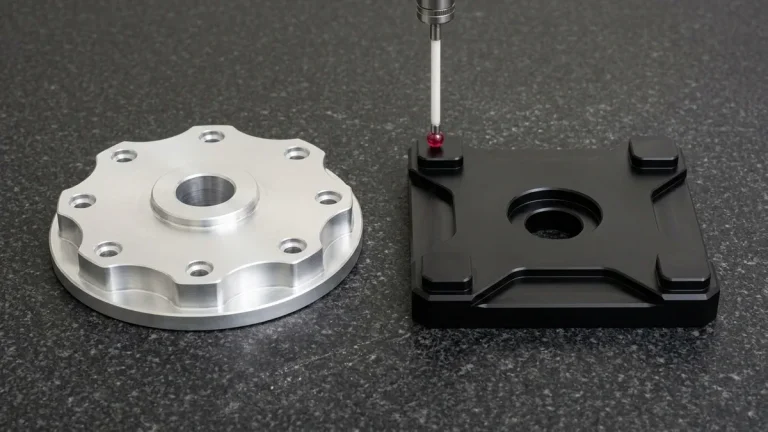
Quality assurance protocols integrate programmable Zeiss Bridge CMM verification (available upon request) and automated pneumatic pressure-decay leak testing (3.5 to 6.0 bar). Differential-pressure air decay leak testing detects micro-porosity leaks on critical EV battery chiller plates and inverter housings. Moreover, First Article Inspection (FAI) and PPAP Level 3 reports verify full compliance with drawing GD&T callouts and automotive dimensional tolerances. Therefore, AS Prototypes delivers fully validated automotive die castings ready for assembly line integration.
The metallurgical characteristics and typical automotive applications of primary die casting alloys are detailed in the table below.
| Alloy Designation | Density (g/cm³) | Tensile Yield Strength (MPa) | Thermal Conductivity (W/m·K) | Core Automotive Application |
|---|---|---|---|---|
| Aluminum A380 | 2.74 | 160 | 96 | Gearbox housings, engine brackets, and oil pans. |
| Aluminum ADC12 | 2.75 | 150 | 92 | Electronic control unit cases and sensor housings. |
| AlSi10MnMg (Ductile) | 2.68 | 210 (T6) | 130 | Chassis shock towers and EV battery frame crossmembers. |
| Magnesium AZ91D | 1.81 | 150 | 72 | Steering wheel armatures, instrument frames, and brackets. |
| Zinc Zamak 3 | 6.60 | 208 | 113 | Door lock mechanisms, wiper gears, and sunroof pulleys. |
5. Technical Engineering FAQ
Molten aluminum rapidly dissolves iron and steel at casting temperatures of 660 degrees Celsius. In a hot chamber system, aluminum would erode the immersed steel plunger and cylinder within hours. Cold chamber sleeves protect hydraulic components by minimizing liquid contact time.
Die casting allows single-piece integration of large battery tray floors, mounting bosses, and internal cooling ribs with nominal wall thicknesses of 2.0 to 3.0 mm. This structural consolidation eliminates dozens of stamped sheet metal brackets and welded joints, reducing overall pack mass while improving torsional rigidity and thermal dissipation.
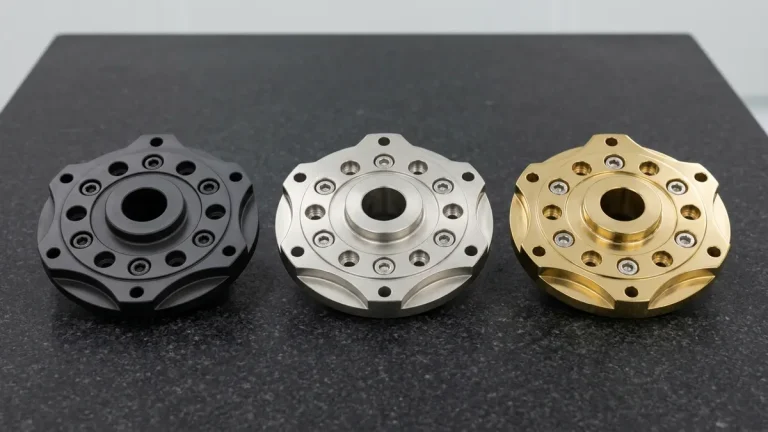
Die castings typically require 3-axis and 4-axis CNC face milling of gasket sealing surfaces (Ra 0.8 to 1.6 µm), precision boring of H7 bearing journals (±0.010 mm / ±0.0004″), and multi-spindle drilling and thread tapping. In addition, shot blasting, vibratory deburring, and Alodine / SurTec 650 chromate conversion or powder coating protect cast aluminum surfaces against road-salt corrosion.
Transition Seamlessly from Rapid Tooling to High-Pressure Die Casting
Optimize cavity life, gating geometry, and secondary CNC datum machining with our in-house die casting and tooling engineering team. Upload your 3D CAD models (STEP/IGES) for a comprehensive flow simulation and DFM manufacturability assessment.
Upload 3D CAD for Die Casting & Tooling DFM Review