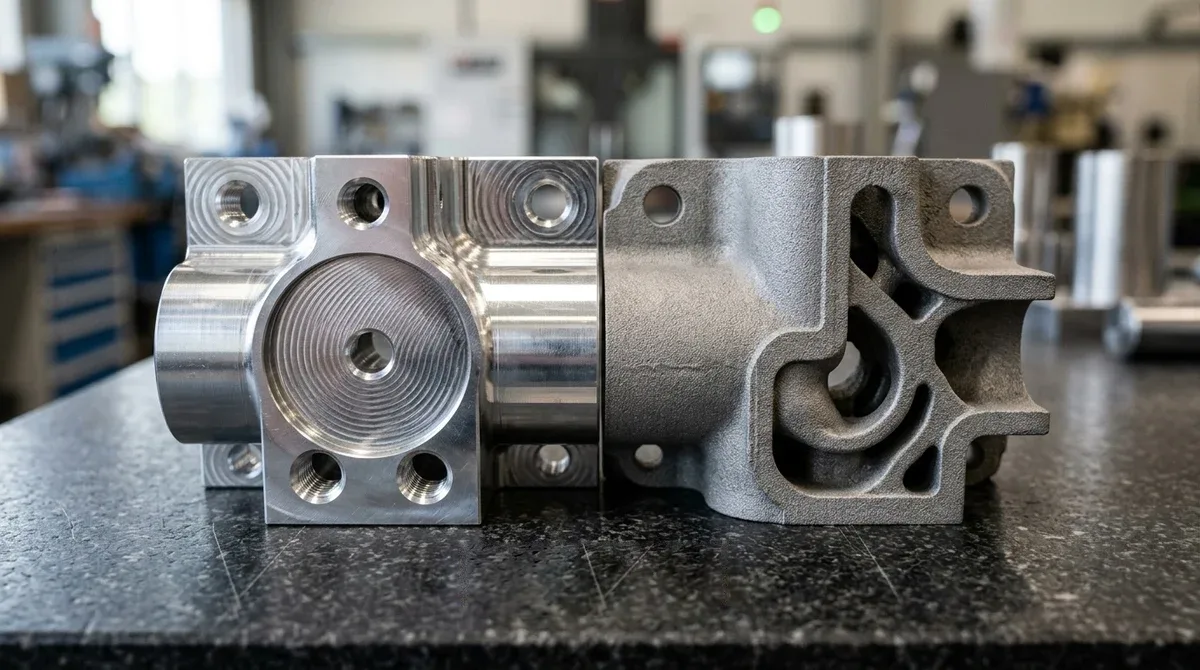
Engineering teams frequently face a fundamental choice during prototype and production planning. Specifically, should they select subtractive machining or additive manufacturing for custom parts?
Understanding the engineering trade-offs between CNC machining vs 3D printing is vital. Both manufacturing approaches offer distinct advantages in geometric complexity, tolerances, and per-unit costs.
Consequently, choosing the wrong process risks unnecessary tooling expenses and delayed product launches. In addition, material properties vary significantly between wrought metal billets and sintered powder beds.
At AS Prototypes, our dual manufacturing plant houses multi-axis precision CNC machining services alongside industrial custom 3D printing services. In this engineering guide, we compare dimensional accuracy, structural strength, cost curves, and selection criteria.
Dimensional Tolerances and Surface Quality
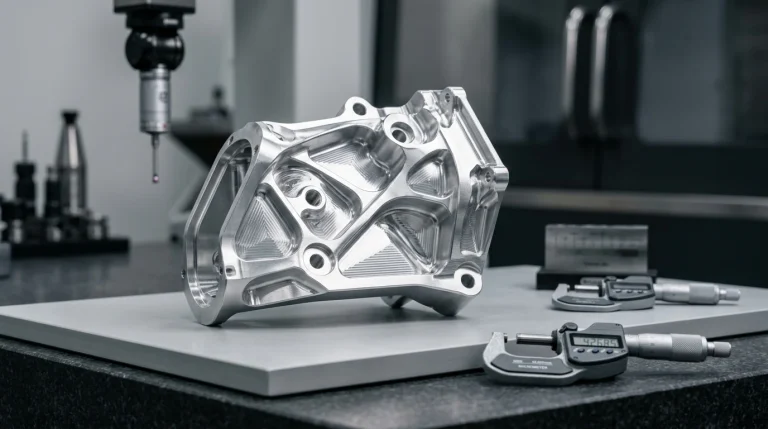
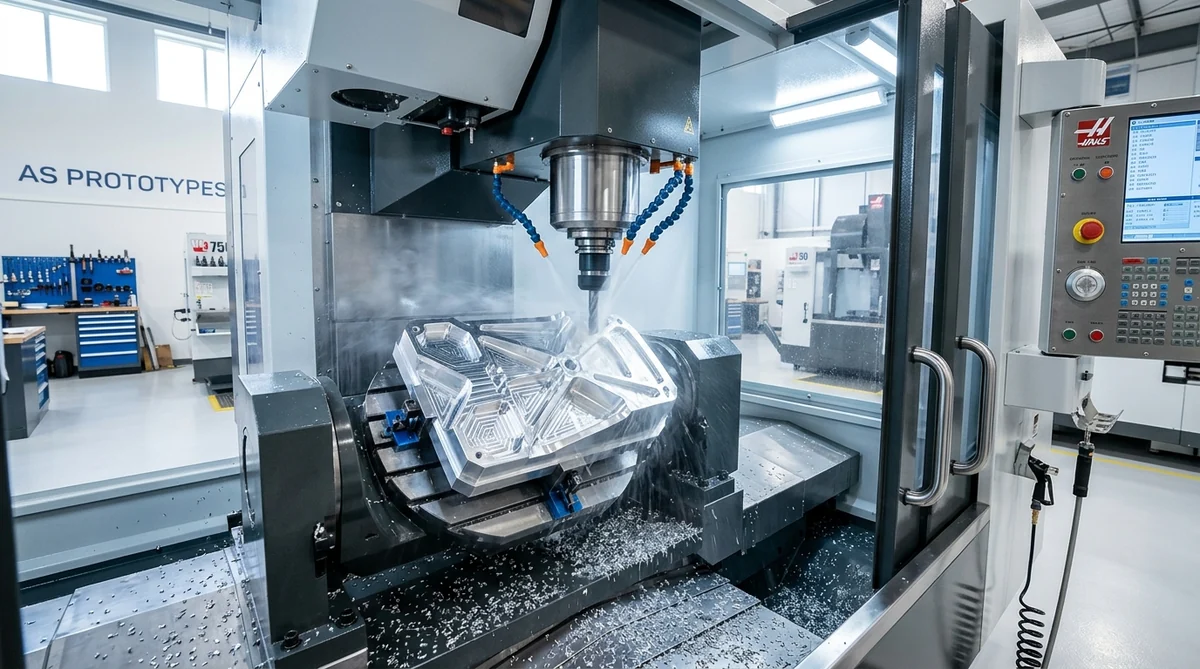
Specifically, CNC machining remains the gold standard for dimensional precision and fine surface finishes.
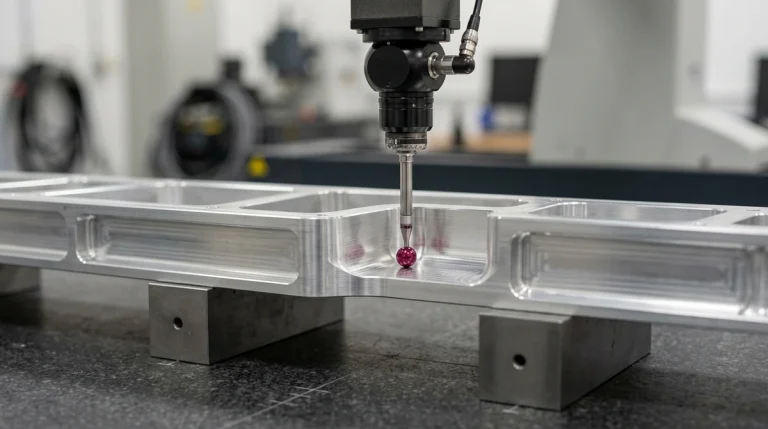
For example, multi-axis milling and precision turning comfortably hold general tolerances to ISO 2768-mK (±0.1 mm). Furthermore, precision finishing setups achieve ultra-tight tolerances down to ±0.005 mm.
In contrast, additive manufacturing typically achieves tolerances between ±0.1 mm and ±0.3 mm. In addition, thermal expansion during laser powder melting introduces localized shrinkage distortion.
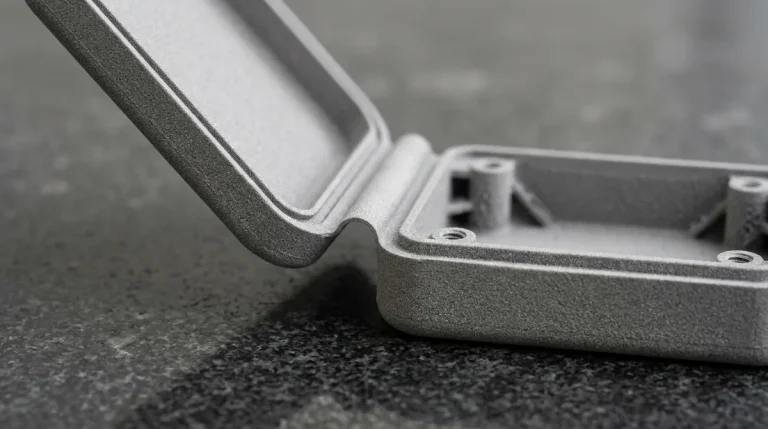
Similarly, as-machined CNC parts deliver smooth surface roughness between Ra 0.8 μm and 1.6 μm. Conversely, raw DMLS or SLS parts exhibit gritty textures requiring secondary bead blasting.
| Technical Metric | Subtractive CNC Machining | Industrial 3D Printing (AM) | Engineering Advantage |
|---|---|---|---|
| Standard Tolerances | ±0.005 mm to ±0.05 mm | ±0.10 mm to ±0.25 mm | CNC delivers superior accuracy. |
| Surface Finish (As-Built) | Ra 0.8 μm to 1.6 μm | Ra 6.0 μm to 12.0 μm | CNC provides cosmetic finish without secondary prep. |
| Geometric Complexity | Constrained by cutter line-of-sight | Virtually unlimited (conformal channels, lattices) | 3D printing enables organic lightweighting. |
| Mechanical Isotropy | 100% uniform wrought billet strength | Anisotropic (weaker along Z-axis build direction) | CNC ensures uniform load-bearing capacity. |
| Material Waste Ratio | Moderate to high (up to 80% swarf) | Low (near-net shape, reusable powder) | 3D printing saves expensive raw superalloys. |
Material Strength and Structural Integrity
In addition, structural engineers must evaluate material behavior under cyclical dynamic stress.
First, CNC machined components originate from dense wrought, rolled, or extruded stock. Therefore, they display 100% isotropic mechanical properties in all Cartesian planes.
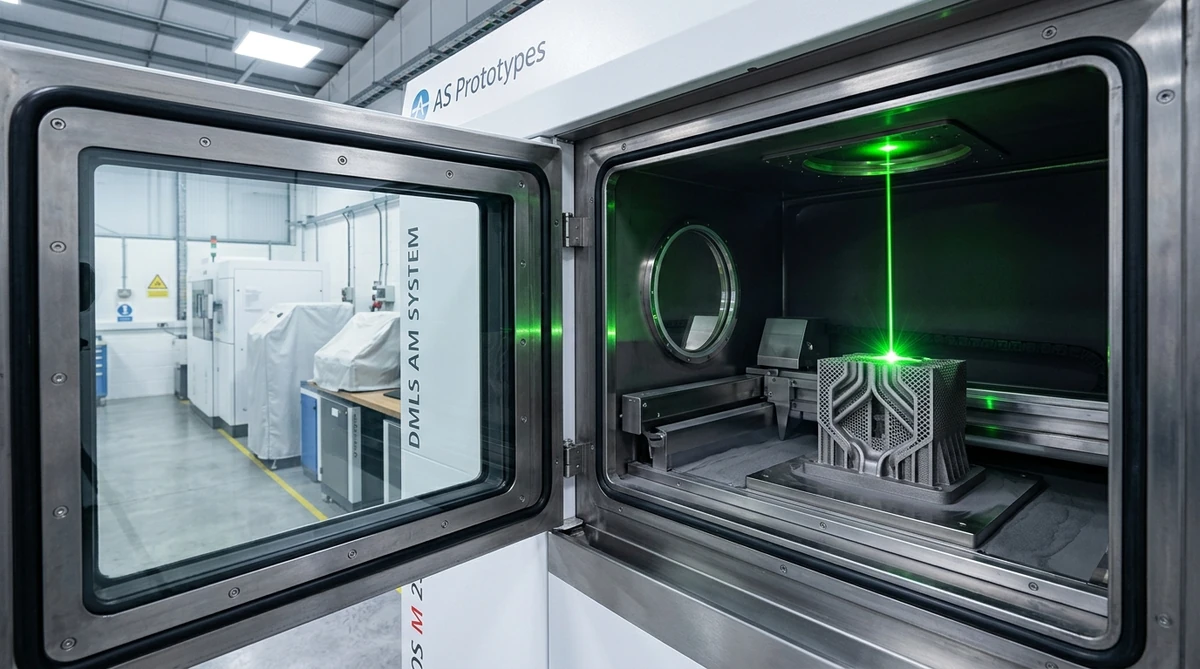
Second, 3D printed components build up layer by layer along the Z vertical axis. As a result, interlayer bonding boundaries can become microstructural weakness planes under severe tensile shear.
Consequently, critical metal additive parts require hot isostatic pressing (HIP) and vacuum annealing. Overall, heat treatment relieves residual thermal stresses and eliminates micro-porosity.
| Alloy / Polymer | Wrought CNC Tensile Strength | As-Printed AM Tensile Strength | Heat-Treated AM Tensile Strength |
|---|---|---|---|
| Titanium Ti-6Al-4V | 950 MPa (Isotropic) | 860 MPa (XY) / 780 MPa (Z) | 930 MPa (After HIP cycle) |
| Aluminum 6061-T6 / AlSi10Mg | 310 MPa (Isotropic) | 240 MPa (XY) / 200 MPa (Z) | 290 MPa (T6 heat treated) |
| 316L Stainless Steel | 580 MPa (Isotropic) | 510 MPa (XY) / 470 MPa (Z) | 560 MPa (Stress relieved) |
| Nylon PA12 / PA11 | 75 MPa (Extruded sheet) | 48 MPa (XY) / 40 MPa (Z) | 50 MPa (Vapor smoothed) |
Cost Break-Even Analysis and Engineering Decision Matrix
Finally, production volume and geometry dictate the optimal manufacturing path.
Specifically, for low volumes between 1 and 10 units, 3D printing avoids setup programming overhead. Furthermore, additive fabrication shines when building consolidated single-piece assemblies with internal fluid passages.
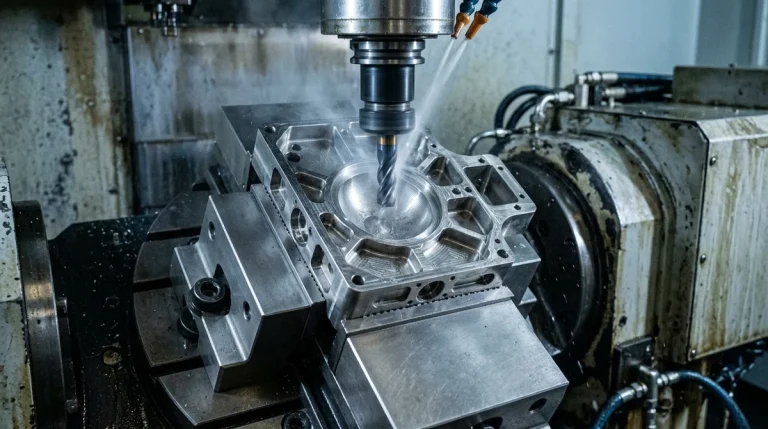
Conversely, for batches from 20 to 10,000 parts, CNC machining offers unmatched speed. In addition, subtractive machining cycles take minutes rather than hours per component.
Frequently Asked Questions
Specifically, as-printed metal parts exhibit lower fatigue strength due to micro-porosity. However, after HIP and vacuum heat treatment, additive titanium reaches 98% of wrought strength.
Engineering teams frequently combine both processes in hybrid workflows. First, DMLS prints complex organic cavities. Next, precision 5-axis CNC milling cuts critical bearing bores, seal grooves, and mounting threads.
For non-functional fit-check models, industrial 3D printing produces complex parts within 4 to 8 business days from CAD files. However, for rigid metal prototypes with tight threads, CNC machining delivers finished parts in days.
Deciding Between CNC Machining and 3D Printing?
AS Prototypes provides unbiased DFM consulting across both subtractive CNC milling and industrial additive manufacturing. Upload your CAD drawings today for fast engineering quotes and lead-time analysis.
Upload CAD for Expert DFM Review